Cultures
Ankh Meaning: The Egyptian Symbol of Life
The ankh is the Egyptian hieroglyph for life. Its looped-cross shape appears in writing, divine imagery, personal amulets, and later Egyptian Christian art.
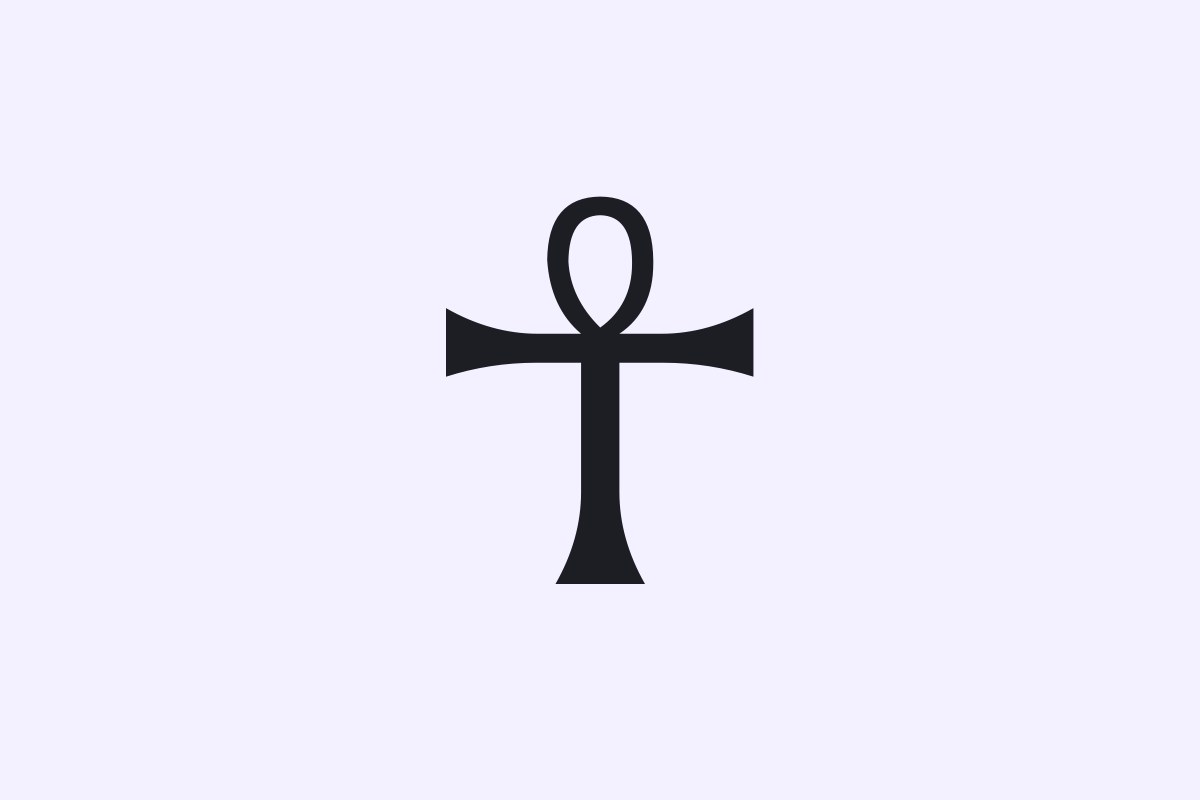
The ankh is an ancient Egyptian sign meaning life. Ankh meaning begins with that documented use in Egyptian writing, rather than with modern guesses about the shape. The same looped sign also appears as an object held by gods and as a small amulet worn or carried by people.
Its outline is easy to recognize: a closed loop sits above a horizontal crossbar and a long vertical stem. Modern readers often call it a looped cross, but it belonged to Egyptian visual culture long before Christianity. Its later appearance in Egyptian Christian art is a separate chapter in its history.
What does the ankh mean?
The core meaning is life. The Metropolitan Museum of Art describes a cowroid, a small cowrie-shaped seal-amulet, whose base carries the full spelling of the Egyptian word meaning “to live” or “life.” That is unusually useful evidence: the interpretation comes from a readable inscription, not simply from an object's resemblance to something familiar.
When an ankh appears in religious imagery, life is understood within Egyptian beliefs about gods, kingship, death, and continued existence. “Eternal life” can be an appropriate explanation in some religious contexts, but it should not replace the basic word life in every inscription. An exact translation depends on the surrounding signs and scene.
Nor does every use carry a hidden code. A small ankh within an inscription may function as writing, while a large ankh held by a deity works as an emblem within a picture. Egyptian artists could combine writing and imagery in the same object. Asking which role the sign plays is more productive than assigning every example one elaborate spiritual message.
How to recognize the symbol
Look for the loop, crossbar, and stem together. The loop is usually oval or teardrop-shaped; proportions vary with material, date, and the available surface. A delicate carved sign on a scarab need not look exactly like a large faience pendant. Wear, breakage, and the angle of a photograph can also change its appearance.
The sign differs from a djed pillar, whose stacked crosspieces relate to stability, and from the Eye of Horus, a different protective emblem. These signs could occur together without becoming interchangeable. See our guide to Egyptian symbols for their wider setting.
The familiar modern character ☥ is a convenient typographic representation. It is not a complete record of the range of Egyptian handwritten and carved forms. A computer font standardizes the outline so that the character can be displayed and copied consistently.
What was the ankh originally shaped like?
The meaning of the sign is much more secure than the identity of the physical object, if any, behind its original outline. Popular explanations compare it to a sandal strap, a mirror, or combined male and female forms. A visual resemblance alone does not settle the question.
It is reasonable to distinguish two questions: what Egyptians used the sign to mean, and why its earliest designers chose that shape. Readable texts answer the first much more confidently than modern speculation answers the second. This entry therefore does not present one proposed shape-origin as established fact.
The same caution applies to claims that every part represents a particular cosmic element. Unless an explanation can be tied to a dated Egyptian source or a defensible scholarly interpretation, it is better described as a later reading. A meaningful modern interpretation does not have to be disguised as an ancient teaching.
Ankhs on amulets and everyday objects
Museum collections preserve ankhs in several forms. The Met records a quartz-and-gold amulet with ankhs from the Middle Kingdom, dated about 1981–1640 BCE, and a later faience ankh amulet dated about 1300–1080 BCE. These objects show that the sign circulated in portable material forms as well as on monumental surfaces.
Materials matter. Faience is a manufactured glazed material, not a gemstone; a gold setting and a molded faience sign involved different techniques and resources. Calling all such objects “ankh necklaces” can hide their original form and use. An object's suspension hole, setting, archaeological context, and museum description provide better clues.
A seal-amulet also had more than one possible function. Its engraved base could leave an impression, while its signs could express a wish or protection understood by its users. The cowroid with the word for life is an example of the overlap between practical object, writing surface, and amuletic meaning.
The ankh in Egyptian Christian art
The Cleveland Museum of Art's Hanging with Christian Images, dated to the 500s, provides a specific later example. Its museum description identifies an ankh between two birds, together with Christograms and other Christian imagery. Here the sign participates in a Christian expression of life and redemption.
This does not mean the ankh was secretly Christian in pharaonic Egypt. It demonstrates adaptation: an established Egyptian sign could be used in a new religious setting. The surrounding images make that later setting legible. Our Christian symbols guide explains related motifs, including the Chi Rho.
“Coptic cross” is sometimes used loosely for any looped cross. For precision, identify the actual object and date, rather than treating all Egyptian Christian crosses as one unchanged design. Religious art develops within communities, and similar outlines can carry different histories.
What the ankh means today
Today people may wear an ankh to express connection with Egyptian history, African heritage, religious commitments, or the general idea of life. A wearer's intention cannot be read from the pendant alone. Modern uses add to the symbol's history without replacing its Egyptian linguistic meaning.
For a caption, “Egyptian sign for life” is a reliable short description. For a historical object, add the collection's date, material, and context. Avoid promises that an ankh heals illness, channels measurable energy, or guarantees protection. Those are not conclusions established by a museum artifact or its inscription.
The strongest way to understand an ankh is to move between the small sign and its setting: what the text says, who holds it, what it is made from, and where it was found. The outline is familiar; the evidence gives it depth.
In the museum
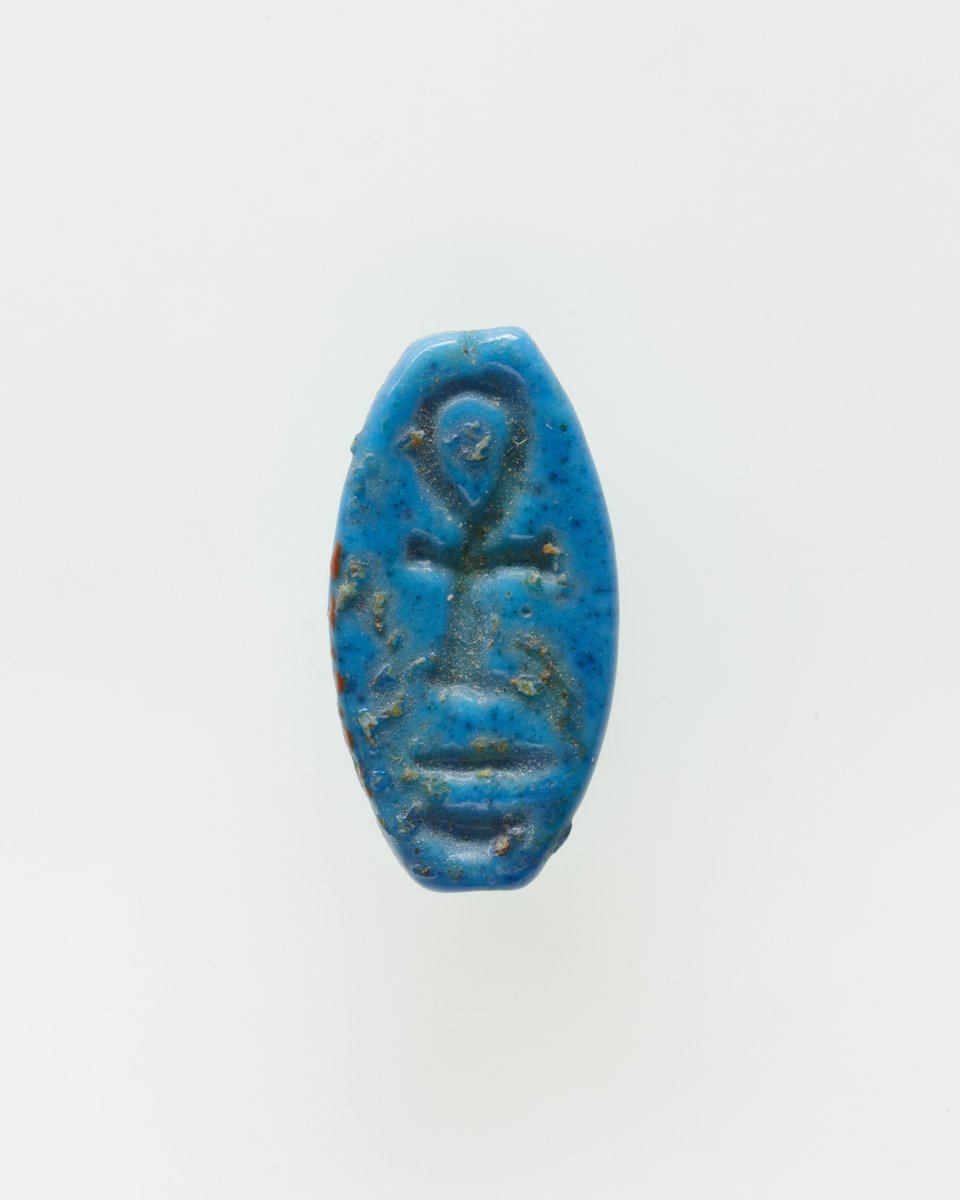
Base of a cowrie-shaped seal-amulet inscribed with an ankh and the full spelling of the word for life.
ca. 1491–1473 BCE · Egyptian · The Metropolitan Museum of Art · 36.3.22 · CC0
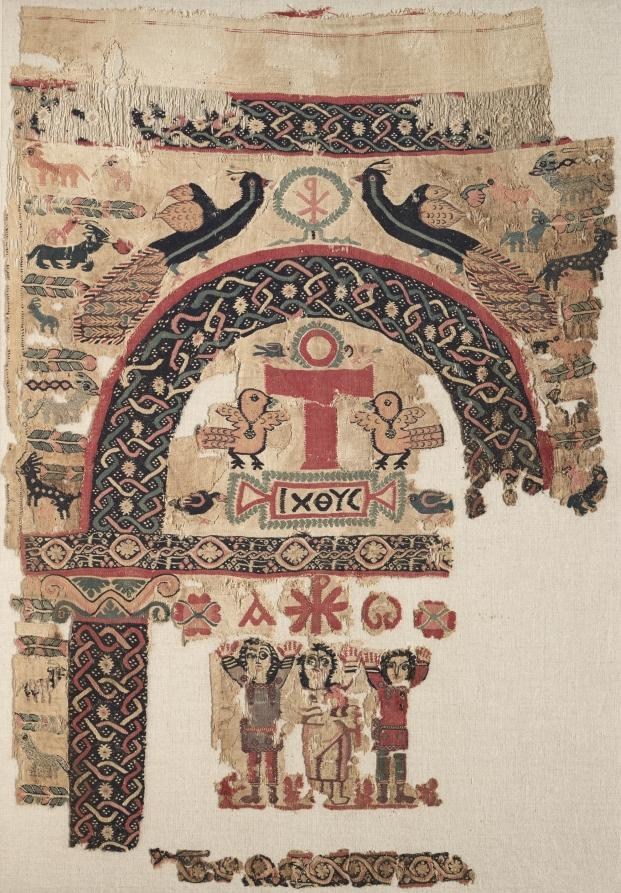
An ankh framed by two birds appears beneath the arch on this Egyptian Christian textile, alongside Christograms.
500s · Egypt, Byzantine period · Cleveland Museum of Art · 1982.73 · CC0
Frequently asked questions
Does the ankh mean life or eternal life?
Its basic Egyptian meaning is life. Religious scenes and funerary objects can give that meaning an afterlife or enduring-life context.
Is the ankh a Christian cross?
It began as an Egyptian sign before Christianity. Some later Egyptian Christian objects adapted its life symbolism.
Can I copy the ankh character?
Yes: ☥ is Unicode U+2625, named ANKH. Its appearance depends on the font.