Religion
Eye of Horus Meaning and the Restored Wedjat Eye
The restored eye of Horus expresses soundness and protection. Dated Egyptian amulets show the symbol in material form.
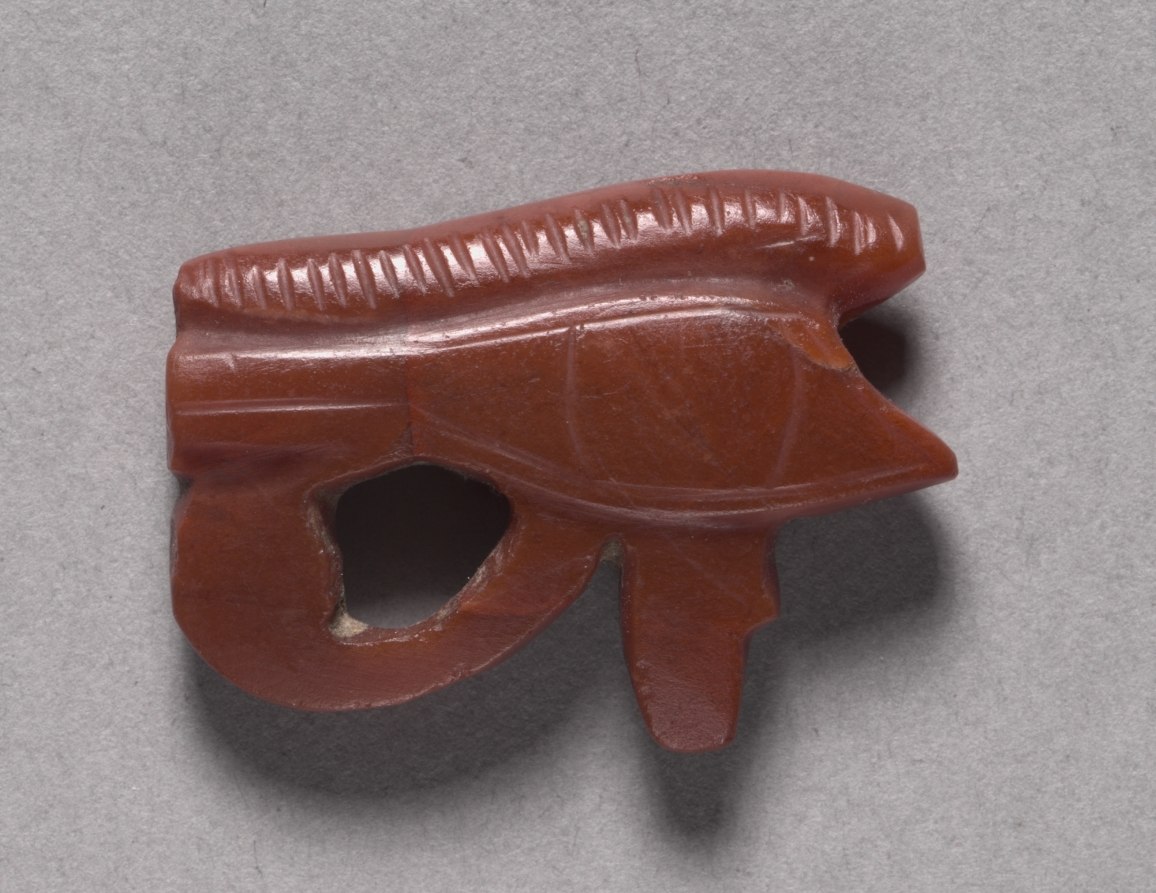
The Eye of Horus is an ancient Egyptian symbol of restoration, soundness, and protection. Often called the wedjat eye, it represents the god Horus's injured eye made whole again. Its meaning comes from Egyptian religion and funerary practice, not from a universal code shared by every eye-shaped symbol.
Ancient people used eye amulets in life and in burial. Museum examples preserve the symbol as a small physical object, not just as an outline in a modern chart. Their materials, dates, and forms show how a religious idea could be made wearable and placed with the dead.
What does the Eye of Horus mean?
The Metropolitan Museum of Art explains the Egyptian name wedjat as “the one that is sound (again).” The eye's recovery made it a fitting emblem of restored completeness. Protection and renewal follow from that story: the amulet invokes a divine example of injury being overcome.
These are descriptions of ancient beliefs. They do not mean a modern pendant has proven medical effects or can prevent an injury. A reference entry can explain why Egyptians valued an amulet without endorsing its efficacy as a health treatment. The difference matters especially when modern marketing turns historical associations into promises.
For a wider view of the visual language around it, see our Egyptian symbols guide. The wedjat belongs alongside other distinct signs, such as the ankh and djed. They could share an amuletic setting without having the same literal meaning.
The story behind the restored eye
In the account summarized by the Met, Horus's eye was injured or stolen in conflict with Seth and restored by Thoth. Egyptian religious narratives have variations, so it is wiser to identify the source of a particular version than to present every detail as part of one fixed script.
The crucial connection for the amulet is the restoration. An eye that has become sound again offers a compact image of recovered wholeness. That explains the symbol more precisely than simply saying it stands for “power.” Many Egyptian images concern power, but the recovered eye has its own story and vocabulary.
Horus was closely associated with the falcon. The wedjat combines a recognizable human eye with stylized markings associated with a falcon's eye. The form is not a naturalistic portrait of an ordinary human eye, and its distinctive additions are a useful clue when identifying museum objects.
How to recognize the wedjat
Look for a long eyebrow above the eye, an extended outer corner, and markings below. Those elements distinguish the familiar wedjat from a plain eye outline. Surviving examples vary in proportion, material, and detail, so there is no single modern vector drawing against which every ancient example must match.
Small amulets had to work in three dimensions and sometimes had openings for suspension. A flat graphic may simplify details that an object preserves. When identifying an item, use the museum's catalog description together with the photograph rather than guessing from a silhouette alone.
Orientation by itself is not a safe way to settle every identity question. Online charts often make absolute rules from whether an eye faces left or right. Religious context, inscriptions, associated imagery, and the catalog attribution provide firmer evidence than a rule detached from the object.
Eye of Horus versus Eye of Ra
The names are related to Egyptian divine-eye traditions, but they are not a license to treat Horus and Ra as the same god. The name “Eye of Horus” emphasizes the restored eye of Horus. When a museum identifies an object as a wedjat-eye amulet, retain that identification rather than automatically relabeling it an Eye of Ra.
Modern jewelry listings are less consistent. A product title may combine both names to reach more searches. That does not establish an ancient equivalence for the particular object. A careful caption identifies what can be supported and leaves uncertain details uncertain.
The Eye of Providence is another different image, associated with later religious and civic contexts. Resemblance between eyes is not evidence that one directly descends from the other. Dates and intermediate evidence are needed to make that historical argument.
Real Eye of Horus amulets in the museum
The Cleveland Museum of Art catalogs the examples reproduced here as Eye of Horus amulets. Its object 1914.762 is dated 1540–1296 BCE; objects 1914.757 and 1914.756 are dated 945–715 BCE. These are the catalog's dates for individual objects, not proposed dates for the invention of the symbol.
Having objects from different periods makes an important point: the wedjat was not a one-time decorative idea. Its recognizable structure was used across long stretches of Egyptian history. At the same time, three selected examples cannot stand for every local practice or every person who used the image.
The museum photographs are CC0, with collection records linked below. Their catalog numbers distinguish similar-looking amulets and let readers return to the evidence. A photograph without a number is much harder to check, especially when images are repeatedly reposted with new claims attached.
What about the eye and Egyptian fractions?
Popular diagrams divide the eye into parts and assign a fraction, sense, or bodily function to each. Such diagrams should not be mistaken for a complete explanation of every surviving amulet. The museum sources cited here establish the restored eye and its protective associations; they do not establish a universal six-senses key for these objects.
This entry therefore does not label the brow, pupil, and lower markings with numerical or medical claims. If you encounter a detailed chart, ask for a specific Egyptian text or a scholarly argument supporting it. A neat visual arrangement can be memorable while still extending beyond what the evidence on a museum label shows.
Using the name accurately today
Wedjat, udjat, and similar spellings reflect different ways of rendering an Egyptian word in modern alphabets. “Eye of Horus” is the clearest familiar English label. In a school assignment or image caption, “wedjat-eye amulet, ancient Egypt” is useful when the object record supports it.
A modern drawing can introduce the symbol, but an actual dated amulet offers something more: material evidence of use. Keep that distinction when sharing images, and avoid presenting a contemporary pendant as a newly discovered ancient object. The strongest account combines the myth, the word's meaning, and traceable artifacts without promising supernatural benefits to the reader.
In the museum
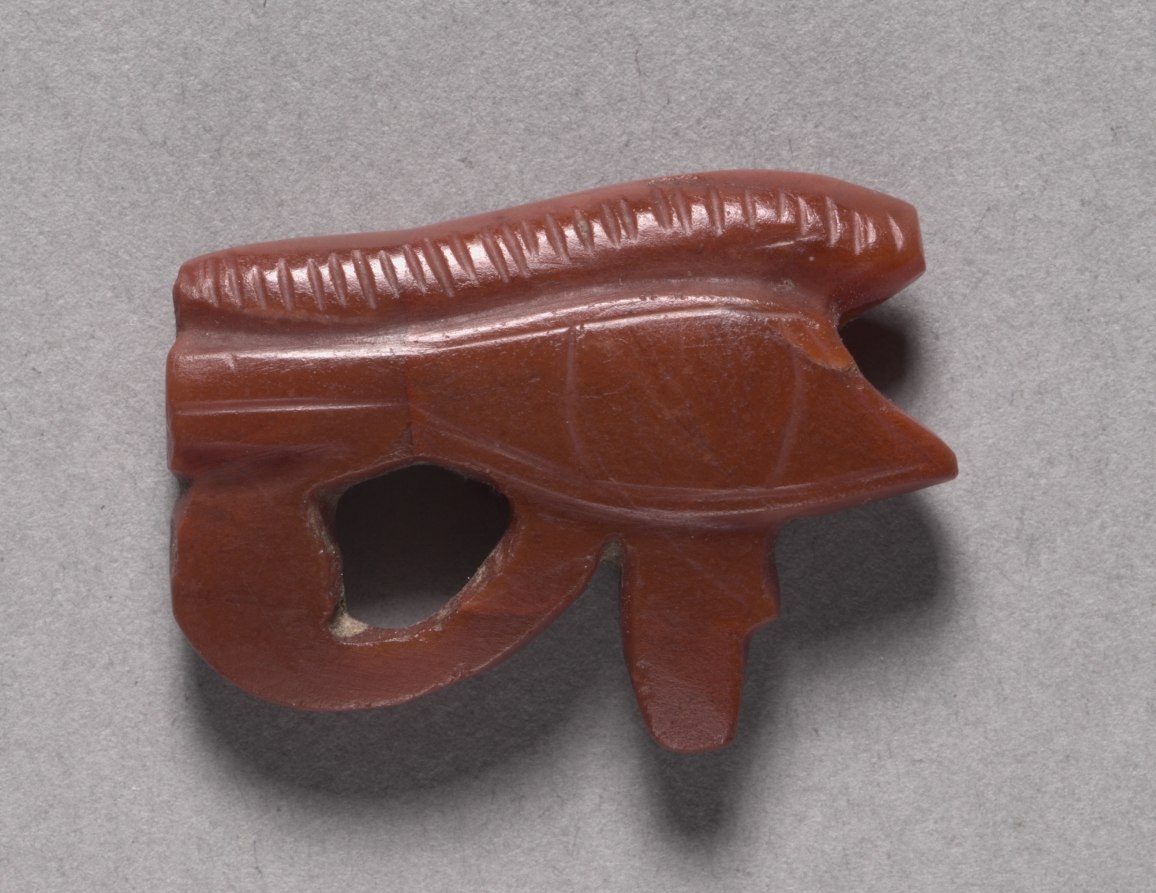
The museum catalogs this object as an Eye of Horus amulet; 1540–1296 BCE.
1540–1296 BCE · Egypt, New Kingdom (1540–1069 BCE), Dynasty 18 · The Cleveland Museum of Art · 1914.762 · CC0
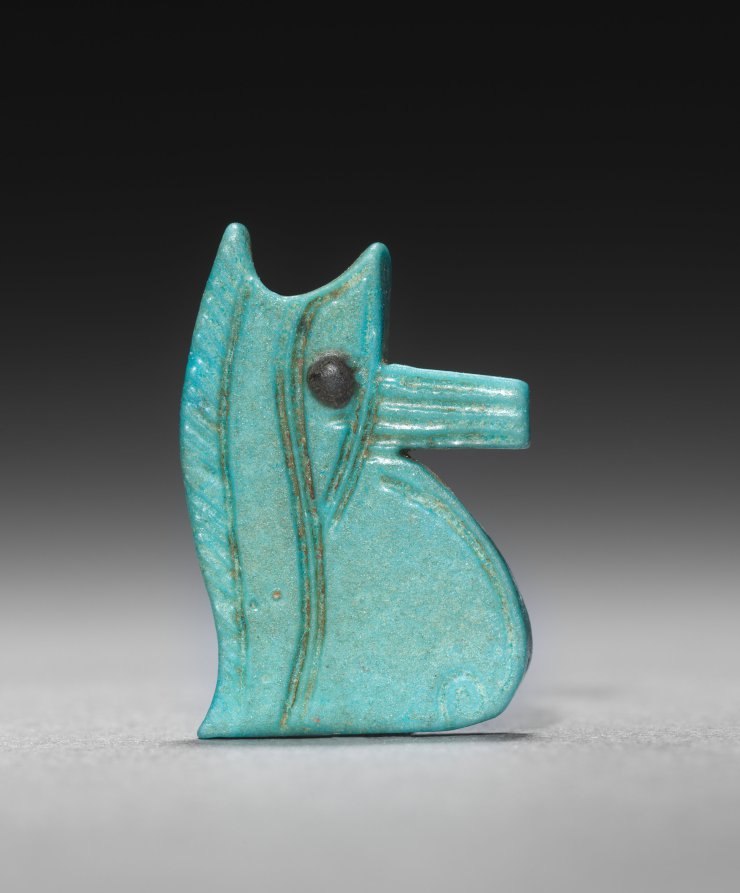
The museum catalogs this object as an Eye of Horus amulet; 945–715 BCE.
945–715 BCE · Egypt, Third Intermediate (1069–715 BCE), Dynasties 22–25 · The Cleveland Museum of Art · 1914.757 · CC0
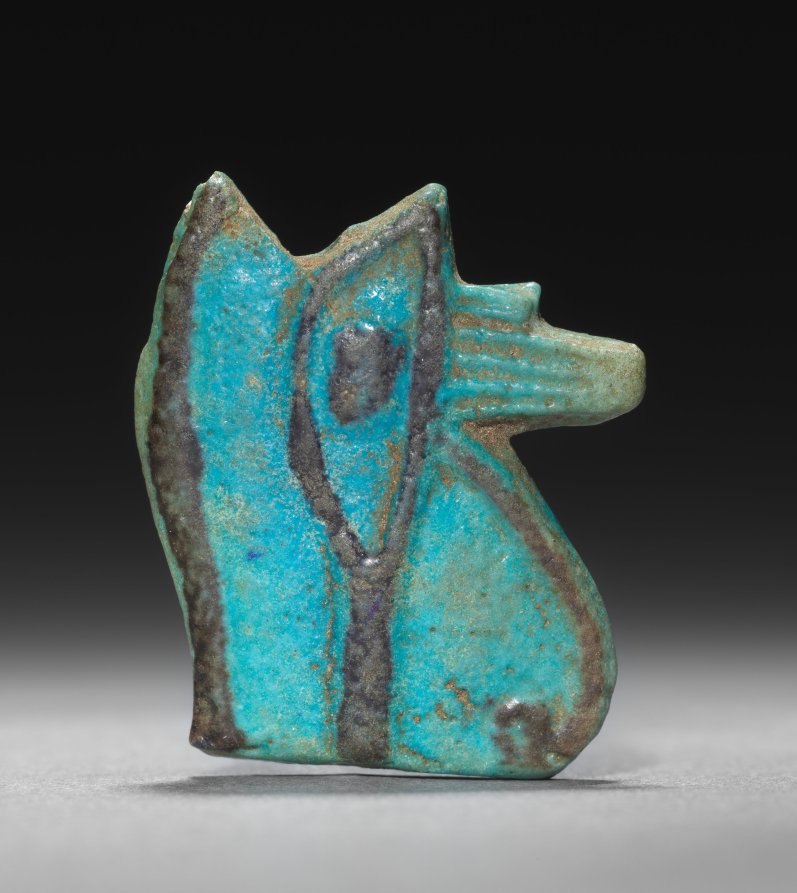
The museum catalogs this object as an Eye of Horus amulet; 945–715 BCE.
945–715 BCE · Egypt, Third Intermediate (1069–715 BCE), Dynasties 22–25 · The Cleveland Museum of Art · 1914.756 · CC0
Frequently asked questions
What does the Eye of Horus symbolize?
The restored wedjat eye symbolizes soundness, restoration, and protection in ancient Egyptian belief.
What is a wedjat eye?
Wedjat is an Egyptian name for the restored eye of Horus. The Met translates it as “the one that is sound (again).”
Does wearing the Eye of Horus have medical benefits?
Ancient amulets expressed religious beliefs about protection and restoration. Those beliefs are not evidence that a modern pendant can treat illness or prevent injury.