Cultures
Egyptian Symbols and Their Meanings
Life, protection, kingship, and renewal explained through Egyptian signs, dated artifacts, and the differences between writing and symbolism.
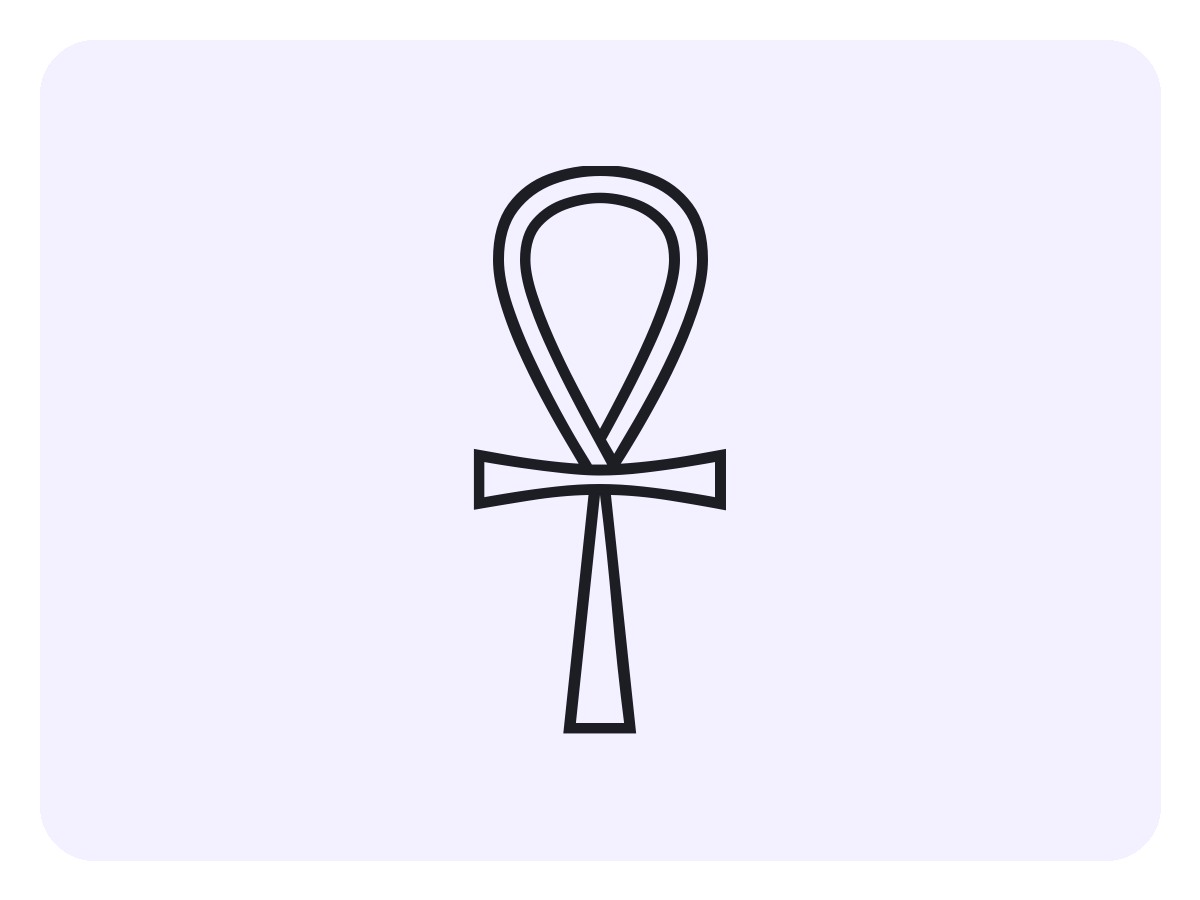
Life or living; a sign and emblem of divinely given life.
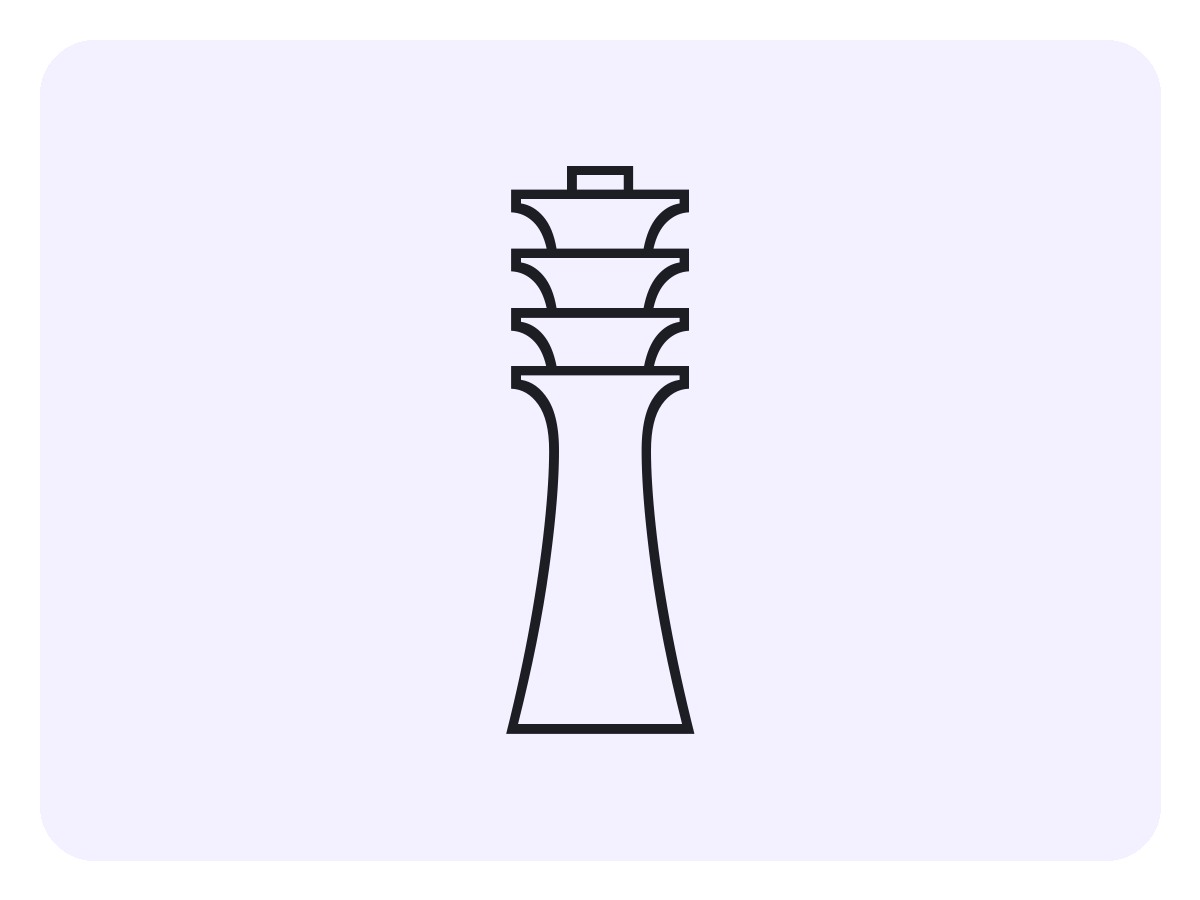 Djed
Stability and permanence, with later Osirian associations.
Original illustration · Symbolism.co editors; original code-rendered illustration using Noto Sans Egyptian Hieroglyphs (SIL OFL 1.1) · CC0-1.0 · Source record · License
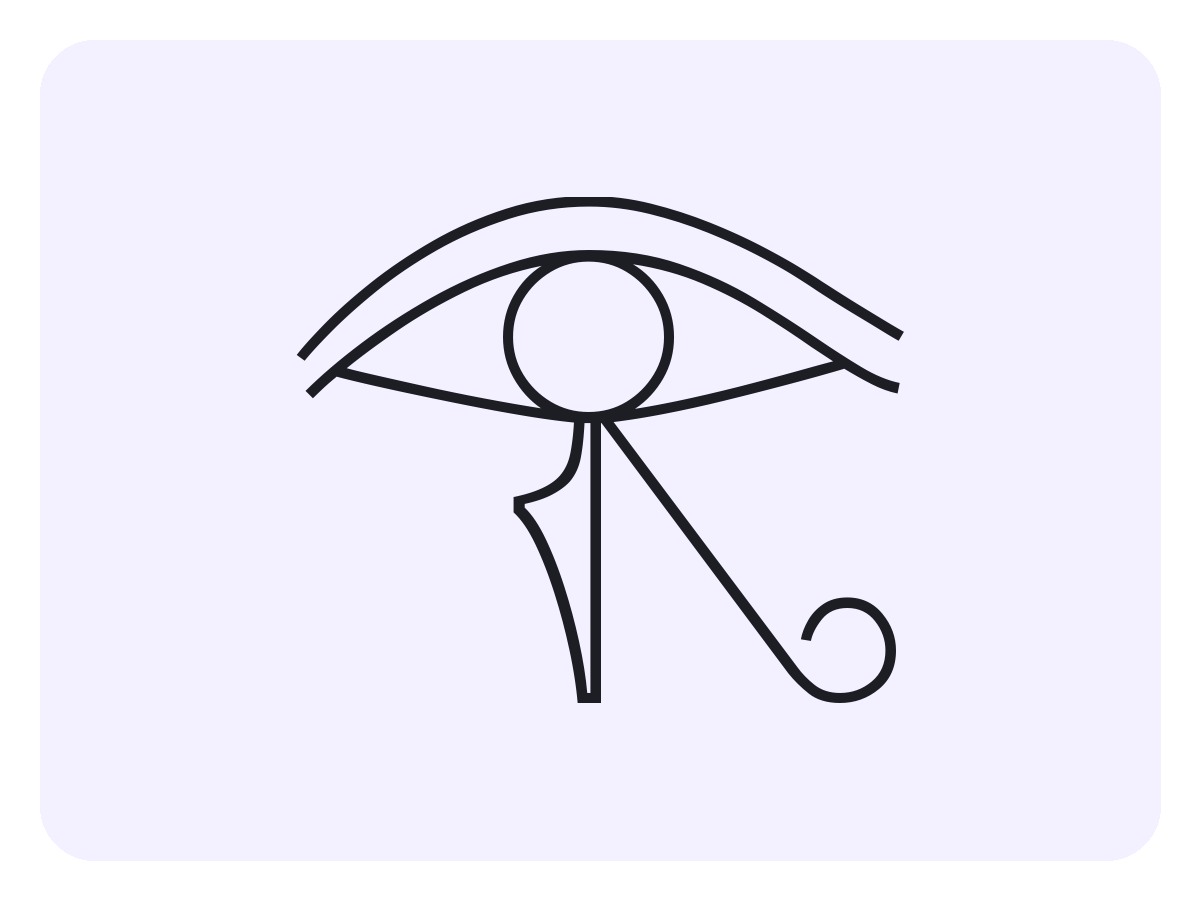 Eye of Horus
Restoration, soundness, and protection in Egyptian belief.
Original illustration · Symbolism.co editors; original code-rendered illustration using Noto Sans Egyptian Hieroglyphs (SIL OFL 1.1) · CC0-1.0 · Source record · License
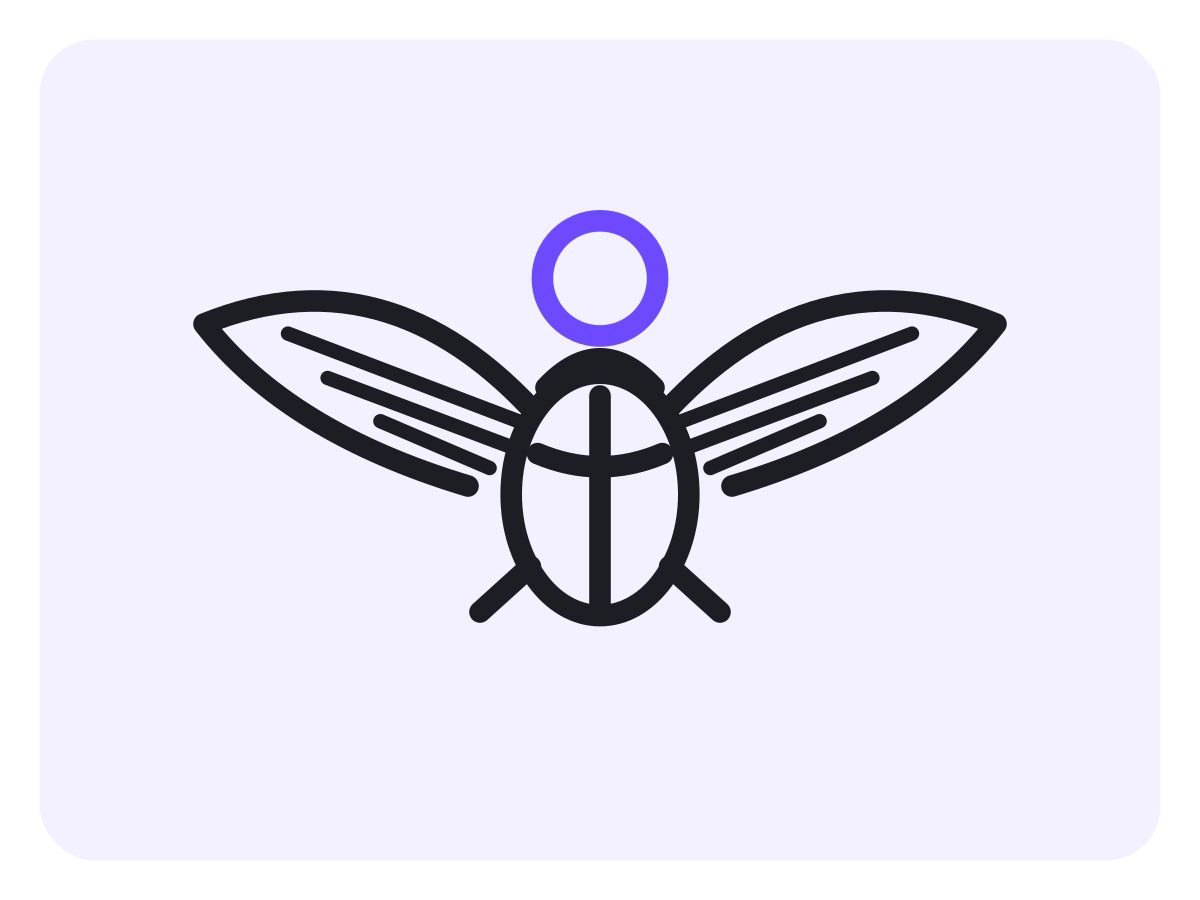 Scarab
Solar renewal and rebirth.
Original illustration · Symbolism.co editors; original code-rendered illustration · CC0-1.0 · Source record · License
 Feather of Maat
Right order and justice.
Original illustration · Symbolism.co editors; original code-rendered illustration using Noto Sans Egyptian Hieroglyphs (SIL OFL 1.1) · CC0-1.0 · Source record · License
Egyptian symbols communicated ideas about life, protection, kingship, divine power, and renewal. The ankh means life; the djed pillar expresses stability or permanence; the wedjat eye concerns restoration and protection. These familiar signs belonged to a much larger visual and written language, used on temple walls, royal equipment, jewelry, and objects made for burial.
There was no single timeless list of Egyptian symbols and their meanings. Ancient Egyptian history spans many centuries, and a sign's role depends on its date, material, inscription, and setting. A protective amulet and the same shape in a written sentence need related but different explanations. Start with those distinctions rather than treating every object as a message about modern spirituality.
Ancient Egyptian symbols at a glance
| Symbol | Common meaning or association | How to recognize it |
|---|---|---|
| Ankh | Life; to live | A loop above a crossbar and stem. |
| Djed | Stability, permanence; later strongly linked with Osiris | A pillar with stacked horizontal bars. |
| Wedjat eye | Wholeness, restoration, protection | A stylized eye with characteristic marks beneath it. |
| Scarab | Solar renewal and rebirth | A beetle, sometimes with spread wings. |
| Uraeus | Royal and divine protection | An upright cobra, often on a royal brow. |
| Feather of Maat | Right order and justice | An ostrich feather, or a feather worn by the goddess. |
| Papyrus | Lower Egypt; flourishing life | A tall stem with a spreading head. |
The ankh: the Egyptian sign for life
The ankh is both a hieroglyph and an emblem. As a written sign, it can express “life,” “alive,” or “to live.” In art, a god may carry an ankh or present it toward a king's nose, giving visual form to life as a divine gift. Its looped outline makes it easy to recognize even when carved at a small scale.
The Metropolitan Museum's wooden Model ankh, dated about 1981–1802 BCE, anchors that reading in an actual Middle Kingdom object. An even earlier libation dish combines an ankh with the raised arms of the ka sign. The Met explains that this combination can be read as a phrase concerning life and spirit, or as a personal name.
What physical object inspired the ankh's original shape is less certain than its meaning. Popular explanations involving a sandal strap, a knot, or the union of sexes should not be presented as equally established facts. Oxford's Griffith Institute discusses a loop-like origin while questioning the often-repeated sandal-strap identification. We can read the sign's word value without solving that older design question.
The djed pillar: stability and Osiris
The djed pillar is recognizable by a tall shaft topped with several projecting horizontal bars. Its central association is stability or permanence. Over time it became closely connected with Osiris and was interpreted as his backbone, bringing ideas of enduring life and restoration into its funerary use.
It is misleading to say the shape was simply invented as a picture of a spine. The Met's discussion distinguishes the sign's early history from its later Osirian interpretation. Its original physical model is not securely settled. The Egyptian object and the religious explanation developed over time rather than appearing as a fully fixed dictionary entry.
Cleveland's faience Djed-Pillar, dated 664–525 BCE, offers a clear example. The stacked bars are visible, not reconstructed from a modern diagram. As with other amulets, the form was intended to do more than decorate: within Egyptian belief, it helped make a desired condition available to its owner.
The Eye of Horus, or wedjat eye
The Eye of Horus is commonly called the wedjat, referring to an eye made whole or sound. Its imagery draws on the damaged and restored eye of Horus, and Egyptian amulets used it for protection and well-being. “Protection” here describes the intention of ancient users, not a claim that an image has a measurable protective power today.
The design combines a human-looking eye and eyebrow with distinctive markings below and beside it. Those additions matter: an ordinary painted eye is not necessarily a wedjat. Cleveland's Wedjat-Eye Ring, dated 1350–1296 BCE, shows the outline translated into a wearable object, making the connection between sign and personal adornment concrete.
Modern charts often reduce the Eye of Horus to a complete system of fractions. Others label any left eye “Horus” and any right eye “Ra.” Neither shortcut is a reliable way to identify an unfamiliar object. The Eye of Ra belongs to solar and divine-power traditions with overlapping imagery. An inscription, deity, or museum identification is better evidence than direction alone.
Scarab beetles and the renewal of the sun
Scarab imagery is associated with the sun's renewal and the god Khepri. The beetle's behavior helped make it an effective image of transformation and recurring life. Egyptian artists used the form for small amulets and seals, while winged scarabs could appear in funerary ensembles.
A scarab's underside deserves attention. It may carry a name, a title, a decorative pattern, or a combination of signs. The Met's Scarab Inscribed with Hieroglyphs, about 1640–1550 BCE, includes ankh and djed signs. Another example combines wedjat eyes, an ankh, and a djed. A single object can therefore bring several favorable associations together instead of expressing just one “scarab meaning.”
Not every scarab was a heart scarab. That is a more specific funerary type, and the size, text, and archaeological context matter. Calling every beetle-shaped stone a heart scarab erases useful differences between objects used for sealing, personal ornament, royal commemoration, and burial.
Egyptian god symbols: crowns, animals, and attributes
The upright cobra called a uraeus is a powerful emblem of royalty and protection. The Met identifies the cobra with the goddess Wadjet and explains its placement on the royal brow. It could also be worn by royal women and certain gods. A snake carved elsewhere on an object needs its own reading; not every serpent is a royal uraeus.
Horus is frequently represented as a falcon or a falcon-headed figure, while Thoth appears as an ibis, an ibis-headed figure, or a baboon. These forms do not imply that a deity had only one appearance. The Met's educational guide emphasizes that Egyptian gods could share animal attributes and take multiple forms. A solar disk, crown, inscription, or companion figure can help make an identification more precise.
The was scepter, with its long staff and distinctive top and forked base, is associated with power or dominion. Crook and flail are familiar attributes of royal and Osirian imagery. These are related to authority, but they are not interchangeable emblems. Looking at the whole figure prevents a staff, headdress, or animal head from becoming a misleading standalone label.
The feather of Maat and the weighing of the heart
Maat concerns right order, truth, and justice, and is also personified as a goddess. The ostrich feather is her recognizable attribute. In judgment imagery, a heart is weighed against the feather, connecting individual conduct with the maintenance of a properly ordered world.
The feather is not simply an Egyptian version of a modern “good vibes” icon. Its meaning belongs to a moral and cosmic framework. The Met's inlay depicting Thoth with a Maat feather, dated 360–343 BCE, pairs the scribe god with the emblem of justice. This is a useful reminder that symbols gain meaning through their relationships with figures and neighboring signs.
Lotus, papyrus, and images of the two lands
Plants were not a decorative afterthought in Egyptian art. Papyrus was closely tied to the marsh landscape of the Nile Delta and served as a heraldic plant of Lower Egypt. Its associations with freshness and flourishing also made it suitable for amulets. The Met links the papyrus-shaped hieroglyph with the word wadj, meaning fresh, flourishing, and green.
The plant conventionally called the Egyptian lotus is a water lily. Its opening and closing, and its place in solar imagery, supported associations with renewal. When comparing it with the lotus in other religious traditions, keep the plant and culture straight: Egyptian water-lily imagery should not simply inherit Buddhist or Hindu explanations.
Royal crowns also express geography and rule. The white crown is associated with Upper Egypt and the red crown with Lower Egypt; their combination signifies united kingship. “Upper” and “Lower” refer to the Nile's course, not to north being at the top of a modern map. Upper Egypt lies to the south, upstream.
Are hieroglyphs an alphabet of mystical symbols?
Hieroglyphs are part of a writing system, not merely a collection of sacred pictures. A sign can represent a sound, a word, or a category that clarifies meaning. The same recognizable image may participate in writing and also function as an emblem on an object. Its role has to be read in context.
That is why a row of birds, eyes, and seated figures cannot be translated by replacing each picture with one English concept. Names, grammar, and writing conventions matter. For a broader explanation of the difference between a symbol and its interpretation, see our definition of symbolism.
Reading real Egyptian objects rather than modern charts
The two Cleveland objects shown here were made centuries apart. The New Kingdom wedjat ring turns an eye into a personal ornament; the later djed uses a pillar form to express permanence. Together they show both continuity and difference. Their dates identify particular surviving works, not the moment either symbol was first invented.
When you encounter an unfamiliar Egyptian sign, record what you can actually see: its outline, material, neighboring figures, and any inscription. Then consult the museum's object record or a scholarly source. Ask whether an explanation describes ancient belief, later reinterpretation, or modern jewelry marketing. An ankh pendant can have personal meaning today without making every claim made about it a fact about ancient Egypt.
Finally, avoid turning the entire civilization into one religion without change. Local cults, royal patronage, funerary practices, and artistic conventions all shaped the evidence. A concise meaning such as “life” or “stability” is a useful doorway, but the dated object is what makes the explanation historically specific.
In the museum
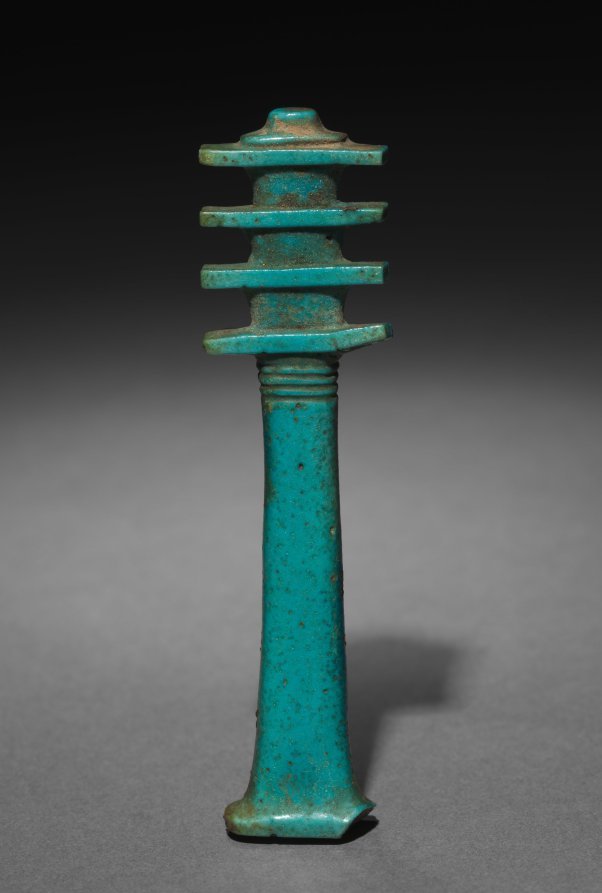
Faience Djed-Pillar with four horizontal projections, 664–525 BCE; Egypt, Dynasty 26 or later; Cleveland Museum of Art, 1914.735.
664–525 BCE · Egypt, Late period (715–332 BCE), Dynasty 26 or later · Cleveland Museum of Art · 1914.735 · CC0
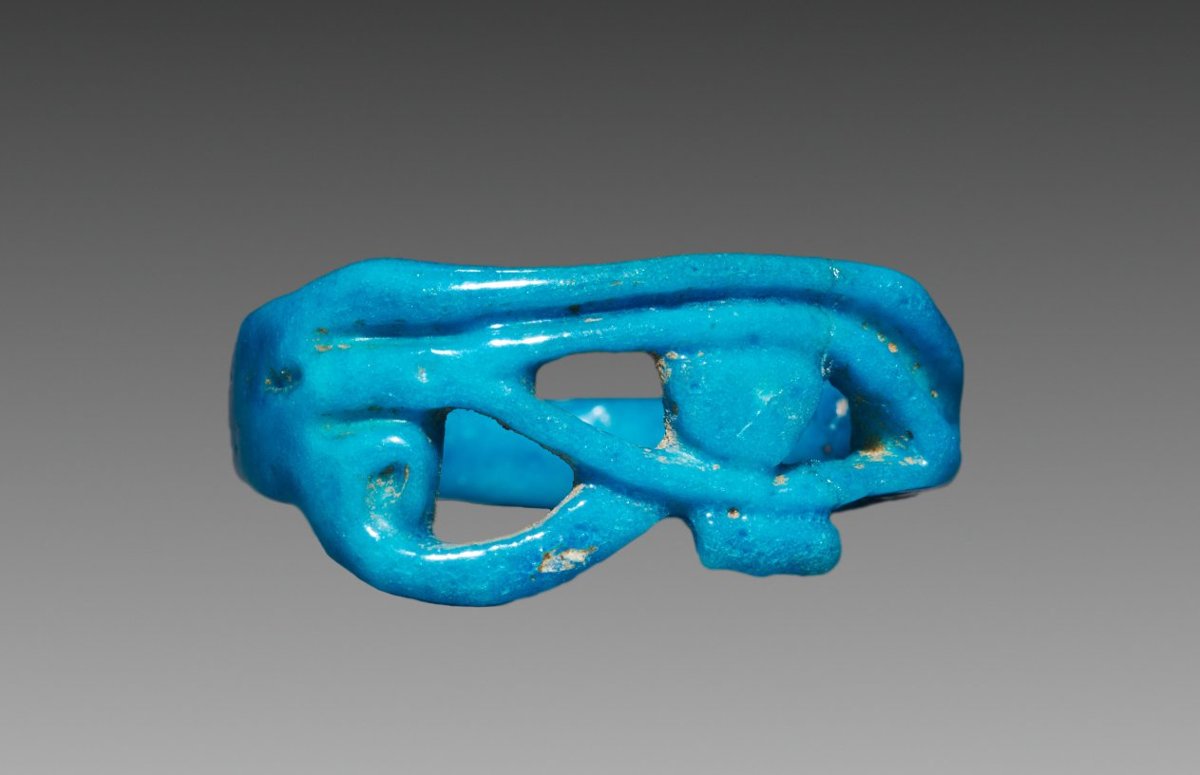
Faience Wedjat-Eye Ring showing the eye outline and markings below it, 1350–1296 BCE; Egypt, Dynasty 18; Cleveland Museum of Art, 1916.655.
1350–1296 BCE · Egypt, New Kingdom (1540–1069 BCE), Dynasty 18 · Cleveland Museum of Art · 1916.655 · CC0
Frequently asked questions
What are the main Egyptian symbols?
Among the most recognizable are the ankh, djed pillar, wedjat eye, scarab, uraeus cobra, and feather of Maat. Their meanings depend on the object and its historical setting.
What is the Egyptian symbol for life?
The ankh is the best-known Egyptian sign for life. It was used in writing for life or living and also as an emblem carried or offered by deities.
What is the difference between the Eye of Horus and Eye of Ra?
The wedjat or Eye of Horus is associated with restoration and protection. The Eye of Ra belongs to solar divine-power traditions. Their imagery can overlap; left-versus-right orientation alone is not a dependable identification method.
What does the djed pillar mean?
The djed signifies stability or permanence. It later became closely associated with Osiris and was understood as his backbone, especially in funerary contexts.
Are Egyptian symbols the same as hieroglyphs?
Some symbols are also hieroglyphic signs, but the categories are not identical. Hieroglyphs are elements of a writing system; an emblem or amulet may use a recognizable sign outside a written sentence.
Sources & further reading
- The Metropolitan Museum of Art: Ancient Egyptian Amulets
- The Metropolitan Museum of Art: The Art of Ancient Egypt, educator guide
- The Metropolitan Museum of Art: Model ankh
- The Metropolitan Museum of Art: Libation Dish Depicting Ka-Arms Presenting an Ankh-Sign
- Griffith Institute, University of Oxford: The ankh symbol
- The Metropolitan Museum of Art: Djed Pillar Amulet
- The Metropolitan Museum of Art: Scarab Inscribed with Hieroglyphs
- The Metropolitan Museum of Art: Scarab with wedjat eyes, ankh, and djed
- The Metropolitan Museum of Art: Scarab with Wedjat Eyes and the restored eye
- The Metropolitan Museum of Art: Heart Scarab
- The Metropolitan Museum of Art: Figure of Osiris and symbols of kingship
- The Metropolitan Museum of Art: Uraeus
- The Metropolitan Museum of Art: Inlay depicting Thoth as the ibis with a Maat feather
- The Metropolitan Museum of Art: Papyrus in Ancient Egypt
- Cleveland Museum of Art: Djed-Pillar
- Cleveland Museum of Art: Wedjat-Eye Ring