Cultures
Chinese Symbols and Their Meanings
Chinese characters are writing; dragons, bats and flowers are images. Both can carry meaning, but they are read in different ways.
Fú: blessing or good fortune, also evoked through bat imagery.
Shòu: long life, often used in celebratory art.
A joined joy character especially associated with weddings.
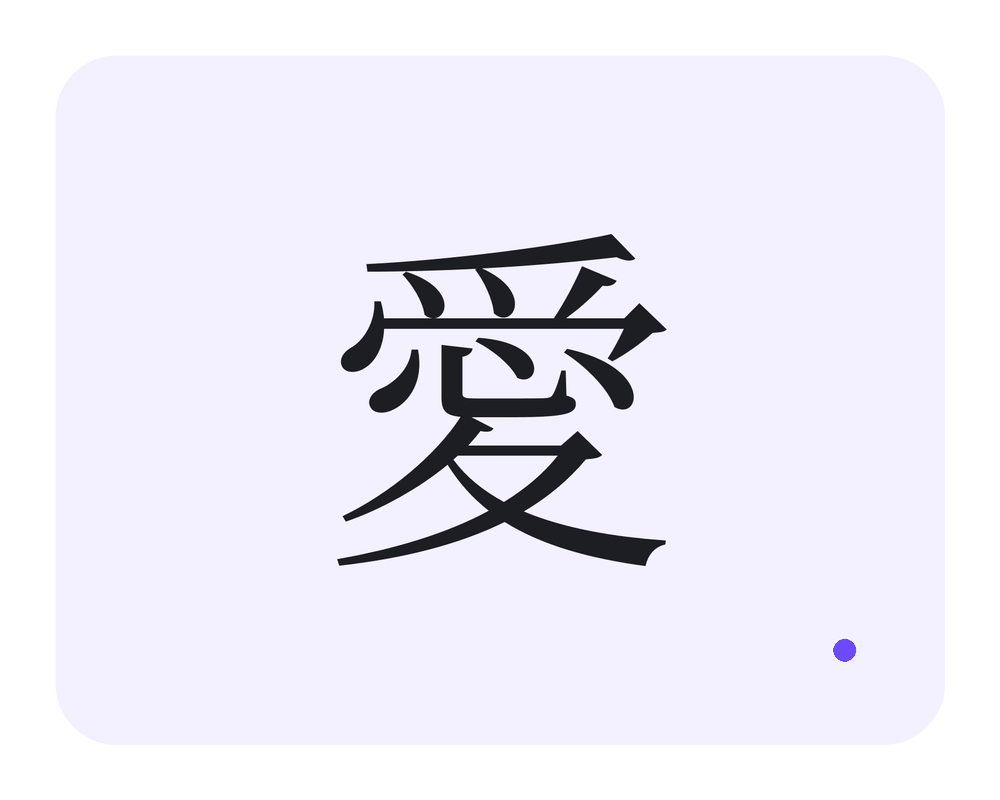
Ài: love or affection; simplified form 爱.
Jiā: meanings depend on the word and sentence.
Complementary, interacting aspects, not good versus evil.
Chinese symbols include written characters such as 福, meaning good fortune or blessing, and pictorial motifs such as dragons, bats and lotus flowers. These are related but distinct forms of communication. A character represents language; a bat on a robe can convey a wish through a spoken pun; a dragon on an imperial object may express authority.
There is no single chart that translates every Chinese image into one English word. Meaning depends on the object's date, region, language, setting and neighboring motifs. Start by separating ordinary vocabulary, auspicious wordplay, religious imagery and emblems of status. That distinction makes Chinese art easier to understand and prevents common translation mistakes.
Chinese characters and meanings at a glance
The readings below are in Standard Mandarin pinyin. They are not the pronunciations of every Chinese language. Traditional and simplified forms are shown where they differ; neither column is a phonetic spelling of the other.
| Traditional / simplified | Mandarin | Useful meaning | Important distinction |
|---|---|---|---|
| 福 | fú | Blessing, good fortune | Broader than winning a game of chance |
| 壽 / 寿 | shòu | Longevity | A wish for long life, not a health treatment |
| 喜 | xǐ | Joy, happiness | Not identical to every English use of happiness |
| 囍 | xǐ | Double happiness | A joined celebratory form especially associated with weddings |
| 愛 / 爱 | ài | Love, affection; to love | Its sense depends on the phrase |
| 家 | jiā | Home, family | A normal written character, not a secret family emblem |
| 信 | xìn | Trust, belief; also a letter or message | Not a universal one-character translation of religious faith |
| 龍 / 龙 | lóng | Dragon | The written word is different from a dragon image |
| 火 | huǒ | Fire | Literal and figurative uses vary by context |
Are Chinese characters pictures or symbols?
Chinese writing has pictorial elements in its history, but modern characters are not simply little drawings of abstract ideas. As Britannica explains, the writing system represents language. A character usually corresponds to a meaningful unit, and many words contain more than one character.
It is misleading to treat each character as a free-floating icon with a single English translation. A character can have several dictionary senses. A compound can mean something that cannot be obtained by translating each part mechanically. Sound-related components are also important to the writing system, even when an attractive online explanation notices only a visible shape.
For the same reason, “all Chinese symbols” is not a manageable list like an alphabet. A short chart can teach useful characters, but it cannot replace a dictionary or reading knowledge. If you are identifying an inscription, preserve its full sequence of characters and any surrounding text rather than extracting one attractive sign.
福: good fortune, blessing and visual wordplay
福 is one of the most useful starting points for Chinese auspicious imagery. It conveys a favorable condition or blessing, not just random luck. It can appear as an actual written character or be evoked indirectly by another image.
The best-known example is the bat. In Mandarin, 蝠, the character for bat, and 福, good fortune, share the pronunciation fú. The Metropolitan Museum of Art documents this sound connection in its discussion of Chinese dress and decorative art. An animal that may seem ominous in one visual tradition can therefore carry a positive wish in another.
Five bats can evoke the Five Blessings. The Met's description of a woman's ceremonial robe identifies these as longevity, health, wealth, virtue and a natural death. This is an example of a wish expressed by an object, not evidence that wearing the design produces those outcomes. Read such motifs as historical expressions of hope, celebration or status.
壽 and 囍: longevity and double happiness
壽, simplified 寿, is the character for longevity. Artists have varied its shape in calligraphy, textiles, porcelain and other media. A highly stylized version can be harder to recognize than the printed character, so an inscription may require comparison with the museum's identification rather than guesswork.
Longevity imagery also uses plants, animals and figures. The Met's essay on the subject shows how wishes for long life overlap with wealth, blessings and high rank. A scene can combine several of these aims. It is therefore better to read a whole arrangement than to isolate one motif and assume the rest are decorative filler.
喜 means joy or happiness. The joined double form 囍 is especially associated with marriage celebrations. On a Cleveland Museum of Art mirror dated around 1800, double happiness occupies the center while five bats circle it. The design brings written celebration and auspicious animal imagery together on an everyday object.
That mirror is useful evidence because the motifs are visible and the museum names them. We do not need to invent a secret origin story to explain why the combination is celebratory. A caption can identify the two joined joy forms, the surrounding bats, the Qing date and the object type, while leaving undocumented details of its original use open.
Love, family, faith and other requested translations
愛, simplified 爱, is read ài in Mandarin and can mean love or affection, or function as the verb “to love.” Taiwan's Ministry of Education dictionary records a range of emotional and verbal senses. It is a real word element, not a magical love sign. The phrase 我愛你, simplified 我爱你, means “I love you” in Mandarin; it is a sentence, not one character.
家 can refer to home or family, depending on context. 信 is often sold online as a “faith symbol,” but its range includes trust, belief and correspondence. These broad labels can be useful entry points, yet they do not guarantee a natural translation of an English slogan or a particular religious commitment.
Some popular English concepts normally need a multi-character word. 希望, xīwàng, is hope; 智慧, zhìhuì, is wisdom; 永遠, simplified 永远, yǒngyuǎn, expresses forever or always. A single sign cropped from one of these words may not convey the intended message on its own. “Life,” “serenity” and “spirit” similarly require a decision about which sense the English word has.
For permanent inscriptions, product names or personal dedications, dictionary labels are only a beginning. Choose the intended sentence and language first, then verify its wording, register and written form. A visually elegant character is not necessarily the correct translation.
The dragon: more than one meaning
The Chinese dragon is not simply the fire-breathing enemy familiar from some European stories. In Chinese art it can be connected with powerful natural forces, auspicious imagery and imperial authority. Which association matters most depends on the work. A court robe, a ceramic dish and an ink painting do not necessarily make the same statement.
The Met's catalog entry for a Ming jar with dragons and a longevity character explicitly identifies its five-clawed dragons as symbols of imperial power. That is a strong object-specific reading. It should not be turned into a rule that every dragon ever painted in China belonged exclusively to an emperor.
A celadon plate in Cleveland, dated to the fourteenth century and attributed to the Longquan region, shows a dragon in relief among clouds. Its surface makes the creature part of the vessel's design. The dated object is more useful than a generic online dragon drawing because it lets us ask about material, production and historical setting as well as symbolic associations.
Fish, lotus flowers and combined messages
Fish can participate in auspicious wordplay because 魚, simplified 鱼, yú, sounds like 餘, simplified 余, abundance or surplus. This is not a case of a fish “looking like wealth.” The relationship works through language, which helps explain why translating the picture without its spoken associations loses part of the meaning.
Lotus imagery can carry Buddhist associations with purity, as the flower rises above muddy water. It also appears in seasonal and auspicious settings. The Met's account of a Yuan-dynasty lotus-pond flask notes several associations rather than treating purity as the flower's only possible definition.
Combination is crucial. A lotus beside fish can participate in a larger wish for continuing abundance; the exact wording depends on the work and its interpretation. The Met's catalog entry for Tang Guang's Red lotus and fish explains such a New Year's message. An image may therefore function like a compact verbal arrangement, with motifs working together rather than as separate dictionary entries. Compare the different traditions discussed in lotus flower symbolism.
Yin and yang are not good versus evil
The familiar black-and-white yin-yang symbol expresses a relationship of complementary, interacting aspects. It is not a diagram in which white means moral goodness and black means moral wickedness. Reading it that way imports a contrast that distorts the concept.
Nor should it become a promise of spiritual healing. It belongs to philosophical and religious histories that require their own explanation. A simple introductory account can identify complementarity and changing relationships without reducing every aspect of Chinese thought to two colors or presenting a decorative pendant as medical advice.
How to identify a Chinese symbol on an object
- Separate writing from imagery. A character, a seal and an animal motif require different identification methods.
- Record the whole object. Nearby figures, repeated motifs, inscriptions and the object's purpose can change the reading.
- Find a dated comparison. Prefer a museum catalog or scholarly explanation over a modern merchandise label.
- Check the language. A pun explained in Mandarin should not be assumed to work identically in every Chinese language.
- Keep the claim proportional. “A wish for longevity” is not “a symbol that grants a longer life.”
Older searches sometimes use “Oriental symbols and their meanings.” More specific language is clearer: identify Chinese, Japanese or another tradition, then name the period or community when possible. Shared characters and circulating motifs connect these histories, but do not make them interchangeable. For the broader distinction between a visible sign and its associations, see the definition of symbolism.
In the museum
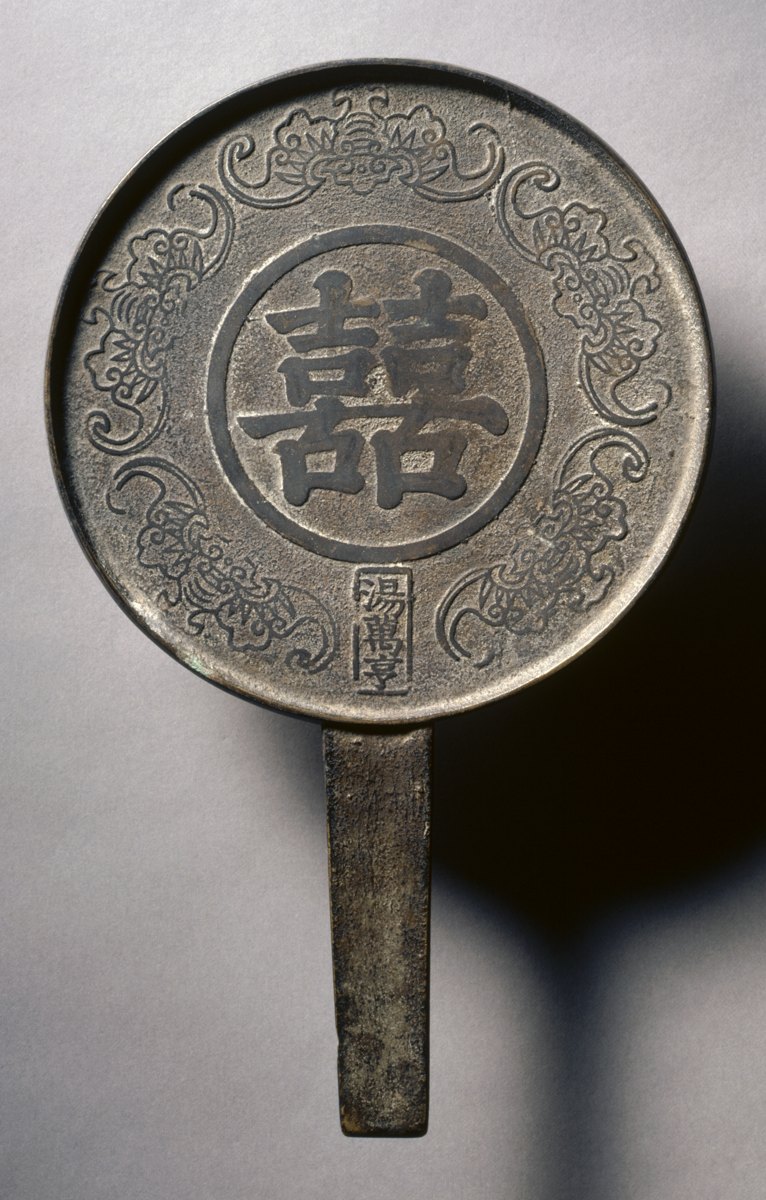
The joined double-happiness character is encircled by five bats, bringing writing and auspicious imagery together.
c. 1800 · China, Qing dynasty (1644–1911) · The Cleveland Museum of Art · 1995.401 · CC0
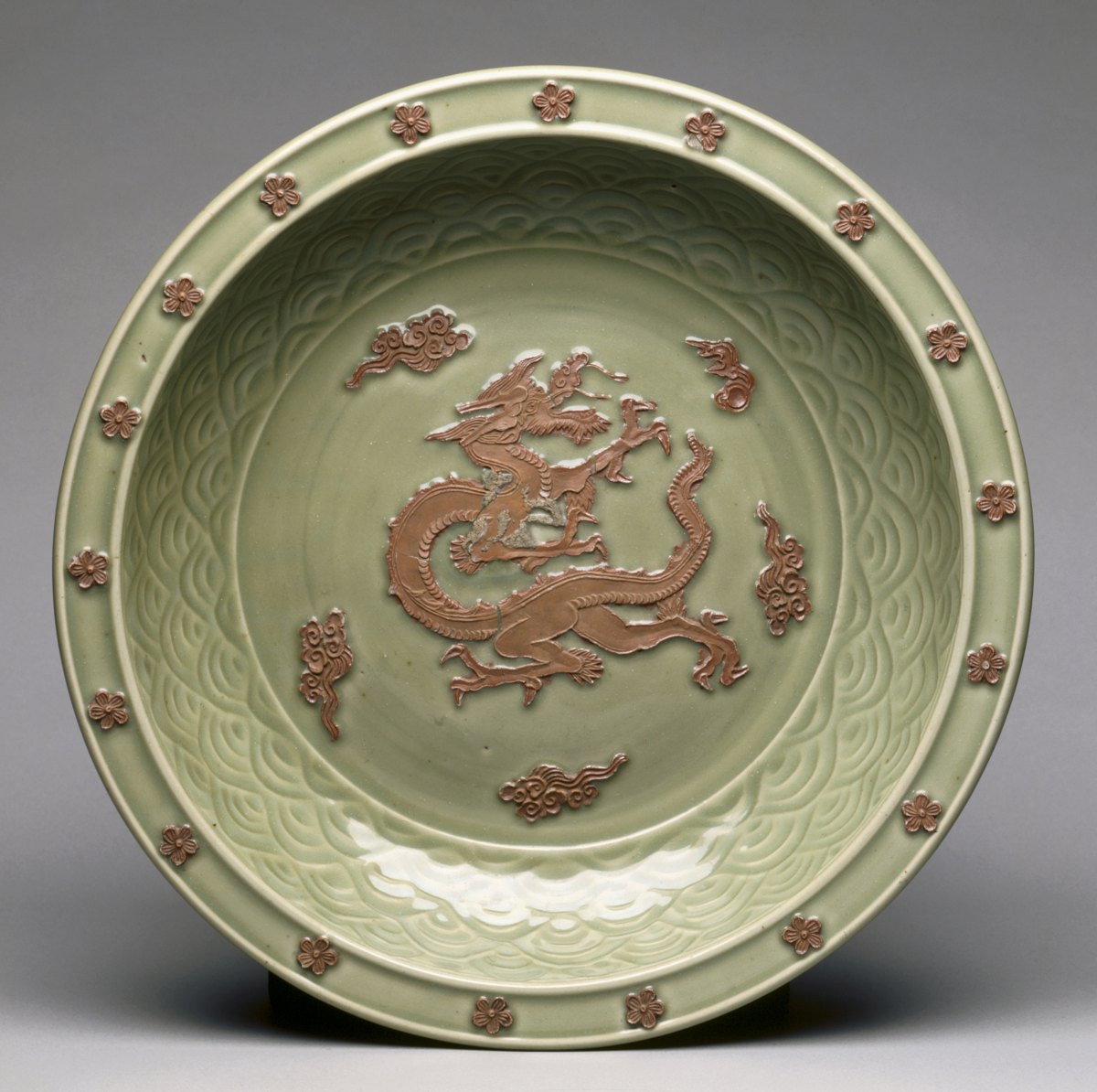
A dragon among clouds appears in relief on a celadon plate dated to the fourteenth century.
1300s · China, Zhejiang province, Longquan region, Yuan dynasty (1271–1368) · The Cleveland Museum of Art · 1961.92 · CC0
Frequently asked questions
What is the Chinese symbol for love?
愛 is the traditional character and 爱 the simplified form, read ài in Mandarin. It can mean love or affection or serve as a verb. A complete phrase may be needed for a particular message.
What Chinese symbol means good luck?
福, fú in Mandarin, is commonly translated as blessing or good fortune. It is broader than chance-based luck and also appears indirectly in bat imagery through a sound connection.
Why are bats positive symbols in Chinese art?
In Mandarin, the words for bat and good fortune share the pronunciation fú. Artists use that connection to convey auspicious wishes. Five bats can represent the Five Blessings.
Are Chinese and Japanese symbols the same?
No. Japanese kanji developed from Chinese characters, and the traditions share many forms, but pronunciations, vocabulary, written variants and cultural meanings can differ.
Is every Chinese character an ancient picture?
No. Chinese writing represents language. Characters have complex histories, and many include sound-related components. Modern characters cannot generally be decoded by treating each stroke as a picture.
Sources & further reading
- Britannica: Chinese writing
- Taiwan Ministry of Education: 愛
- MDBG Chinese-English dictionary
- The Met: Longevity in Chinese Art
- The Met: Woman's ceremonial robe and the Five Blessings
- The Met: Jar with dragon and stylized character for longevity
- The Met: Flask with Lotus Pond
- The Met: Tang Guang, Red lotus and fish
- Britannica: Yin and yang
- Cleveland Museum of Art: Double-happiness and five-bats mirror
- Cleveland Museum of Art: Plate with Relief Dragon among Clouds