Cultures
Japanese Symbols and Their Meanings
Understand the difference between Japanese writing, religious signs and visual motifs, with careful translations and examples from art.
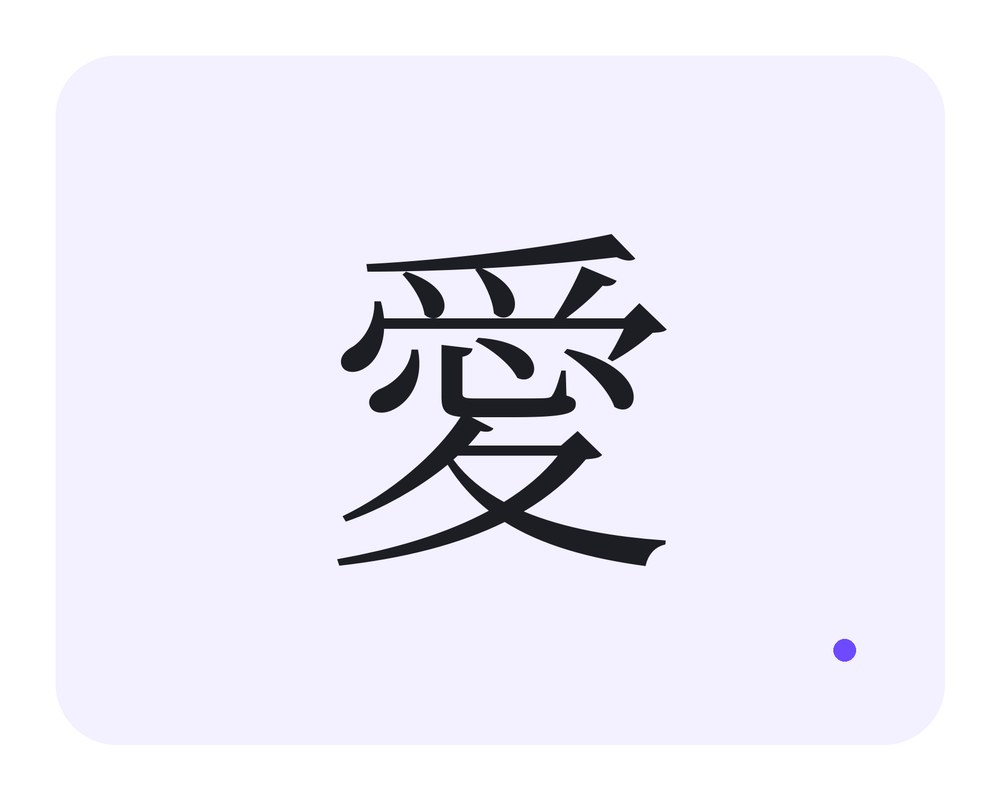
Ai: love or affection, with meaning shaped by the word and phrase.
Inochi as an independent word; other readings occur in compounds.
A versatile kanji used in words about life, growth and birth.
Yume: dream, with sense determined by context.
A shrine gateway marking a boundary with sacred space.
A brushed circle in Zen painting, not a single fixed verbal message.
Japanese symbols can mean written characters, religious signs, family emblems or recurring images in art. Kanji such as 愛, associated with love, are part of a writing system. A torii gate marks a shrine entrance; a crane or cherry blossom communicates through cultural associations rather than by spelling a word. Those distinctions matter when asking what a Japanese symbol means.
A useful guide must therefore do more than put English labels under attractive characters. It should explain how the writing works, where a motif appears, and when more than one interpretation is possible. The chart below is an introduction, not a list of all kanji or a substitute for translating a complete phrase.
Japanese symbols and kanji meanings chart
The readings are selected common readings or words, not an exhaustive pronunciation list. A reading attached to one vocabulary item should not be carried into every compound containing the same character.
| Character or word | Selected reading | Meaning | Context to remember |
|---|---|---|---|
| 愛 | ai | Love, affection | A written word element, not a universal emblem of romance |
| 命 | inochi | Life | Also has other senses and readings in compounds |
| 生 | sei; ikiru as 生きる | Life, birth; to live | A very flexible character, not one word with one reading |
| 夢 | yume | Dream | Meaning depends on the phrase and context |
| 勇 | yū | Courage, bravery | Occurs in words such as 勇気, yūki |
| 美 | bi | Beauty | Also appears in adjectives and names with other readings |
| 神 | kami | A deity or kami | Not always equivalent to the English singular “God” |
| 知恵 | chie | Wisdom, good sense | A two-character word, not a single kanji |
| Torii | torii | A shrine gateway | A religious architectural form, not a kanji character |
| Ensō | ensō | A brushed circle in Zen art | Its interpretation depends on practice, inscription and work |
Kanji, hiragana and katakana are different systems
Japanese writing commonly combines kanji with hiragana and katakana. Kanji developed from Chinese characters and contribute meaning as well as readings to words. Hiragana and katakana are phonetic scripts. They are not three interchangeable fonts for a single alphabet.
Hiragana commonly appears in grammatical endings and many ordinary words. Katakana often writes loanwords, foreign names and emphatic or specialized forms. These descriptions are useful starting points, not rules without exceptions. The Japan Foundation's learning materials introduce all three scripts as part of learning vocabulary and communication.
That makes “Japanese words symbols” an imprecise search phrase. A word may contain one kanji, several kanji, only kana, or a combination. The writing is language, not a collection of standalone pictures. To translate a symbol in Japanese, first establish whether it is actually a written character, a logo, a crest or a religious image.
Why one kanji can have several meanings and readings
Kanji often have readings derived from historical Chinese pronunciations and readings associated with Japanese vocabulary. The correct reading depends on the word. A list that gives one pronunciation beneath every character may be displaying only one part of its use.
生 demonstrates the problem particularly well. Kanjipedia, the reference provided by the Japan Kanji Aptitude Testing Foundation, records senses related to growing, birth, living, rawness and other uses. In 生きる, ikiru, the character works with the following hiragana to write “to live.” It should not be assumed to read ikiru whenever it appears alone or in another compound.
Likewise, a kanji can carry different senses in different words without being vague to a Japanese reader. English does something similar when one written form has several meanings. The solution is not to search for a secret meaning behind the shape; it is to identify the actual vocabulary item.
Japanese symbols for life: 命 and 生
People looking for Japanese symbols for life commonly encounter 命 and 生. They overlap, but they are not interchangeable. 命, read inochi as an independent word, refers to life. The same character also occurs in words connected with commands, naming and fate, with readings and meanings determined by those words.
生 has a wider visible range across vocabulary connected with birth, growth and living. A compound such as 生命, seimei, brings the two characters together in a word for life. Which form fits an English sentence depends on whether “life” means being alive, a person's lifetime, daily existence or something else.
A single-character chart cannot settle every choice. If the intended message is “enjoy life” or “a new life,” the translation requires grammar and idiom, not just the character used as a heading in an English guide. Kanjipedia's separate entries for 命 and 生 are more useful here than a design gallery that labels both simply “life.”
Love, dreams, courage and wisdom in Japanese
愛, read ai, is associated with love and affection. Its dictionary entry includes caring for, cherishing and liking, among other senses. It is not a promise that every English expression involving “love” should be translated with that character alone. Romantic attachment, affection for family and enthusiasm for an activity may call for different wording.
夢, yume, means dream. Its meaning in a phrase might concern sleep, imagination or aspiration. Treat “follow your dreams” as a sentence to translate rather than assuming that enlarging 夢 conveys every part of the English message.
勇 carries senses of bravery or courage and occurs in vocabulary such as 勇気, yūki. The character is meaningful, but a complete word may be more natural than an isolated sign in a particular setting. A decorative chart should make that difference clear instead of implying that every abstract English noun has a perfect one-character replacement.
For Japanese symbols for wisdom, 知恵, chie, is a useful ordinary word. It contains two characters. The fact that a design request asks for “one symbol” does not change the vocabulary. Religious or philosophical discussions may use other terms, so an English label like “wisdom” should never be treated as a universal translation across all contexts.
Religious words are not interchangeable icons
神 can be read kami and appears in Shinto vocabulary, but the English label “God” can be misleading if it suggests that every use refers to one monotheistic deity. Kanjipedia also records senses and compounds involving extraordinary power, mind and spirit. The full word matters.
The same caution applies to English words such as soul, spirit, honor or enlightenment. They do not each point to one universally correct Japanese character. A term in a Buddhist text, an everyday description and a poetic inscription may require different language, even when an English shop label treats them as the same idea.
It is more respectful and more accurate to name a tradition and a text than to describe a character as “the ancient Japanese spiritual symbol for” a broad feeling. Religious symbols can be living elements of worship and practice, not just interchangeable decorations.
The torii gate: entering sacred space
A torii gate is an architectural sign associated with Shinto shrines. Meiji Jingu and Jinja Honcho explain its function as marking the boundary between secular and sacred space. That is more specific than calling it a generic doorway to happiness or good luck.
A torii often has two upright pillars and horizontal elements, with variations in form and material. Not every torii is red. Its meaning comes from its place in shrine space and practice, not simply from its color or a silhouette used in a travel logo.
On a map, a stylized gate may identify a shrine. In a photograph, it can evoke a particular site or become a broader image of Japan. These are related uses, but the original architectural and religious context should remain visible in the explanation.
Ensō: a circle in Zen painting
The ensō is a brushed circle associated with Zen art. The Asian Art Museum describes it as a circle painted with a single brushstroke and explains several possible associations, including enlightenment, the cyclical nature of existence and Buddhist emptiness.
Those associations do not turn every circle into an ensō, nor does an incomplete circle always have one standardized meaning. The brushwork, inscription, maker and setting help shape the work. An individual painting can be both a physical act of making a mark and an object of religious or philosophical interpretation.
“Emptiness” here should not be confused with simple sadness or meaninglessness. It belongs to Buddhist thought. A short description can identify that connection without claiming to summarize all Zen teachings or presenting the image as a therapeutic device.
Cherry blossoms, cranes and longevity in Japanese art
Cherry blossoms mark spring and can evoke beauty's brevity. The Metropolitan Museum of Art's essay on seasonal imagery explains how seasonal references participate in both Shinto and Buddhist contexts. A blossom can signal a time of year while also inviting reflection on transience. It need not have only one of these functions.
Cranes commonly convey wishes for happiness and longevity. Japan's national tourism organization notes their appearance on bridal kimono, sake bottles and screens. That association does not mean that every picture of a crane is a wedding image; subject, medium and use still matter. Compare bird symbolism for other culturally specific readings.
A Muromachi-period bronze mirror in Cleveland shows a pair of cranes within a repeated chrysanthemum pattern. The visible motifs give a concrete example of birds and flowers sharing one design. The museum's catalog dates the object to 1392–1573, which is more precise than labeling it merely “an ancient Japanese mirror.”
Another Cleveland work, Toda Tadanaka's Symbols of Longevity: Deer under Peach and Pine, is dated 1801. The paired scrolls show deer beneath the named trees. Their title and imagery anchor an interpretation of longevity in a particular work, while also reminding us that motifs circulated between Chinese and Japanese artistic traditions. Shared subjects do not erase local histories. For comparison, see Chinese symbols and their meanings.
How to check a Japanese symbol before using it
- Identify the category. Is it writing, a religious sign, a family crest or an image from nature?
- Keep the entire word. Do not remove kana or half a compound because one character looks more appealing.
- Verify meaning and reading separately. A correct English gloss does not guarantee a correct pronunciation.
- Check written form. Shared Chinese and Japanese characters can have different standard forms; a font can also change visible details.
- Read the context. A museum caption, shrine explanation or dictionary entry is stronger evidence than a decorative label.
There is no compact list of “all kanji symbols” that can replace this process. Good reference material makes the limits clear, offers useful examples and directs you to the appropriate kind of evidence. For more on how language, images and context work together, see what symbolism is.
In the museum
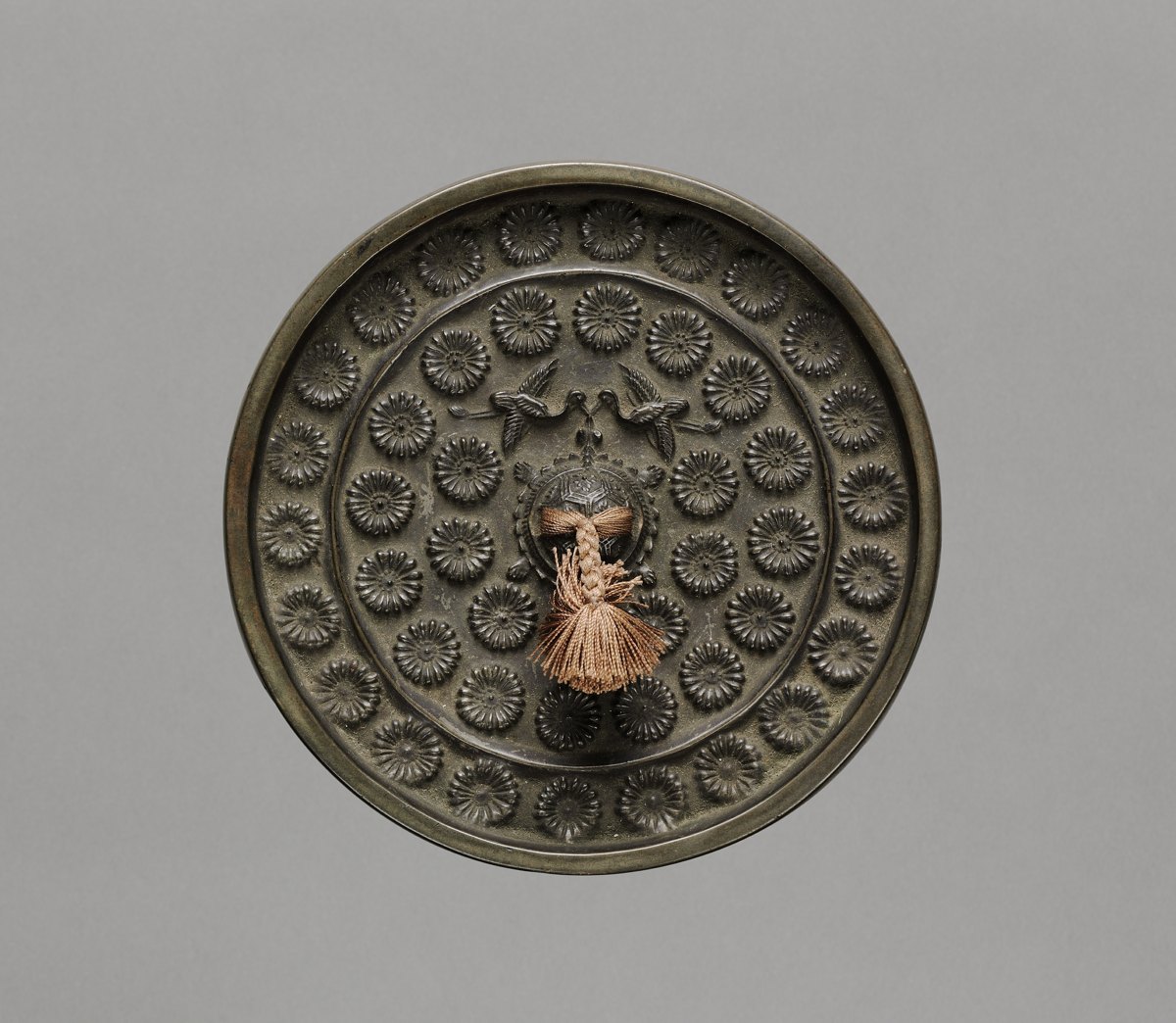
Two cranes appear among chrysanthemums on the back of a Muromachi-period bronze mirror.
1392–1573 · Japan, Muromachi period (1392–1573) · The Cleveland Museum of Art · 1917.652 · CC0
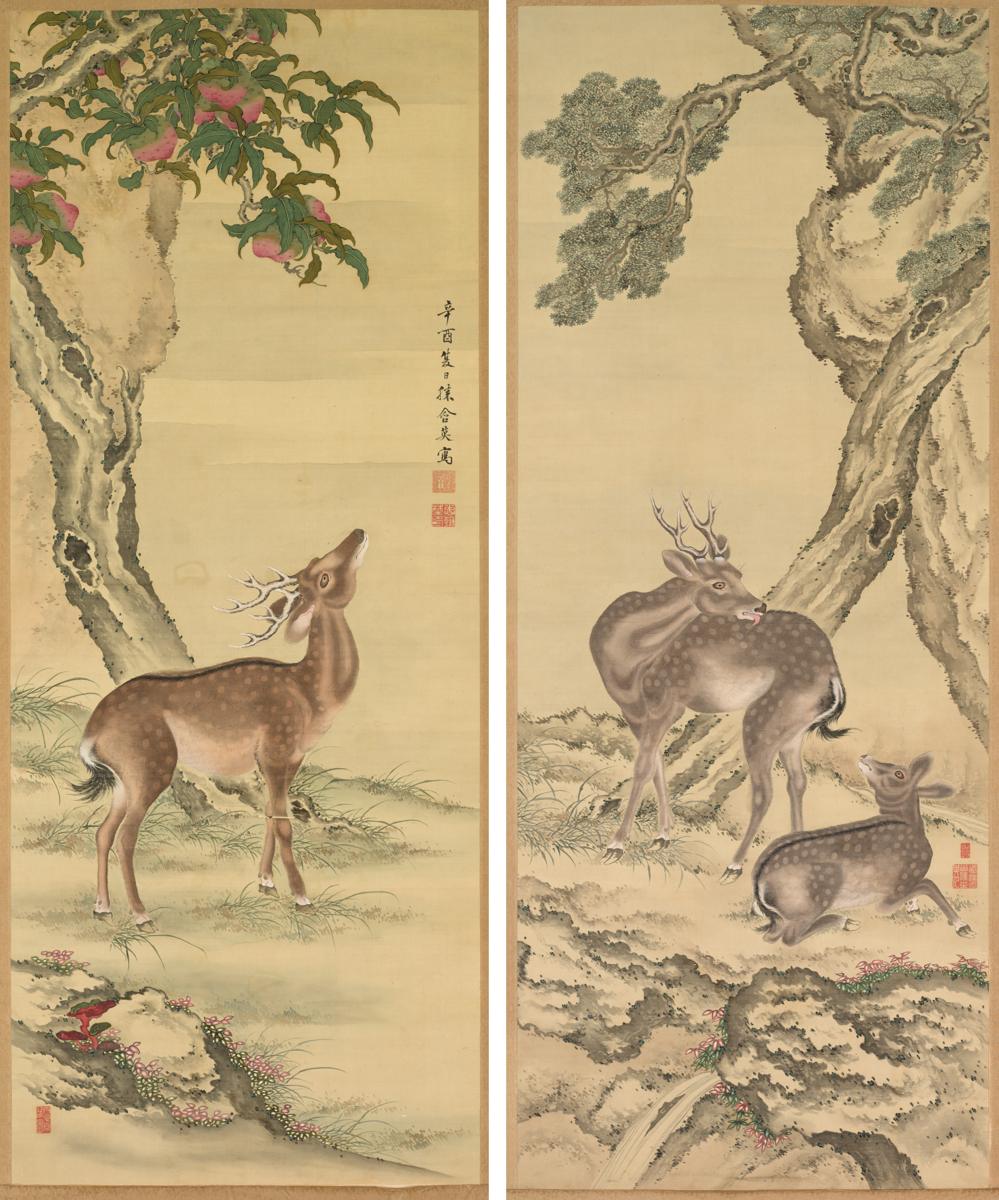
Toda Tadanaka, 1801. Deer, peach and pine combine in a documented longevity composition.
1801 · Japan, Edo period (1615–1868) · The Cleveland Museum of Art · 2015.86 · CC0
Frequently asked questions
What is the Japanese symbol for life?
命, read inochi as an independent word, can mean life. 生 also appears in many words about life, birth and growth. The correct choice depends on the intended word or sentence.
What is the Japanese symbol for wisdom?
知恵, read chie, is a useful ordinary word for wisdom or good sense. It has two characters. More specialized philosophical or religious meanings may require another term.
What is the Japanese symbol for love?
愛, read ai, is associated with love and affection. It is part of real vocabulary, and a complete English phrase may need more than that one character.
Are kanji the same as Chinese characters?
Kanji developed from Chinese characters, so many forms are shared. Japanese readings, vocabulary and some standard written forms differ. Knowing one language does not automatically provide the correct reading in the other.
Do Japanese symbols always have deep spiritual meanings?
No. Many are ordinary written characters or practical signs. Religious and philosophical meanings belong to specific traditions and contexts rather than to everything that looks visually striking.
Sources & further reading
- The Japan Foundation: Japanese study materials
- The Japan Foundation: Irodori resources
- Kanjipedia: 愛
- Kanjipedia: 命
- Kanjipedia: 生
- Kanjipedia: 夢
- Kanjipedia: 勇
- Kanjipedia: 神
- Kanjipedia: 恵, including 知恵
- Meiji Jingu: Precinct map and torii explanation
- Jinja Honcho: Shrine questions and answers
- Asian Art Museum: Ensō
- The Met: Seasonal Imagery in Japanese Art
- Japan National Tourism Organization: Bird-Watching in Japan
- Cleveland Museum of Art: Mirror with Pair of Cranes in Chrysanthemum Pattern
- Cleveland Museum of Art: Symbols of Longevity