Religion
Awen Meaning in Welsh and Modern Druidry
The Welsh word for inspiration and the three-ray emblem used in modern Druidry have related, but different, histories.
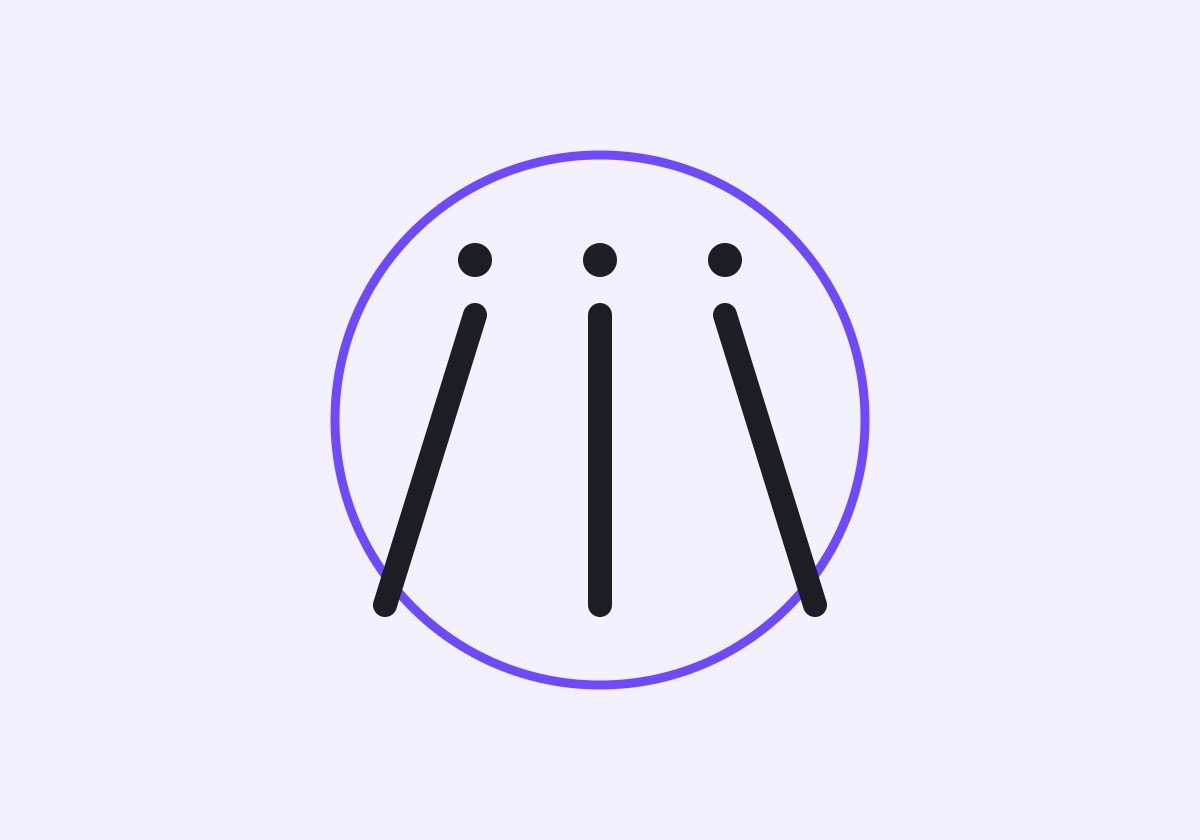
Awen means inspiration in Welsh. As a symbol, Awen usually appears as three rays spreading downward from three points, sometimes enclosed by circles. Its strongest documented setting is modern Druidry and the Welsh bardic revival, not a securely identified prehistoric Druid emblem.
That distinction does not make the sign meaningless. It places its meaning where evidence and living practitioners locate it: in creativity, poetic inspiration, and modern religious practice. The older word and the much later graphic emblem need separate histories.
What does Awen mean?
The Order of Bards, Ovates & Druids defines awen as inspiration, including a gift or blessing associated with the gods or with Ceridwen, patroness of bards. It is not simply a Welsh translation of “good luck.” Its emphasis is the arrival or cultivation of inspiration, especially in poetry and creative expression.
The British Druid Order describes Awen in spiritual terms and connects its threefold logo with the paths of Bard, Ovate, and Druid. That is a tradition's account of its own practice. It should not be flattened into a claim that all people who use the Welsh word share one theology or that all Druid organizations explain every line identically.
In ordinary discussion, “Awen meaning” can therefore refer to either a word or an emblem. If someone is asking about the three-ray design, answer with its modern Druid context. If the question concerns Welsh poetry, begin with inspiration and the literary tradition rather than assuming the logo is present.
How to recognize the three-ray symbol
The central ray is usually upright; the two outer rays angle outward toward the bottom. Three small dots or points may sit above them. One or more circles may surround the design. Exact spacing and the number of circles vary, so there is no reason to treat a particular commercial pendant as the authoritative version.
The British Druid Order calls its version three rays of light emanating from three points of light. Its explanation also shows why the dots are not incidental decoration in that particular design. They help present inspiration as something that flows or radiates. Other modern renderings may emphasize drops rather than points of light.
The illustration on this page presents the recognizable structure without reproducing any organization's exact logo. It is a modern diagram, not a photograph of an excavated object or a facsimile of an early manuscript. Keeping those categories separate matters when a simple image circulates without its original caption.
Iolo Morganwg and the Druid revival
The British Druid Order identifies the design underlying its logo with Iolo Morganwg, the eighteenth- and nineteenth-century Welsh poet and Druid revivalist. The Druid Network likewise places the emblem's development in the revival and discusses its appearance in nineteenth-century publications associated with Iolo's material.
This is a much firmer historical statement than calling the three rays an “ancient Celtic symbol.” The word Celtic covers many places, languages, and periods. A modern Welsh revival emblem does not become a prehistoric object merely because it draws on Welsh literary culture and an imagined relationship to earlier Druids.
Our Celtic symbols guide separates archaeological motifs, medieval Christian art, and later revival designs. Awen belongs in that conversation, but it should not be assigned the same date as an Iron Age object or a medieval high cross. Each requires its own evidence.
Ceridwen, Gwion, and poetic inspiration
Modern Druid discussions of Awen often return to the Welsh story of Ceridwen and her cauldron. In the account discussed by the Order of Bards, Ovates & Druids, three drops reach Gwion and bring extraordinary inspiration and knowledge. This story supplies a rich imaginative language for creativity and transformation.
A story's importance to present practice is different from proof that its characters invented a graphic symbol. The tale can help explain why three drops or points resonate with practitioners. It does not establish an archaeological date for the three-ray emblem. Literary history, religious interpretation, and the history of a drawn mark should inform one another without being treated as interchangeable.
When describing the story, it is also worth naming the Welsh setting rather than merging it with every tradition that uses a cauldron, a triple figure, or sacred poetry. Shared numbers and shapes can invite comparison, but comparison is not a substitute for a documented historical connection.
Do the rays mean mind, body, and spirit?
Some present-day explanations attach different sets of three ideas to the rays. The clearest approach is to name the person or organization making the interpretation. The British Druid Order's Bard, Ovate, and Druid explanation is one documented example. A personal interpretation can be meaningful without becoming a universal translation.
Avoid presenting lists such as “past, present, future” or “earth, sea, sky” as an established original key unless a source actually supports that attribution. Repeating an attractive three-part formula does not tell us when it entered use. The same care is needed with the triquetra, whose threefold shape has carried different meanings in different settings.
Is Awen the same as a Celtic knot?
No. The Awen emblem is a ray design; a Celtic knot uses interlacing strands. Both may appear in contemporary jewelry marketed as Celtic, but shop categories are not historical classifications. A three-ray emblem, an interlaced knot, and a ringed cross are not interchangeable simply because they are sold together.
For the same reason, Awen is not a rune. Describing it as a “Druid rune” confuses distinct systems and obscures its Welsh revival setting. Use a plain descriptive caption such as “modern Awen emblem with three rays and three points” when no more precise provenance is known.
Evidence, illustration, and respectful use
The Met and Cleveland open-access searches checked for this page did not yield a verified object bearing this modern Awen emblem. We have left the museum strip empty rather than substitute an unrelated Celtic artifact. The historical discussion instead relies on named Druid organizations and their accounts of the emblem.
In a caption, classroom, or design brief, identify Awen as a Welsh word for inspiration and the emblem as associated with modern Druidry. That short description is more useful and more respectful than a claim of anonymous “ancient wisdom.” It acknowledges both a living tradition and the limits of what the surviving evidence establishes.
Frequently asked questions
What does Awen mean in Welsh?
Awen means inspiration, especially poetic or creative inspiration.
Is the Awen symbol ancient?
The familiar three-ray emblem belongs to the Welsh Druid revival and is associated with Iolo Morganwg. The older word does not establish prehistoric use of the emblem.
What do the three rays mean?
Interpretations vary. The British Druid Order connects its version with the paths of Bard, Ovate, and Druid; this is not a universal key for every use.