Cultures
Celtic Knot Meaning and the History of Interlace
Celtic knotwork is a family of interlaced designs, not a single ancient code. Its history joins early medieval Christian art with powerful modern meanings.
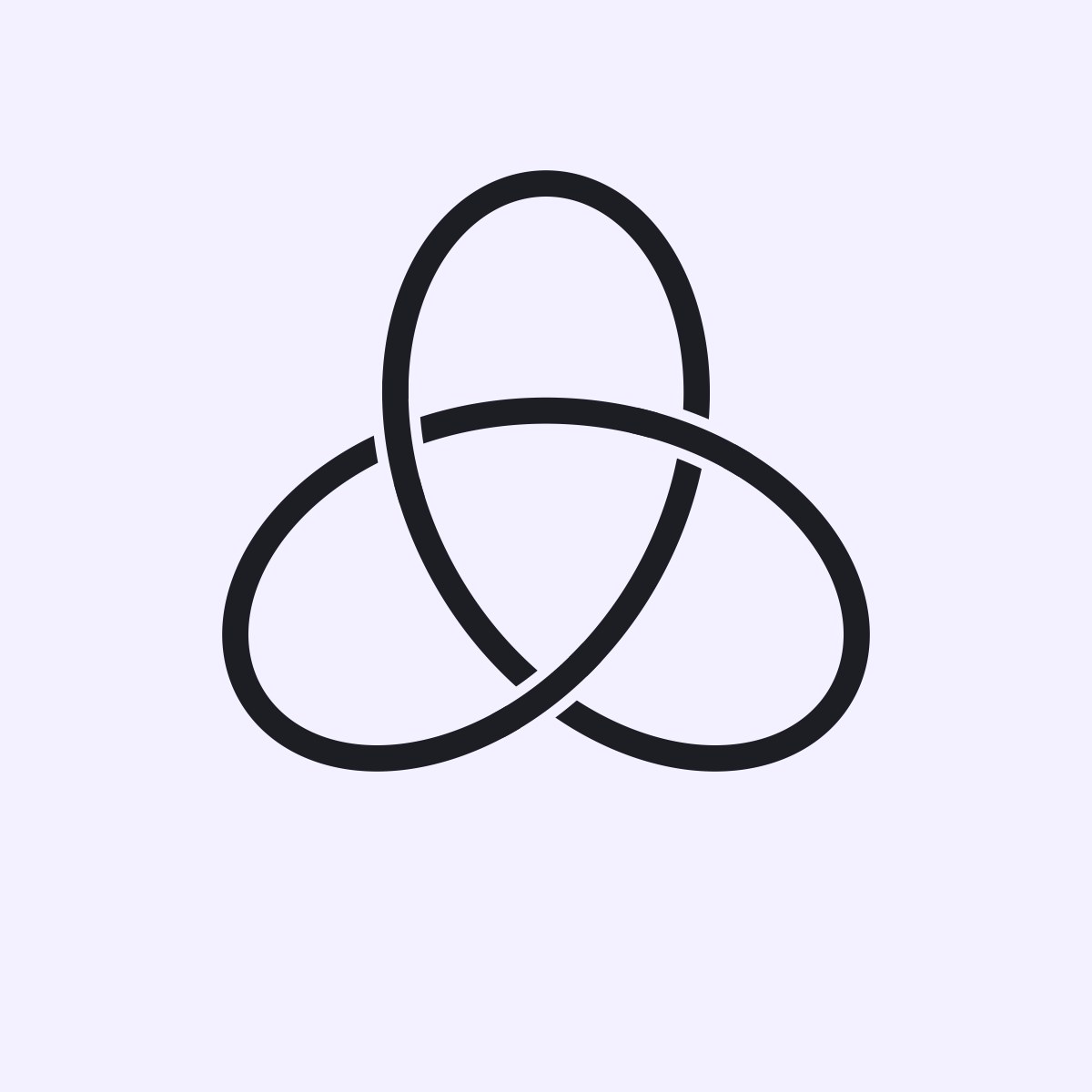
A Celtic knot is an interlaced design in which ribbonlike strands cross over and under one another. Today it often means continuity, lasting love, or connection with Irish and Scottish heritage. Historically, however, knotwork belongs to a broad decorative language. There is no surviving master key that translates every knot into one precise ancient message.
That distinction makes Celtic knot meaning more interesting, not less. A medieval Gospel book, a carved cross, and a modern wedding ring can share interlace while serving very different purposes. To read the design well, separate the pattern you can trace from the meaning supplied by its setting.
What makes a design knotwork?
Interlace creates the illusion of woven bands on a flat surface. At a crossing, one strand passes above another; at the next, it may pass below. Closed paths return to their starting point. Other designs have terminals or merge into animal bodies. The eye moves through the crossings rather than resting on a single central figure.
A single continuous strand is one possibility, not a rule for every Celtic knot. Some designs contain several separate loops. A pattern that looks endlessly complex may be built from repeating units, while a simple three-lobed knot can have a carefully controlled sequence of crossings. Counting visible lobes is not the same as counting strands.
Nor is every spiral a knot. A spiral curls inward or outward without necessarily crossing another line. A triskelion can be drawn with three spiraling arms, while knotwork depends on interlacing. Medieval artists could combine these different forms on the same page or monument.
Where Celtic knotwork fits in art history
The name “Celtic” is familiar, but the art-historical setting is often more specifically Insular: the interconnected early medieval art of Ireland and Britain. Heritage Ireland describes Insular illumination as a blending of Celtic, Classical, and Germanic artistic traditions. Its ornament includes interlace, spirals, plants, animals, and human figures.
This is an important correction to the idea that knotwork was an isolated invention carrying an unchanged prehistoric code. Art develops through exchange as well as local skill. Describing a manuscript as Insular does not diminish its Irish or British history; it identifies a setting in which several artistic traditions were transformed.
Trinity College Dublin’s research on manuscript art studies the repeated spirals, crossings, and maze-like fretwork of this tradition. Researchers trace ribbons and compare crossings to understand how motifs relate. That practical attention to construction reminds us that knotwork was also an achievement of design: planned, repeated, varied, and sometimes imperfectly executed.
The Book of Kells: context before secret codes
The Book of Kells, generally dated around AD 800, is one of the best-known settings for elaborate Insular ornament. Trinity College Dublin identifies its contents as the four Gospels in Latin with additional introductory material. It is a Christian manuscript, not a handbook of pre-Christian knot meanings.
Its decoration includes abstract patterns alongside plants, animals, human figures, evangelist symbols, and narrative scenes. Trinity explains this imagery in relation to glorifying Jesus’ life and message. That documented religious purpose matters more than a modern chart assigning a separate virtue to every visible loop.
The manuscript’s history also contains real uncertainty. Heritage Ireland notes debate over whether it was begun on Iona and continued at Kells, made entirely on Iona, or made entirely at Kells. A careful reference can acknowledge that uncertainty while still identifying the book’s broad period, religious content, and extraordinary ornament.
Does a Celtic knot mean eternity?
An unbroken line readily suggests continuity: there is no obvious beginning or end. That makes eternity a comprehensible interpretation, especially for a closed knot. It does not demonstrate that every historical example was intended to express eternity, or that all interlace has an identical religious meaning.
A useful label is “commonly interpreted today as.” It distinguishes a meaningful contemporary reading from a statement about a particular medieval maker. If a museum or scholarly source offers a more specific interpretation for a named object, that interpretation should be tied to the object rather than generalized to every knot.
The same principle applies to connection and interdependence. Interwoven bands offer a compelling visual metaphor for relationships. The metaphor is easy to understand without claiming that a modern name or explanation has been transmitted unchanged for a thousand years.
Love knots, family knots, and named designs
People often search for a Celtic love knot, mother-and-child knot, or family knot. Such labels can communicate the intention of a modern designer or the feelings of a person choosing a gift. A named design should not be presented as an ancient symbol of a particular family relationship unless a dated source supports that claim.
Before repeating a seller’s history, ask three questions: Is a historical object identified? Is it dated? Does a reliable source connect that exact pattern with the claimed meaning? Without those links, the design may still be attractive and sincere, but its origin story remains unverified.
A three-lobed knot is also often called a triquetra. In Christian settings, threefold forms can invite Trinitarian interpretation, but shape alone does not settle every example. The number three has many uses. Do not assume that every three-part ornament means the same thing across different periods or religions.
Knotwork on crosses and other surfaces
A Celtic cross may contain knotwork, but cross and knot are not synonyms. The cross is the main form; interlace is one way to decorate its surfaces. Heritage Ireland’s description of Tuam High Cross records interlace alongside figures, inscriptions, and animal ornament. Each element contributes to a larger composition.
That relationship offers a good reading method. Start with the object’s purpose and location. Then consider where knotwork appears: around a sacred text, within a cross shaft, or on a small personal object. The pattern may frame something important rather than operate as an independent pictogram with a dictionary definition.
Our diagram and the museum-image gap
The illustration here is a modern, three-lobed knot diagram, not a facsimile of a Book of Kells page. Follow its alternating crossings to see how interlace works. It represents one member of a large design family and should not be treated as the original or only Celtic knot.
No suitable Celtic-knot artifact with a verified CC0 image was established through the permitted museum searches in this review. The searches returned interlace from other cultures and broadly matched decorative works, which would mislead if relabeled as historical Celtic knotwork. Those objects have therefore not been used as substitutes. Explore Celtic symbols for related forms, or compare the distinct history of the infinity symbol.
Frequently asked questions
What does a Celtic knot symbolize?
Common modern meanings include continuity, lasting love, and connection with Celtic heritage. Historical meaning depends on the particular object and its setting.
Are all Celtic knots one continuous line?
No. Some use one closed strand; others contain multiple loops or strands with animal or other terminals. Trace the paths rather than assuming.
Is there an ancient Celtic knot for every family relationship?
The sources here do not establish that system. Modern family and love-knot labels should not be described as ancient without specific historical evidence.
Is a Celtic knot the same as an infinity symbol?
No. They can share modern associations with continuity, but interlaced ornament and the mathematical infinity sign have different forms and histories.