Cultures
Valknut Meaning, Viking Evidence, and Modern Uses
Three interwoven triangles survive in early medieval imagery, but their original name and exact meaning are unknown. Evidence matters more than a confident legend.
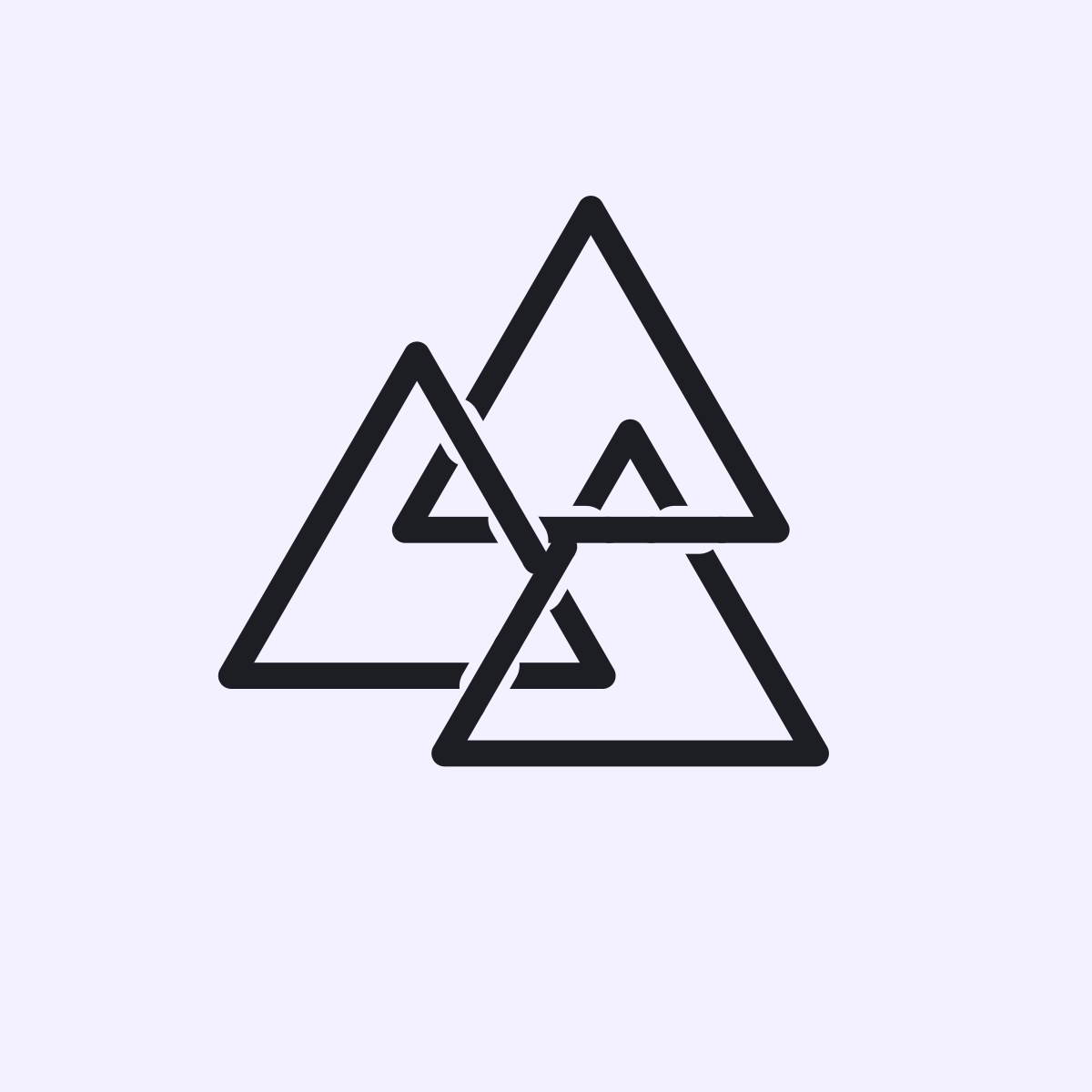
The valknut is a design of three interwoven triangles known from early medieval northern European objects, especially Scandinavian picture stones. Its exact historical meaning is uncertain. Associations with Odin, death, and the afterlife are influential interpretations, not a translation supplied by a Viking-age text naming the symbol.
That is the essential starting point for valknut meaning: the design is historical, but much of the certainty surrounding its modern name and explanation is not. A modern person can give it religious or personal significance without that significance becoming proof of what every early medieval example meant.
What the valknut looks like
The familiar form consists of three angular, interlocking triangles. Modern drawings differ in how their lines connect and pass over or under one another. Some emphasize three separate triangular components; others present a more continuous angular knot. It is worth describing the version in front of you rather than assuming there is only one authoritative drawing.
The threefold organization can resemble other interlaced designs, but resemblance does not erase distinctions. A curving three-lobed knot, a three-armed spiral, and three interwoven triangles are not automatically the same symbol. Historical catalogs sometimes use overlapping terms, so an object’s photograph and detailed description are more informative than a search label alone.
The valknut is also not a rune. Runes are characters in writing systems. An ornamental or symbolic motif does not become a letter simply because it appears in a Scandinavian setting or beside a runic inscription. Calling every Norse-looking design a rune obscures the difference between writing and imagery.
Where the historical design appears
Historian Pete Sandberg’s study, “A ‘Valknut’ in the Capitol,” surveys the limited evidence and the much larger modern mythology around it. He discusses examples on Gotlandic picture stones, an object from the Oseberg ship burial, and a gold ring found in the River Nene in England. These are specific artifacts, not evidence that every Viking carried the motif.
The Swedish History Museum’s description of a picture stone from Lillbjärs on Gotland is especially useful. It records a ship and an upper scene in which a mounted figure approaches a woman offering a drinking horn. Above this scene the museum identifies a simple triquetra and a more complex valknut.
The museum interprets the upper scene as a welcome involving a fallen hero and Valhalla, while also discussing uncertainty about whether the stone commemorates a particular event. The distinction matters: we can describe the figures and motifs, then identify the museum’s interpretation, without pretending that an ancient caption explains every part of the scene.
Does the valknut mean Odin?
Odin is a plausible focus for interpretation because of the broader imagery and themes in some relevant objects. The Swedish History Museum describes Odin as a god of war and of the dead, associated with Valhalla. Scenes involving a rider, death, or reception in an otherworldly hall can therefore invite comparison with traditions about him.
But “associated with Odin in scholarly interpretation” is not the same as “documented badge of Odin.” Sandberg cautions that the surviving material offers few clues and no premodern written explanation of the design itself. The context may support a question or a hypothesis without settling it.
Claims that it guaranteed entry to Valhalla, marked warriors personally chosen by Odin, or functioned as a standardized initiation sign require evidence beyond a modern caption. The sources cited here do not establish those claims. A responsible reference should not convert an evocative interpretation into a rule supposedly followed throughout the Viking world.
The problem with “knot of the slain”
The familiar translation “knot of the slain” seems to offer a ready-made definition. Its apparent neatness is precisely why it needs caution. Sandberg explains that the name used for the triangular design in modern English is not attested in Old Norse and cannot securely explain the design’s early medieval use.
He also discusses the relationship with a modern Norwegian word used for a different, four-cornered looped design. In other words, the history of the word is not a transparent window into the history of these three triangles. Applying a later name to an old object does not make the name contemporary with the object.
This does not mean the physical motif is a modern fake. It means two questions must remain separate: “Did people make this design in the early Middle Ages?” and “Do we know what those people called it?” The first has material evidence; the second remains unanswered.
Triangles, nine points, and other tidy explanations
Modern accounts sometimes connect the triangles’ nine corners with nine worlds, three stages of life, or a precise map of Norse cosmology. Counting features can inspire interpretation, but a numerical match alone does not demonstrate historical intention. A design with three triangles necessarily offers several ways to count its parts.
For the same reason, comparisons with a three-pointed mythical heart or an elaborate theory of binding should be labeled as proposals, not presented as the lost dictionary definition. If a source gives a hypothesis, preserve its uncertainty rather than repeating only its most memorable conclusion.
The safest concise description is therefore visual and contextual: an interwoven triangular motif found on a small body of early medieval objects, with debated religious significance. That wording gives the reader something firm before introducing interpretations.
Modern religion, heritage, and extremist appropriation
Today the motif appears in Norse-inspired religious, heritage, artistic, and commercial settings. The intentions of modern users vary. ADL notes both racist appropriation and use by non-racist pagans, and explicitly advises assessing the context. A valknut alone is not sufficient evidence of a person’s politics.
At the same time, its use by white supremacists should not be hidden behind an exclusively romantic account of ancient warriors. Examine accompanying slogans, organizational affiliations, and other imagery. Context can reveal deliberate extremist signaling, while also preventing the blanket mislabeling of unrelated religious practitioners and people interested in Scandinavian history.
Nor should contemporary practice be dismissed simply because its meanings are modern. Living traditions can create and develop symbolism. The reference task is to identify when that meaning is a present-day commitment rather than a recovered, universally accepted Viking-age fact.
Our diagram and the limits of the image record
The illustration is a modern diagram of interwoven triangles, not a reconstruction of a carved stone or a museum photograph. No matching visible-symbol CC0 object was verified through the permitted museum searches during this review. We have not substituted an unrelated Viking object to imply evidence that is not there.
For comparison, explore the Celtic knot and triskelion. They show why geometric similarity and modern popularity are not enough to establish a shared ancient meaning. Each design deserves its own evidence, chronology, and cultural context.
Frequently asked questions
What does the valknut mean?
Its exact historical meaning is unknown. Odin, death, and the afterlife are influential interpretations based on artifact contexts, not a surviving Viking-age definition.
Is the valknut a Viking rune?
No. It is a motif, not a character of a runic alphabet. Scandinavian origin or use does not make every design a rune.
Does valknut literally mean knot of the slain?
That is the familiar modern explanation, but the name is not attested in Old Norse for the triangular design. It cannot establish the original meaning.
Is the valknut a hate symbol?
White supremacists have appropriated it, but non-racist pagans and other people also use it. Interpret the symbol with the accompanying words, imagery, and setting.