Cultures
Sacred Geometry Symbols and Their Meanings
A grounded guide to circles, triangles, spirals, and sacred diagrams: what their geometry proves, what history records, and where modern interpretations begin.
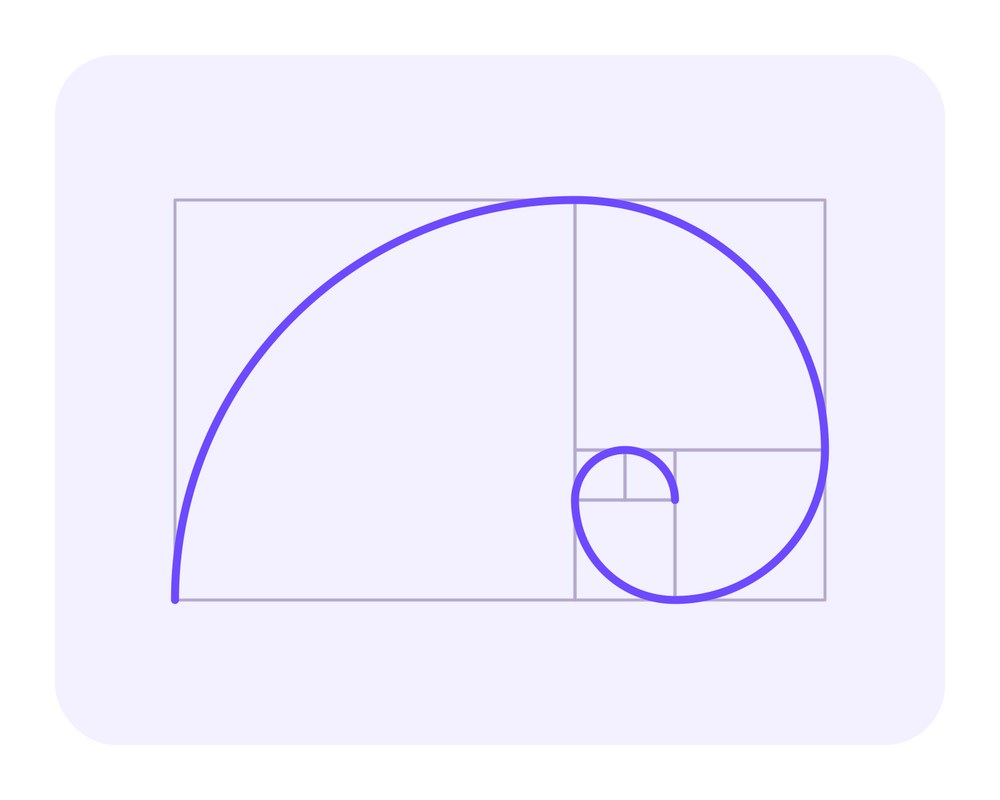
A geometric form often interpreted as wholeness; its religious meaning depends on context.
A three-sided form with different philosophical and religious uses.
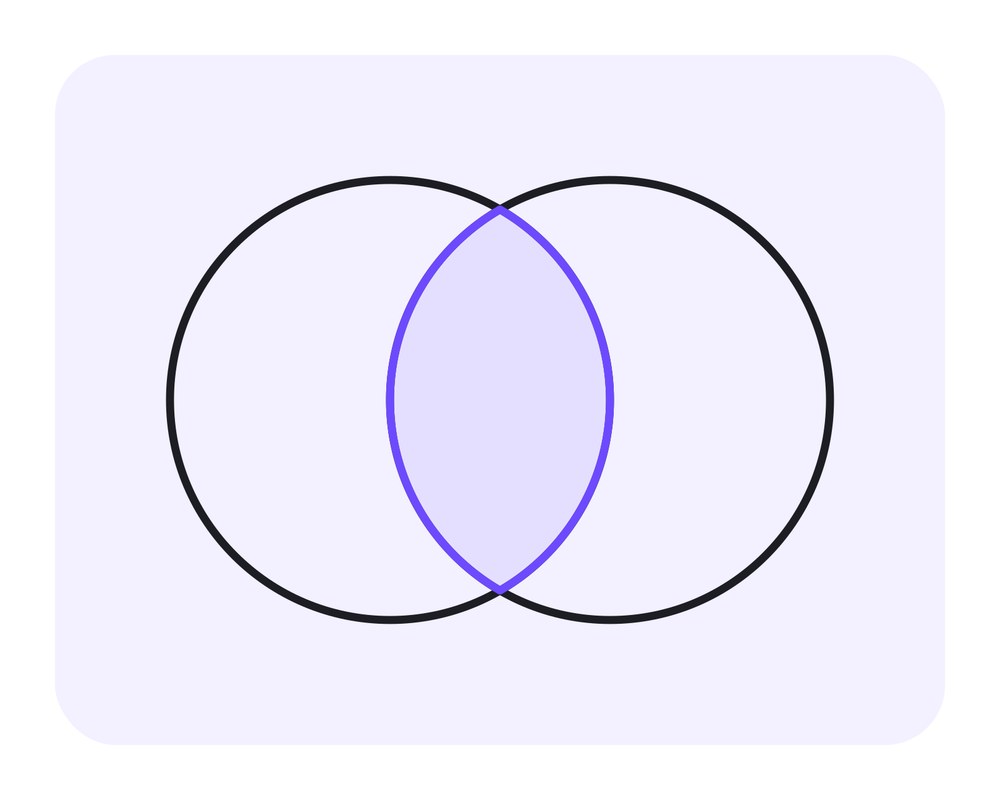 Vesica piscis
The lens-shaped intersection of two equal circles.
Original illustration · Symbolism.co editors; original code-rendered illustration · CC0 · Source record · License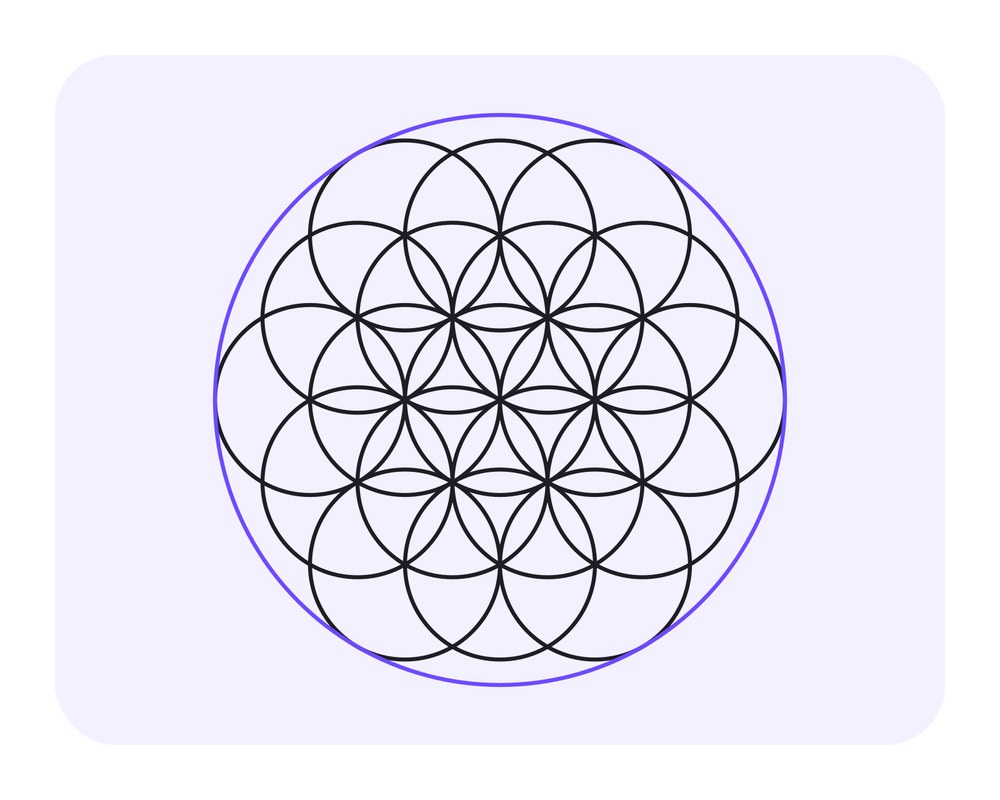 Flower of Life
An overlapping-circle lattice with widely circulated modern spiritual interpretations.
Original illustration · Symbolism.co editors; original code-rendered illustration · CC0 · Source record · LicenseA Hindu sacred diagram whose interlocking triangles require tradition-specific interpretation.
A sacred arrangement in particular religious traditions, not simply a synonym for a circle.
Sacred geometry symbols are shapes and patterns given religious, philosophical, or spiritual significance. Their meanings depend on who uses them: a Tibetan Buddhist mandala, an Islamic geometric design, and a modern Flower of Life drawing are not parts of one documented ancient code. Some have strong historical evidence; others have newer interpretations attached to much older mathematics.
The useful distinction is between a shape's construction, its recorded cultural use, and the meaning a present-day viewer gives it. A circle can be measured without agreeing about what it symbolizes. That separation lets us appreciate the design without turning resemblance into proof.
Sacred geometry shapes and meanings at a glance
| Shape or pattern | What it actually is | How to read its meaning |
|---|---|---|
| Circle | A curve whose points are equally distant from a center | Wholeness or continuity in some settings; look for local evidence |
| Triangle | A three-sided polygon | A triad, stability, or a specific religious relationship, depending on context |
| Vesica piscis | The lens between two equal circles whose centers lie on each other's circumference | A geometric construction; religious associations need separate evidence |
| Hexagon | A six-sided polygon | Often a repeat unit rather than an independent sacred sign |
| Spiral | A curve winding around a center | Growth or movement in modern readings; historical meanings vary |
| Mandala | A tradition-specific sacred diagram, often organized around a center | A religious realm or ritual arrangement, not simply decoration |
| Golden rectangle | A rectangle with side ratio φ, approximately 1.618 | A mathematical proportion; intentional use must be demonstrated |
This chart is a starting point, not a translation key. Two objects can share a shape while serving different purposes. For named patterns and their changing interpretations, compare the Flower of Life, vesica piscis, and Sri Yantra entries.
Circles, overlapping circles, and the Flower of Life
A compass makes a circle by keeping a fixed distance from one point. Repeating that operation with new centers produces intersecting circles, lenses, petals, and sixfold arrangements. The construction can be simple even when the resulting pattern looks intricate.
The modern name Flower of Life refers to a network of overlapping circles arranged into a flowerlike lattice. Seed of Life commonly names a smaller arrangement built from seven circles. Contemporary spiritual writers often associate these designs with creation, unity, or interconnectedness. Those are interpretations, not mathematical properties.
Historical examples of intersecting-circle ornament do not, by themselves, establish that their makers used these modern names or shared one spiritual explanation. A careful identification asks where a pattern occurs, when it was made, and whether an inscription or reliable account explains it. A photograph of a similar rosette cannot answer all three questions.
The lens of the vesica piscis is another useful example. Its geometry is exact, but lens-shaped frames in religious art need to be read through their particular traditions. “These forms resemble one another” is a sound visual observation. “They must encode the same secret teaching” is a much larger claim.
What do triangles mean in sacred geometry?
Triangles are useful building blocks because their edges define a closed shape with the fewest possible straight sides. Sacred triangle geometry may refer to a single triangle, a field of interlocking triangles, or the triangular faces of a solid. These are related visually but are not interchangeable objects.
In Christian imagery, a triangle can refer to the Trinity when the surrounding context supports that reading. In the Sri Yantra, interpenetrating triangles belong to a specific Hindu religious diagram. It would erase both traditions to label every upward triangle “male energy” and every downward triangle “female energy” without qualification.
Count the components before interpreting them. Are there two triangles or many? Is one enclosed by a circle? Are there inscriptions, deities, or an architectural setting? These details often matter more than a generic list of shape meanings. A triangle on a modern pendant may have a personal meaning that cannot be recovered from its outline alone.
A six-pointed star is also not just a hexagon: it can be drawn from two triangles and has a different boundary. The Star of David has a particular Jewish history; its present religious identity should not be reduced to an all-purpose sacred-geometry formula.
Hexagons, stars, and Islamic geometric design
A regular hexagon has six equal sides and six equal angles. Six equilateral triangles meet at its center, and copies of the hexagon can cover a plane without gaps. These properties help explain why sixfold arrangements are so useful in pattern-making.
Islamic geometric art develops circles, polygons, stars, and interlacing bands into extraordinarily varied designs. The Metropolitan Museum of Art describes repetition, symmetry, and combinations of basic units as central to this practice. A compass and ruler can generate complex fields from relatively simple starting operations.
That does not mean each polygon has one fixed theological translation. An eight-pointed star on one object does not prove that every eight-pointed star carries an identical message. The object's material, patron, use, location, and inscriptions supply evidence that the outline alone cannot.
Cleveland's Bowl with Geometric Designs, dated 1450–1500 and attributed to Damascus, is a concrete example. Its catalog describes interlacing designs in twelve arched panels radiating from a star on the base. It also records a pinwheel of six fish inside. The bowl shows skilled pattern construction on a usable object, not a diagram identified by its makers as a modern “energy grid.”
Sacred geometry spirals: not every spiral is golden
A spiral winds around a center while moving away from or toward it. Different rules produce different spirals. In an Archimedean spiral, the radius increases by equal amounts through equal turns. In a logarithmic spiral, the radius increases by a constant factor through equal turns.
A golden spiral is a particular logarithmic spiral whose radius grows by the golden ratio over each quarter-turn. The distinction matters: “logarithmic” does not automatically mean “golden.” A loosely drawn curl, a fossil, and a mathematical plot cannot be treated as the same curve simply because all three turn outward.
The familiar Fibonacci spiral picture uses quarter-circle arcs in adjoining squares whose side lengths follow the Fibonacci sequence. It is a convenient visual approximation to a spiral, not the same construction as a true logarithmic curve. Adjacent Fibonacci numbers approach the golden ratio as the sequence continues; the earliest small-number ratios do not equal it.
In modern symbolic use, spirals often suggest unfolding, growth, cycles, or inward reflection. Those associations can be meaningful to an artist or wearer. They should be labeled as interpretations rather than presented as a single universal meaning inherited unchanged from prehistory.
Is a nautilus shell sacred geometry?
A chambered nautilus provides a striking example of growth that approximately preserves shape. Mathematical discussions often model its profile with a logarithmic spiral. It does not follow that every shell fits the golden ratio, and published examinations warn against that popular assumption.
Shells vary, photographs introduce perspective, and a line can be adjusted until it seems to fit. A proper test requires stated measurements and a defined model. Admiring a shell's structure does not require calling it a perfect golden spiral or claiming that it proves a spiritual law.
The golden mean: a ratio, not a universal beauty test
The golden ratio, φ, is (1 + √5) / 2, approximately 1.618. A line is divided in this proportion when the whole relates to the longer part as the longer part relates to the shorter. A golden rectangle preserves its proportions when a square is removed from it.
These are genuine mathematical relationships. Claims that every celebrated building, painting, face, or natural form follows them require independent evidence. Adding a golden rectangle to an image afterward is not proof that its maker planned the object that way.
For historical art, useful evidence includes design drawings, written instructions, or repeatable measurements with a clearly stated method. Be especially cautious when a diagram changes its crop, reference points, or orientation until the overlay looks persuasive. The construction may explain the overlay better than it explains the object.
Platonic solids and religious diagrams are different kinds of evidence
The five Platonic solids are the tetrahedron, cube, octahedron, dodecahedron, and icosahedron. Each is a convex solid built from identical regular polygon faces, with the same arrangement of faces at every vertex. Their mathematical definition is distinct from their philosophical associations.
Plato's Timaeus links geometric bodies with the elements of a cosmological account. That is a documented historical use of geometry to think about the world's structure. It is not evidence that these solids transmit healing effects or that modern matter is composed according to Plato's elemental theory.
A Buddhist mandala offers a different relationship between geometry and religious practice. Cleveland's Twenty-three Deity Nairatma Mandala, from Central Tibet around 1375, depicts Nairatma's palace and surrounding sacred realms. Its figures, gates, and rings belong to a guided religious framework, not a generic exercise in symmetry.
The mandala entry explains why identifying the tradition and depicted beings is essential. A circular coloring pattern can be inspired by a mandala, but its outline alone does not give it the ritual identity of a consecrated religious diagram.
How to evaluate a sacred geometry claim
- Name the construction. Is it a regular polygon, a circle lattice, a spiral, or a three-dimensional solid?
- Locate the object. Find a museum record, archaeological publication, or tradition-specific source, rather than an unattributed image.
- Separate date from interpretation. An old design can acquire a new name and new meanings.
- Check the proposed connection. Similarity does not establish contact between cultures or continuity of belief.
- Keep spiritual claims in their proper category. A belief about harmony is not a demonstrated medical or physical effect.
This approach does not remove the wonder from geometry. It makes room for several kinds of wonder: mathematical precision, artistic invention, religious commitment, and the ways later viewers discover new meanings in inherited forms.
In the museum
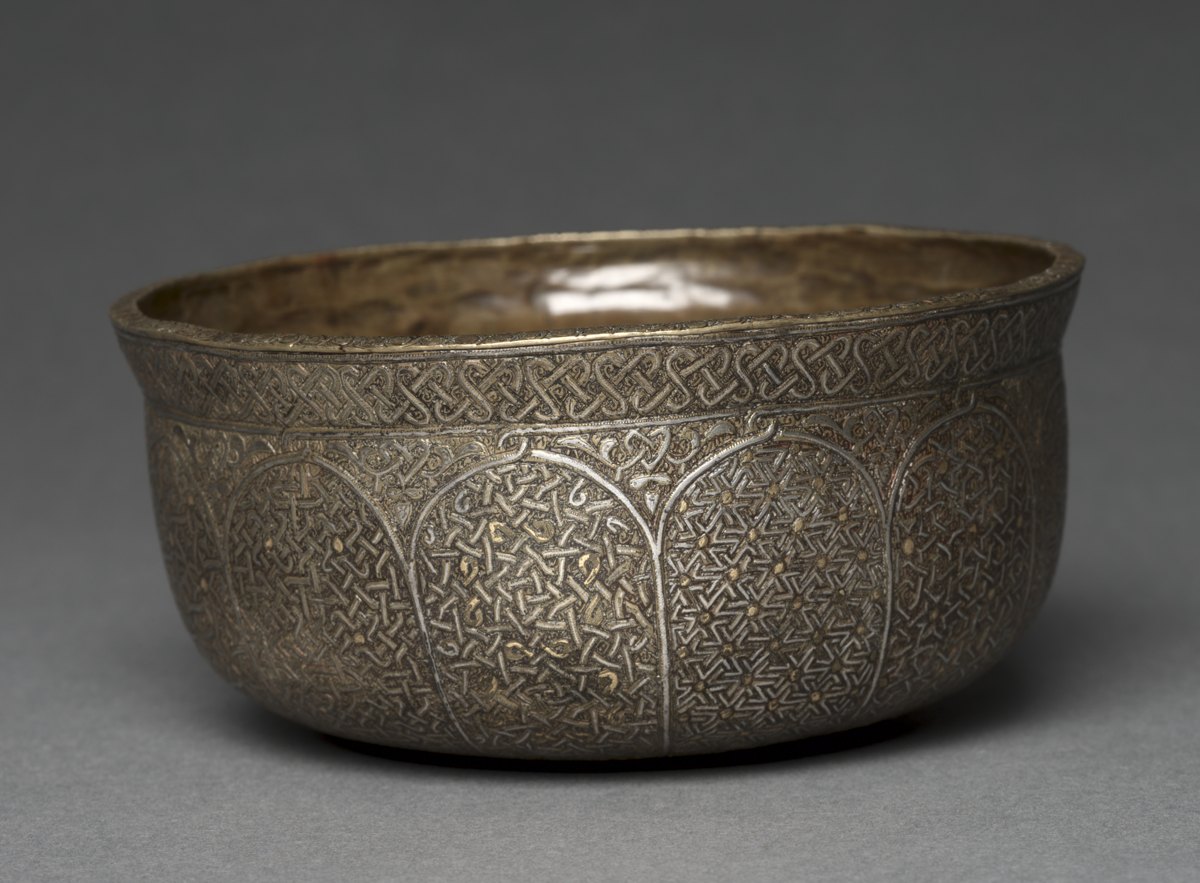
Bowl with Geometric Designs, Damascus, 1450–1500. The exterior shows interlacing ornament in arched panels; the catalog also records a star on the base and fish inside, outside this view. Cleveland Museum of Art, 1945.133. CC0.
1450–1500 · Syria, Damascus, Burji Mamluk period, 15th Century · Cleveland Museum of Art · 1945.133 · CC0
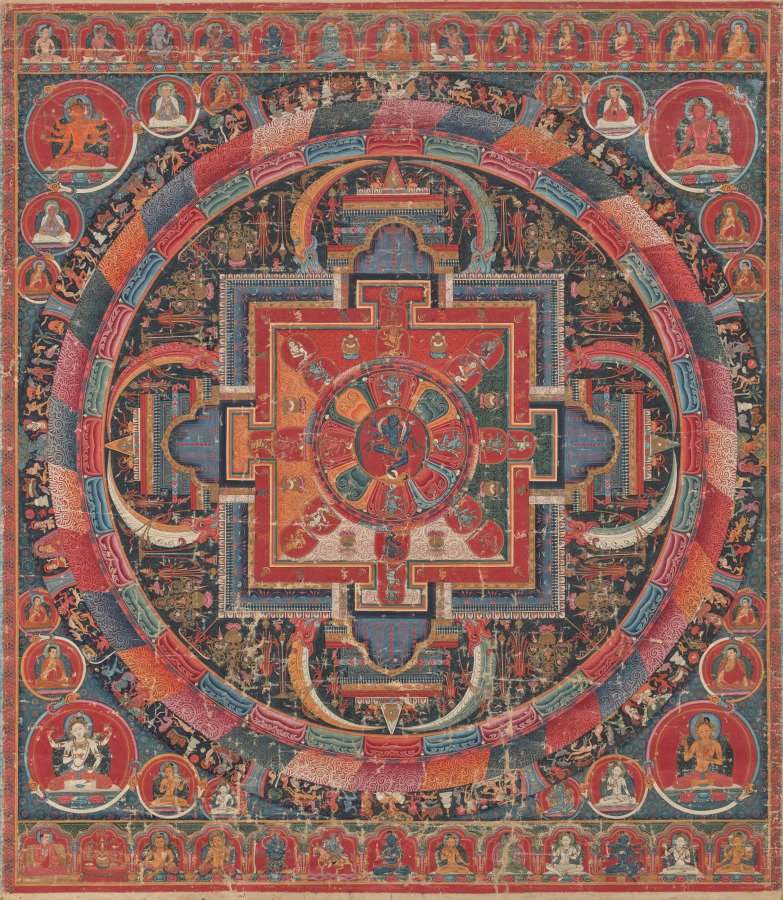
Twenty-three Deity Nairatma Mandala, Central Tibet, c. 1375. The geometric arrangement depicts a specific Buddhist sacred realm with Nairatma at its center. Cleveland Museum of Art, 1993.4. CC0.
c. 1375 · Central Tibet · Cleveland Museum of Art · 1993.4 · CC0
Frequently asked questions
What are sacred geometry symbols?
They are geometric forms given religious, philosophical, or spiritual significance. The category includes historically documented religious designs and newer spiritual interpretations; they should not be treated as one universal ancient system.
What does a spiral mean in sacred geometry?
Modern interpretations often connect it with growth, unfolding, or cycles. Historical spiral designs need their own cultural evidence. A spiral's symbolic meaning is separate from whether its curve is Archimedean, logarithmic, or golden.
Is every nautilus shell a golden spiral?
No. A logarithmic spiral is a useful model for shell growth, but not every logarithmic spiral is golden. Real shells vary, and a golden-ratio overlay is not a substitute for measurements.
What does a hexagon mean spiritually?
There is no single universal spiritual meaning. Its sixfold structure makes it useful in tiling and ornament; meanings such as balance or harmony are interpretations that should be attributed to their users.
Can sacred geometry heal the body?
This guide does not present shapes as medical treatments. Religious practice and personal symbolism should be distinguished from demonstrable health effects.
Sources & further reading
- The Met: José Campeche, The Trinity
- Comptes Rendus Mathématique: On the construction of the Śrī Yantra
- The Met: Geometric Patterns in Islamic Art
- The Met: Geometric Design in Islamic Art, introduction
- Cleveland Museum of Art: Bowl with Geometric Designs
- Cleveland Museum of Art: Twenty-three Deity Nairatma Mandala
- Plus, University of Cambridge: Myths of maths, the golden ratio
- American Mathematical Society: Nautilus and the Ammonites
- Dartmouth Mathematics: Geometry in Art and Architecture, Plato