Religion
Unalome Meaning and Its Buddhist Context
The spiral-and-line sign has a Southeast Asian religious setting. Its connection to the Buddha's auspicious curl is better documented than many modern explanations.
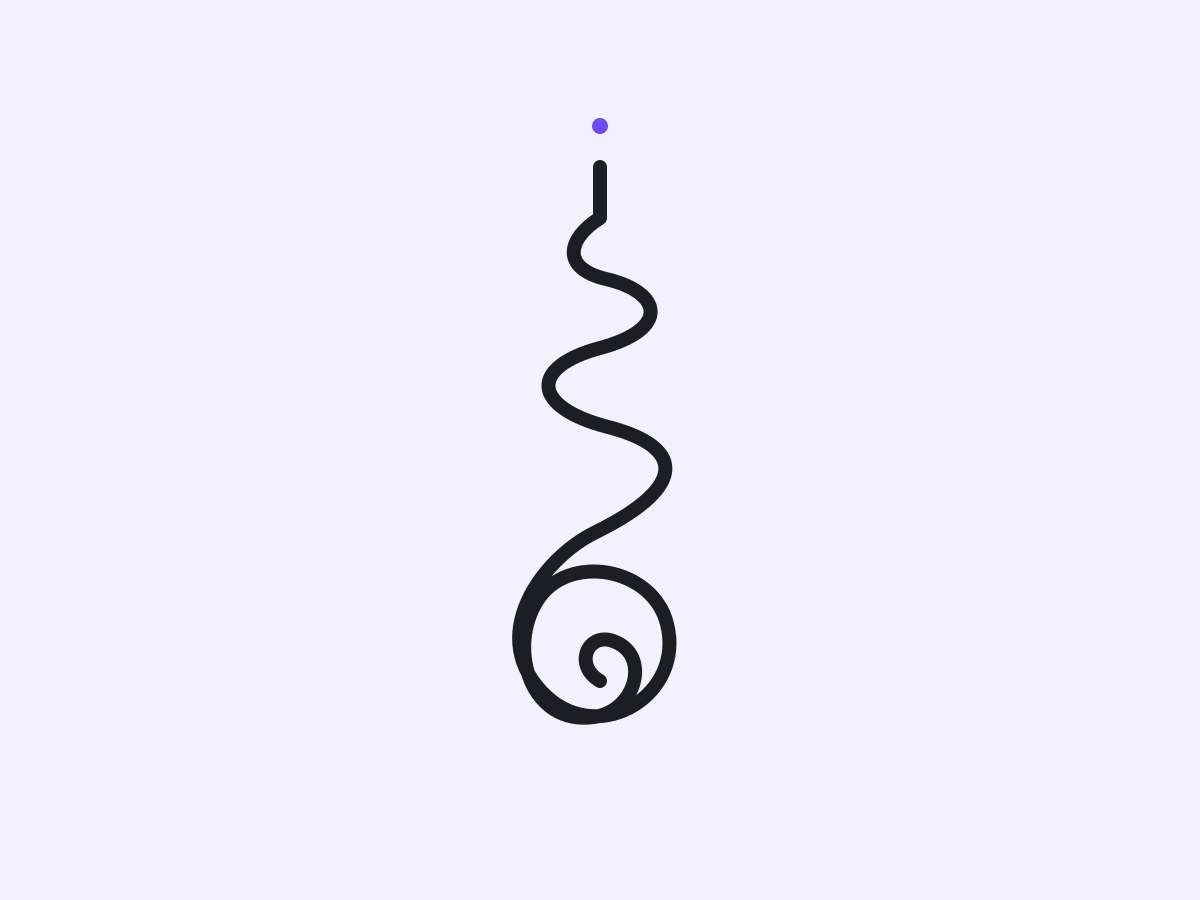
Unalome, also spelled unalom, is a sacred curl or spiral sign associated particularly with Thai and neighboring Southeast Asian religious traditions. Its name refers to the auspicious hair curl between the Buddha's eyebrows, known in Sanskrit as the urna. The familiar spiral rising into a wavering and then straighter line is one graphic expression of this religious world, not a universal symbol with one fixed meaning for every Buddhist.
Today it is often explained as a person's winding path toward enlightenment. That can be a contemporary interpretation, but it should not replace the sign's relationship to Buddhist imagery, regional sacred diagrams, and living ritual practices.
What does unalome mean?
The most securely grounded explanation begins with the Buddha's bodily marks. Buddhist image-making traditions describe extraordinary features that distinguish a Buddha from an ordinary person. The urna is a tuft or curl of hair between the eyebrows; artists often indicate it as a round mark. Art historian Vidya Dehejia explains this convention in the Metropolitan Museum of Art's account of identifying South Asian deities.
In Thai usage, the unalom is an auspicious sign related to that curl. A 2014 discussion preserved in the Unicode mailing-list archive describes the sign as widespread in traditional Thai religious culture and connects it explicitly to the urna and enlightenment. This is useful specialist testimony about a written sign, though it is a mailing-list contribution, not an official Unicode ruling or a Buddhist scripture.
“Enlightenment” is therefore a defensible association when the context supports it. “Every twist represents one specific mistake in your life” is a different kind of claim. It may work as a personal reading, but it should not be described as a literal translation of the symbol or an instruction shared across Buddhist traditions.
The difference between an urna and an unalome design
The urna on a statue and the freestanding spiral-line motif are related, but they are not identical objects. A small dot between a Buddha's brows should be described first as an urna, not automatically labeled a complete unalome diagram. Conversely, the full drawn sign can operate within a larger sacred composition, rather than functioning as a portrait detail.
This distinction matters when looking for early examples. Finding an old Buddha sculpture with a forehead mark does not establish the age of every modern unalome design. A date attached to a statue belongs to that statue and its specific visible features. It cannot be transferred without evidence to a motif sold online.
It is also useful to distinguish the urna from the ushnisha, the cranial prominence conventionally shown at the top of the Buddha's head. They are separate attributes. Neither should be reduced to a generic “third eye” label without explaining the source and setting of that interpretation.
Unalome and Southeast Asian sacred diagrams
Unalom signs appear in the broader world of Southeast Asian yantra practices. These can combine diagrams, letters, numbers, invocations, and figures. They are not simply abstract pictures whose significance can be read from geometry alone.
A study published in the Journal of Buddhist Studies, Chulalongkorn University describes Thai yantra as condensed presentations of stories and teachings through forms, lines, images, characters, and other elements. It also emphasizes the interaction of Buddhist, Brahmanical, and local traditions. That history makes the label “an ancient symbol used identically throughout Buddhism” especially misleading.
Angela Marie May's University of Alabama at Birmingham thesis on sak yant discusses unaloms as individual signs associated with enlightenment. Her larger analysis examines how Indic yantra traditions developed in Thai settings through combinations of religious practices and imagery. This provides a stronger foundation than commercial lists that assign the same meanings to every spiral.
For comparison, a mandala can also organize sacred space, but “mandala,” “yantra,” and “unalome” are not interchangeable names. The Dharma wheel has its own Buddhist histories and textual associations. Similar religious settings do not make distinct designs synonyms.
Does each loop have a fixed meaning?
Popular diagrams identify a base spiral with confusion, loops with life's difficulties, a straight section with clarity, and dots with liberation. Such a reading is understandable as a modern visual narrative. However, the sources used here do not establish a single historical diagram that authorizes every part of that sequence for every version of the sign.
The same caution applies to claims that a right-facing spiral is always male and a left-facing spiral always female. Do not treat that rule as settled Buddhist doctrine without a named tradition and a reliable source. Orientation, arrangement, and additional marks need to be studied within an actual example, not assigned universal meanings from a social-media caption.
Personal interpretation is not inherently illegitimate. The editorial problem arises when a contemporary interpretation is advertised as a verified ancient teaching. Saying “some people now read this line as a life journey” makes a different, more limited claim than saying “this is what all Buddhists have always believed.”
Origins and the limits of the evidence
The sign's relationship to the urna places it within a substantial religious and visual history. It does not supply a secure invention date for the modern spiral-and-line image. We therefore do not give an exact year, original designer, or first country of invention for that standardized online form.
The modern English spelling can also obscure regional differences. “Unalome” is not the name of a single organization that controls a fixed logo. When interpreting a historical work, retain its museum description, local name, and geographical context wherever these are known.
What the museum record can and cannot show
Searches of the Metropolitan Museum of Art and Cleveland Museum of Art open-access APIs for “unalom” and “unalome” returned no qualifying illustrated objects in this research. We have not filled that gap with unrelated Buddha images or ordinary spirals. A museum photograph is only evidence for this entry if the actual sign can be identified.
The featured image is therefore an editorial line diagram of a recognizable spiral-and-rising-line variant. It is not a photograph of a historical artifact, a ritual template, or a claim that all variants should look the same. The lack of an eligible image in two collections does not imply that the sign lacks a documented history.
Respectful identification and modern use
Because the unalome circulates widely in contemporary jewelry and tattoo imagery, it is easy to encounter it detached from its religious setting. Understanding the background comes before treating it as a neutral personal-development logo. A short caption can at least identify its Southeast Asian Buddhist associations and explain that designs and interpretations vary.
Do not copy an entire sacred diagram and assume its letters are decorative marks. Nor should an illustration be sold as a guarantee of luck, healing, or spiritual attainment. To explore a different sacred syllable that also appears in regional religious art, see Om; its relationship to writing and sound requires its own explanation.
Frequently asked questions
What does an unalome mean?
It is an auspicious sign related to the urna, the curl between the Buddha's eyebrows. Enlightenment is a documented association in Thai contexts; a detailed life-journey story for every loop is not a universal Buddhist teaching.
Is unalome the same as the Buddha's urna?
They are related, but a forehead mark on a statue and a freestanding spiral-and-line design are not identical objects. The date of one cannot automatically date the other.
Do right- and left-facing spirals always mean male and female?
The sources used here do not establish that as a universal Buddhist rule. Such claims need a named tradition and reliable evidence, rather than a generic online diagram.
Is there one original unalome design?
No single original design or inventor was verified. The featured illustration shows one recognizable variant, not an authoritative ritual template.
Sources & further reading
- The Met: Recognizing the Gods, by Vidya Dehejia
- James Clark, Thai unalom symbol: Unicode mailing-list discussion (not an encoding decision)
- An analytical study of Buddhist symbols that appear in the Thai Yantra, Journal of Buddhist Studies Chulalongkorn University
- Angela Marie May, Sak Yant: The Transition From Indic Yantras To Thai 'Magical' Buddhist Tattoos, University of Alabama at Birmingham (2014)
- Kittithat Srifa: The Unalom Symbol, Siam Communication Review (2012, Thai)