Nature
Tree of Life Meaning Across Traditions
Life, renewal, and connection are recurring themes, but the biblical tree, Kabbalistic diagram, and decorative motif have distinct histories.
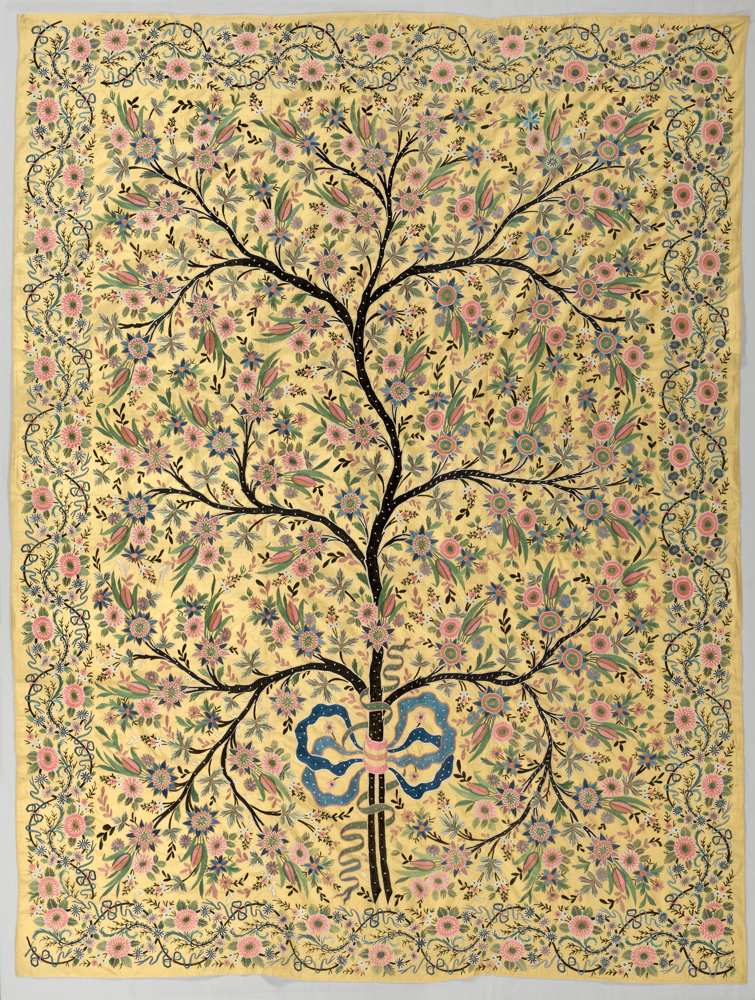
The tree of life represents life sustained, renewed, or connected across generations. That is a useful starting point, not a universal translation. In the Bible it is a particular tree associated with life beyond ordinary mortality; in decorative art it may be a flowering tree surrounded by birds and animals. A modern pendant may instead express family, resilience, or belonging. The tree of life meaning depends on which tradition and object you are looking at.
There is no single ancient tree-of-life logo from which every later design descends. Roots, trunks, branches, fruit, and seasonal renewal give artists many ways to make a tree meaningful. Similar shapes can carry different stories. Our broader guide to tree symbolism considers those associations; this entry separates the named tree-of-life traditions that are often bundled together.
What does the tree of life symbolize?
The most reliable meanings come from context. A family tree uses branching to show descent. A fruit-bearing sacred tree can express nourishment or access to lasting life. A cosmic tree connects different levels of the universe. These ideas overlap, but they are not interchangeable. A tree embroidered on a furnishing is not automatically a diagram of religious belief.
- Life and renewal: growth, fruit, or continuing vitality.
- Connection: relationships between generations, creatures, or parts of a cosmos.
- Sustenance: a source of food, shelter, or divinely given life.
- Continuity: the survival of a family, community, or remembered person.
The first three can be grounded in particular historical sources. The last is also a common way to read a contemporary keepsake. When a maker supplies a dedication or explanation, that evidence is stronger than a generic online list of supposed ancient meanings.
The tree of life in the Bible
Genesis 2:9 places the tree of life in the garden alongside the tree of the knowledge of good and evil. They are distinct trees in the narrative. The familiar forbidden fruit belongs to the story of the latter, not simply to any tree labeled “life.” Genesis does not identify the tree of life as an apple tree.
In Genesis 3:22–24, access to the tree of life becomes the issue after the humans eat the forbidden fruit. The text connects eating from it with living forever, and the way to it is guarded. The tree therefore concerns the boundary between human mortality and life that humans cannot simply seize for themselves.
Revelation 22 returns to the image in its vision of the restored city. The tree bears fruit each month, and its leaves are described as being for the healing of the nations. This is religious imagery within the text, not evidence that a plant or a tree-shaped amulet has medical powers. In Christian interpretation the return of the tree can express restoration and divine generosity. See Christian symbols for other images whose meanings depend on their scriptural setting.
Is the Kabbalistic Tree of Life the same symbol?
The diagram known as the Tree of Life in Jewish Kabbalah is a more specific form. Its connected elements represent the sefirot, conventionally described as ten divine emanations or powers. It should not be reduced to a decorative family tree, and a generic leafy pendant does not necessarily represent it.
The distinction matters visually as well as religiously. A diagram of connected nodes asks the reader to follow relationships within a theological system. A naturalistic flowering tree can work through abundance, shelter, and growth without encoding that system at all. Identifying a design requires more than noticing that both have branches. Britannica's accounts of the tree of life and the sefirot provide useful introductions without treating all later esoteric adaptations as identical to Jewish practice.
Tree of life, Yggdrasil, and Celtic-style trees
Yggdrasil is the named world tree of Norse mythology. Its roots, wells, animals, and role in the gods' world give it a narrative identity. It is related to the broad comparative category of sacred trees, but calling every tree of life “Yggdrasil” erases those details. The biblical garden tree is not simply another spelling of the Norse tree.
A contemporary “Celtic tree of life” often places a spreading tree within a circle and weaves its roots into its branches. That can be an effective expression of connection. It does not establish an ancient, standardized emblem with one recoverable meaning. Claims about a particular Celtic design need a dated object or text. Our Celtic knot entry explains why the history of interlace and a modern design's assigned message are separate questions.
What the museum objects actually show
The three Cleveland Museum of Art objects below demonstrate how varied tree-of-life imagery can be. The earliest is a textile roundel from Egypt, dated to the late 700s–800s. Its central tree stands between paired female busts, with birds and animals around it. The museum names the motif; the surviving fabric does not supply a complete statement of the wearer's beliefs.
An Ottoman silk hanging from the 1800s makes the tree expansive and floral. Cleveland describes a combination of Turkish traditions and European stylistic features, including the elaborate bow around the trunk. The work offers evidence of design exchange and skilled embroidery. Its title does not turn it into an illustration of Genesis or a diagram of the sefirot.
A Russian lace panel dated to the 1700s–1800s shows panthers facing a stylized tree, with birds above. Its geometry differs sharply from the Ottoman hanging's bouquets, yet the museum identifies the same broad motif. Together these objects support a careful claim: artists used tree-of-life compositions in distinct settings. They do not prove that every setting shared one religious explanation.
How to interpret a tree-of-life design
Start with what is visible. Are there fruit, paired animals, named figures, a cross, or numbered circles? Then ask where the object was made and what its catalog or maker calls it. Finally, distinguish that evidence from the meaning a current owner gives it. A memorial necklace can sincerely mean family continuity without needing an invented prehistoric origin.
For a personal gift, “roots and branches representing our family” is a clear explanation. For a museum object, its date, place, and specific imagery are better guides. Reading both ways preserves the tree's emotional usefulness without making different religious traditions say the same thing.
In the museum
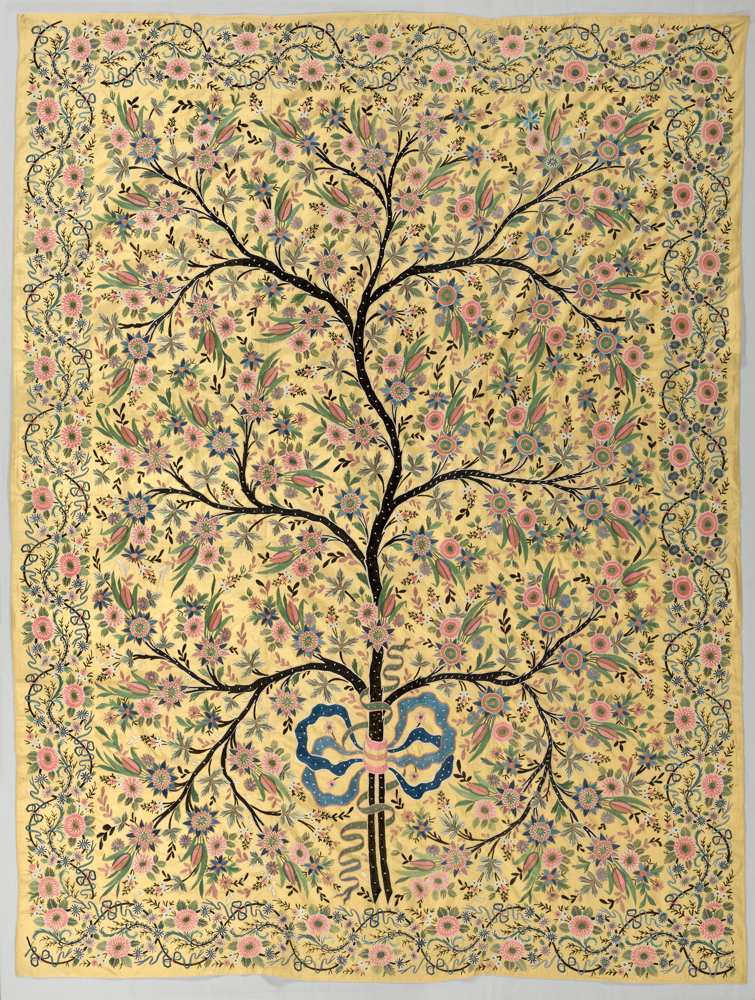
An embroidered flowering tree rises from a bow-wrapped trunk inside a floral border. This Ottoman hanging demonstrates a named tree-of-life design, not a Norse world tree.
1800s · Turkey, Ottoman period · Cleveland Museum of Art · 1916.1358 · CC0
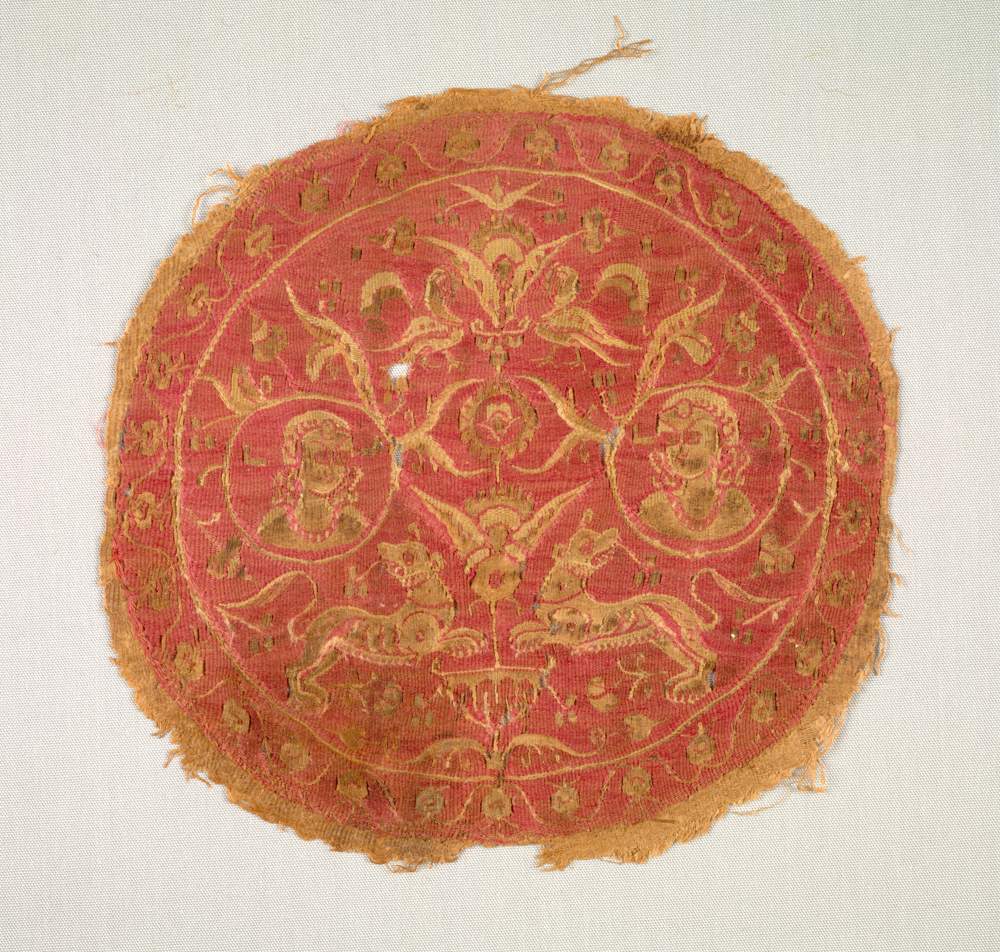
A central tree, paired female busts, birds, and animals fill a circular textile design. Cleveland identifies the central motif as a tree of life.
late 700s - 800s · Egypt, Islamic period, Abbasid, 8th - 9th century · Cleveland Museum of Art · 1982.272 · CC0
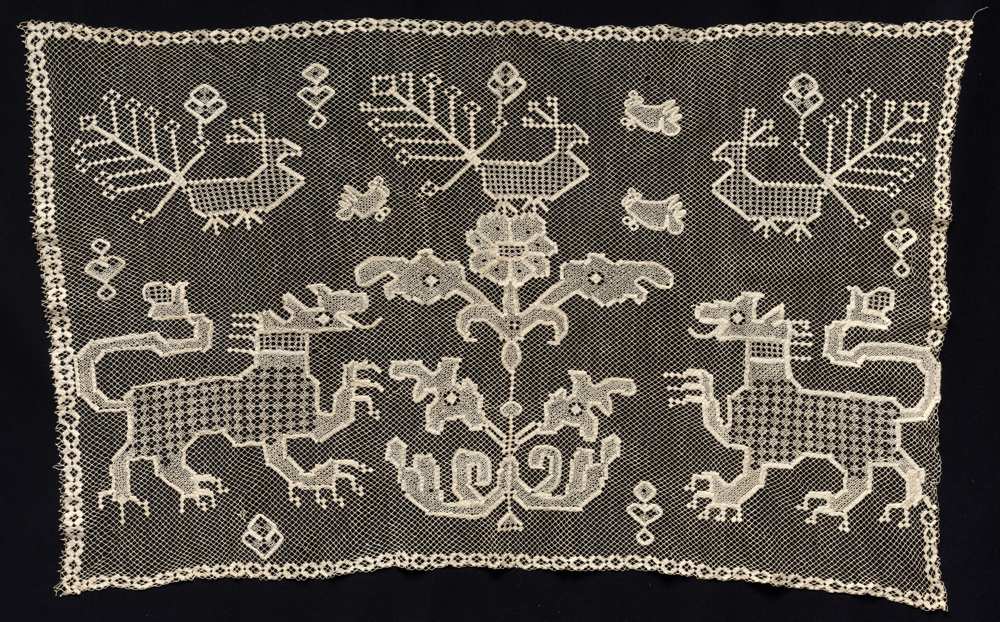
Two panthers flank a stylized tree in a geometric lace panel, with birds above. The museum explicitly identifies the central motif as a Tree of Life.
1700s–1800s · Russia, Nizhniy Novgorod, 1700s-1800s · Cleveland Museum of Art · 1934.193 · CC0
Frequently asked questions
What is the main tree of life meaning?
Life, renewal, and connection are common readings. A specific tradition may give the tree a more precise meaning, such as access to everlasting life in Genesis.
Are the tree of life and the tree of knowledge the same?
No. Genesis 2:9 names them separately. The story of the forbidden fruit concerns the tree of the knowledge of good and evil.
Is the tree of life a Celtic symbol?
Modern Celtic-style versions exist, often with interlaced roots and branches. That does not make every tree-of-life motif Celtic or establish a single ancient Celtic logo.
Is there a tree of life Unicode character?
There is no dedicated standard character for this complete motif. A tree emoji is a generic tree, not an exact replacement for a particular religious design.