Nature
Tree Symbolism and Meanings Across Cultures
Trees can express growth, endurance, ancestry, or a sacred center. These documented examples show why species and context matter more than a universal meaning chart.
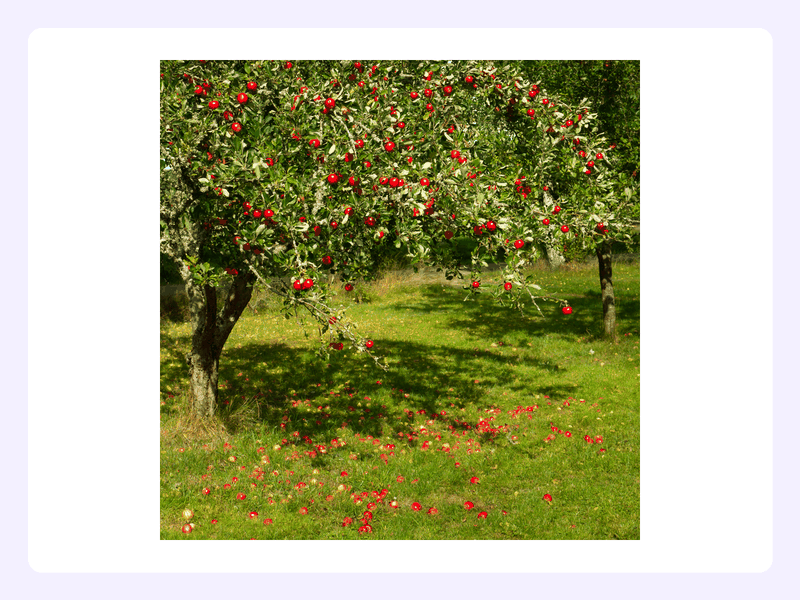

Tree symbolism often expresses life, growth, ancestry, endurance, and the connection between earth and sky. But there is no single meaning of trees: a cherry tree in a spring celebration, the Bodhi tree in Buddhism, and the trees of Eden belong to different stories. The species, setting, and surrounding details determine which reading makes sense.
A tree can also carry contrasting meanings within one work. Strong roots may suggest belonging, while branches stretching away from the trunk can suggest separation. A bare tree may indicate loss or simply the season before new leaves. Reading the evidence is more useful than treating every tree as a fixed code.
What does a tree represent?
Trees are productive symbols because their forms make abstract ideas visible. They grow, branch, endure weather, bear fruit, and sometimes outlive the people who plant them. These observable qualities give artists and storytellers material for comparisons without requiring a shared worldwide belief.
- Life and growth: a living tree can show development over time.
- Ancestry and connection: branches provide a useful model for relationships and descent.
- Endurance: a tree surviving harsh conditions can become an image of persistence.
- Renewal and change: flowering, fruiting, and leaf fall make time visible.
- A sacred center: particular religious narratives place a tree at a decisive meeting point between human life and the divine.
These are interpretive possibilities, not promises hidden in the plant. An uprooted tree in a story might suggest displacement; in a landscape record, it might simply document storm damage. Our introduction to what symbolism is explains how context turns an ordinary object into a meaningful image.
Tree symbols and meanings at a glance
| Tree or motif | Documented setting | Meaning to consider |
|---|---|---|
| Bodhi tree | Buddhist narratives and sacred sites | The Buddha's awakening |
| Yggdrasill | Norse mythology | A world tree connecting the cosmic order |
| Tree of life | Genesis and other distinct traditions | Life or immortality, interpreted within each narrative |
| Pine | Chinese painting and decorative arts | Longevity and constancy |
| Plum | Chinese painting, especially winter imagery | Survival, renewal, and hardiness |
| Flowering cherry | Japanese blossom viewing; Washington's gift trees | Seasonal beauty, fleeting life, or friendship |
| Willow | Specific scenes in Shakespeare | Grief and abandoned love |
The setting column matters as much as the meaning column. It prevents a useful guide from becoming a claim that everyone, everywhere, has always read a species in the same way.
The tree of life is a family of motifs, not one universal sign
The phrase “tree of life” describes several related-looking but distinct ideas. Britannica's account notes that sacred-tree narratives may concern the source of life, the connection among living things, or life and death. Similarities make comparison possible; they do not establish a single original interpretation behind every example.
In Genesis 2, the tree of life and the tree of the knowledge of good and evil appear as distinct trees. Genesis 3 links access to the tree of life with living forever. It is therefore inaccurate to merge the two trees into one general emblem of “wisdom and immortality” without explaining the text.
Modern circular tree designs often emphasize interconnectedness through a spreading canopy and visible roots. That can be a perfectly clear contemporary message. What cannot be assumed is that the exact drawing has one continuous, documented meaning stretching back through every culture that used tree imagery.
The Bodhi tree in Buddhism
The Bodhi tree is associated with the Buddha's awakening at Bodh Gaya. The Met's Tree & Serpent exhibition guide calls it the wisdom tree and places it within a wider South Asian religious landscape in which trees, rivers, and other natural features already had sacred significance.
The guide also emphasizes that key events in the Buddha's life are associated with trees. This makes a tree more than convenient scenery in an image about his life. It may identify the event or the sacred place, even when a viewer initially notices only the surrounding figures.
The important distinction is between a particular sacred association and a generic claim about trees. A tree image does not become Buddhist merely because someone captions it “enlightenment.” Look for the artwork's identification, the site, and its accompanying imagery. A useful comparison is lotus flower symbolism, where the plant's role also depends on its religious and artistic setting.
Yggdrasill and the world tree
In Norse mythology, Yggdrasill is the great world tree, usually described as an ash. Britannica explains that its branches extend over the world and into heaven and that it supports the nine realms. This is a cosmological image: the tree helps organize the universe of the stories.
Its meaning is not exhausted by the word “strength.” Accounts also connect it with Odin, knowledge, and a world inhabited by gods and other beings. The image joins life with danger and vulnerability rather than presenting a tree as an uncomplicated good-luck sign.
Calling any branching diagram “Yggdrasill” loses that specificity. A modern artist may deliberately borrow from the Norse world tree, but the attribution needs evidence from the work or its creator. A decorative tree with interlacing branches is not enough on its own to establish the identification.
Trees with symbolic meaning in Chinese art
Pine: longevity and constancy
The Met's exhibition Noble Virtues: Nature as Symbol in Chinese Art identifies pine with longevity and constancy. Its evergreen appearance helps explain the association, but the meaning is also supported by an artistic tradition rather than inferred only from botany.
A pine beside a figure, a pine in a landscape, and a pine on a household object can participate in different compositions. The broad association gives you a starting point; the rest of the work tells you whether the emphasis falls on enduring character, a wish for long life, or another theme.
Plum: life emerging in difficult conditions
The Met's fourteenth-century hanging scroll Wintry plum, attributed to Ni Jing, shows pale blossoms and buds on branches. The museum explains that the plum's ability to flower early made it an emblem of survival, rejuvenation, and longevity.
The work offers a more precise lesson than “all flowering trees mean new beginnings.” The contrast between seemingly lifeless wood and delicate emerging blossoms is central. Meaning is carried by the state of the tree and by a particular history of painting it.
The Three Friends of Winter
Pine and plum often appear with bamboo as the Three Friends of Winter. Bamboo is a grass, not a tree, but it belongs here because the grouping is a cultural motif rather than a botanical classification.
A Chinese lacquer Dish with the Three Friends of Winter at the Met, dated to the sixteenth or early seventeenth century, combines pine needles, bamboo leaves, and plum blossoms. The museum reads the group as an image of a lofty individual persevering in a harsh environment. For other examples of plants carrying specific cultural messages, see Chinese symbols and their meanings.
Cherry trees: brief beauty and enduring friendship
Flowering cherry trees carry several meanings, even within closely connected settings. In Japan, hanami is the practice of viewing and enjoying blossoms. The National Park Service describes it as a social spring celebration that can also mark new beginnings around the school and business year.
The brief life of the blossoms also supports reflection on transience. The point is not simply that beauty disappears, but that its passing makes attention valuable. A blossom-filled scene can therefore feel celebratory and reflective at the same time.
In Washington, DC, the trees have an additional documented history. The 1912 gift from Japan to the United States made them symbols and agents of friendship, as the National Park Service describes them. Reading those trees only as reminders of mortality would miss their diplomatic setting.
Willow trees: grief in a literary setting
Willows are often associated with sorrow in English literary discussion, but a specific work is a better source than the drooping shape alone. In Hamlet, Gertrude's account of Ophelia's death begins with a willow beside the brook. The setting ties the tree to a particular scene of loss.
In Othello, Desdemona sings the Willow Song before her death. The Folger Shakespeare Library discusses the song's place in her despair and in her relationship with Emilia. The willow belongs to a dramatic pattern of abandoned love and impending tragedy.
These examples support a literary association, not a claim that planting a willow brings grief or that seeing one predicts bereavement. In another work, a willow might be shade, a landmark, or an image of flexibility. For a fuller approach to such readings, explore symbolism in literature.
Apple trees and the forbidden-fruit misconception
Apple trees often make viewers think of Eden, especially in a scene with Adam, Eve, and a serpent. But Genesis does not identify the forbidden fruit as an apple. It names the tree by its role, the knowledge of good and evil, rather than by a fruit species.
This is a useful distinction between a text and its later visual interpretation. An apple can signal Eden in an artwork without proving that the biblical narrative specified an apple tree. A responsible description says what the picture shows and what the source text actually states.
How to interpret roots, branches, and bare trees
When the species is unknown, start with the image's structure. Roots can suggest origins or stability; branching can suggest relationships or diverging possibilities. These are visual comparisons, not automatically documented religious meanings.
Then look for action and contrast. Is the tree being planted, cut down, sheltered, or climbed? Is it fruiting while everything around it is barren? A bare tree beside a full one means something different from a solitary tree in a winter landscape. The relationship may matter more than either object alone.
Finally, check whether your proposed reading explains more of the work than a literal description does. If nothing beyond the tree's presence supports the claim, keep the interpretation tentative. Trees are powerful symbols precisely because they can hold many ideas; good interpretation preserves that range while staying accountable to evidence.
Frequently asked questions
What is the symbolic meaning of a tree?
A tree may represent life, growth, ancestry, endurance, renewal, or a sacred center. The meaning depends on its species, condition, cultural setting, and role in the surrounding story or artwork.
What tree symbolizes strength and perseverance?
Pine is a documented example in Chinese art, where it can signify longevity and constancy. Pine, plum, and bamboo together form the Three Friends of Winter, associated with perseverance in harsh conditions.
Is the tree of life the same as Yggdrasill?
No. Yggdrasill is the world tree of Norse mythology. Tree of life is a broader label used for distinct motifs and narratives. Their similarities do not make every tree-of-life image an image of Yggdrasill.
What does a willow tree symbolize?
A willow is associated with grief and abandoned love in specific English literary settings, including Hamlet and Othello. That association is not a universal meaning or a prediction about someone who sees the tree.
Was the tree of knowledge an apple tree?
Genesis does not identify its fruit as an apple. An artwork can use an apple to identify the Eden story, but that visual choice should be distinguished from what the biblical text actually says.
Sources & further reading
- Britannica: Tree of life
- USCCB: Genesis 2
- USCCB: Genesis 3
- The Met: Tree & Serpent exhibition visiting guide
- Britannica: Yggdrasil
- The Met: Noble Virtues exhibition overview
- The Met: Noble Virtues, curatorial themes including pine and longevity
- The Met: Ni Jing, Wintry plum, 14th century
- The Met: Dish with the Three Friends of Winter, 16th–early 17th century
- National Park Service: Hanami
- National Park Service: History of the Cherry Trees
- National Park Service: Two Memorials and the Cherry Blossoms
- Folger Shakespeare Library: The Hamlet variations
- Folger Shakespeare Library: Desdemona and Emilia, Female friendship in Shakespeare's Othello