Cultures
Claddagh Meaning: The Heart, Hands, and Crown
A crowned heart held by two hands makes the Claddagh one of Ireland's most recognizable love tokens. Surviving rings date to around 1700, not to an undefined ancient Celtic past.
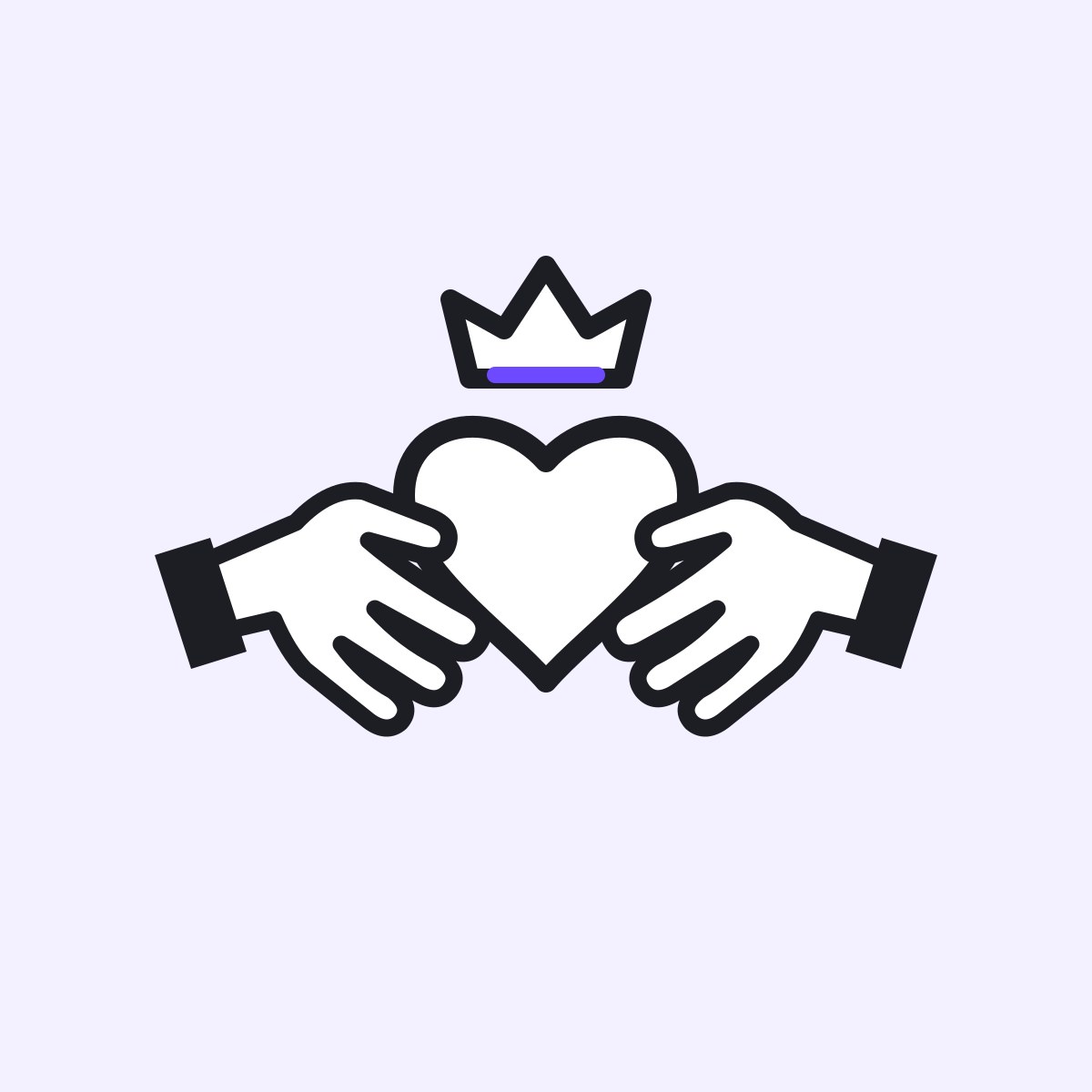
The Claddagh is an Irish ring design showing two hands holding a heart topped by a crown. The heart is conventionally read as love, the hands as friendship, and the crown as loyalty. Its best-documented early history belongs to Galway around 1700, rather than to prehistoric Celtic religion.
Claddagh meaning is therefore both personal and local. It can celebrate a marriage, a friendship, family attachment, or Irish heritage. The design has traveled far beyond Galway, but understanding the place and the surviving rings makes it more specific than a generic promise of “eternal Celtic love.”
What the heart, hands, and crown mean
The three-part design is unusually easy to read. A heart is offered or protected between two hands, while a crown rises above it. The National Museum of Ireland identifies the combination with friendship, love, and loyalty. Modern explanations commonly pair each of those values with its corresponding visible feature.
These meanings need not be romantic in every use. A ring given by a relative or close friend can emphasize affection and commitment without implying an engagement. A family heirloom may express continuity between generations. The occasion of the gift supplies part of the meaning, just as it does for many other symbols of love.
The crown is conventionally associated with loyalty in this design. It should not automatically be interpreted as a political allegiance to a particular monarch, or as proof that the wearer supports monarchy. Reading the entire composition is more reliable than isolating one feature and assigning it every meaning a crown can have elsewhere.
Where does the Claddagh ring come from?
The name is associated with the Claddagh, a fishing settlement beside Galway. The National Museum of Ireland explains that the ring style became associated with that community from the middle of the nineteenth century, while also being worn elsewhere in the surrounding region. That distinction matters: the age of the design and the history of its place-name association are not identical.
The museum dates the earliest examples of this style to around 1700 and notes that the design is often credited to Galway goldsmith Richard Joyce. “Often credited” is a careful formulation. Surviving signed work anchors Joyce in the history, but it does not establish every detail of a single invention story.
The Claddagh also resembles the older fede ring tradition, in which joined hands express trust or a bond. The National Museum traces that broader type back to the Roman era. This is a design relationship, not evidence that a Roman object already carried the full Galway combination of hands, crowned heart, and later name.
A surviving Richard Joyce ring
Galway City Museum holds a gold Claddagh ring dated to approximately 1700 and attributed to Richard Joyce. Its collection record identifies a crowned heart clasped by two hands and records the maker's mark RI inside the ring. Additional initials suggest a connection with a marriage, although identifying particular wearers requires more than initials alone.
This is unusually helpful evidence. The object connects the recognizable design with a maker, material, and approximate date. It lets the history rest on something more substantial than a modern retailer's account. The worn surface also reminds us that a ring was an intimate object handled and carried over time, not simply a free-floating emblem.
The museum describes it as among the earliest Claddagh rings and, in its public interpretation, as thought to be the oldest known example. “Known” is essential: discoveries and attributions can change. There is no need to turn a carefully qualified museum statement into a claim that no earlier ring ever existed.
Richard Joyce: history and the captivity story
The best-known origin story says Joyce was captured by pirates, enslaved in North Africa, and trained as a goldsmith before returning to Galway. In retellings, a ring made during captivity becomes a token for a faithful sweetheart. The narrative explains the design through endurance, skill, and lasting affection.
Galway City Museum itself describes the captivity account as remarkable but largely unproven. It is appropriate to tell it as a tradition connected with Joyce; it is not appropriate to report each scene and conversation as a documented event. In particular, the precise romantic circumstances of the ring's invention should not be treated as established fact.
The distinction does not make the story worthless. An origin legend can show what later communities value about an object. It simply belongs in a different category from a maker's mark on a surviving ring. Good symbolic interpretation can discuss both while naming which is evidence and which is tradition.
How is a Claddagh ring worn?
A familiar convention uses hand and heart direction to communicate relationship status. The National Museum of Ireland records wearing the ring on the right hand with the heart facing out to indicate that the wearer has not found a love, and on the right hand with the heart facing in to indicate a romance. Wearing it on the left hand indicates marriage in the tradition it describes.
More elaborate contemporary guides may separate engagement and marriage by the heart's direction on the left hand. Those guides are not a universal historical code. The museum explicitly says the origins of wearing traditions are uncertain. Treat these arrangements as customs that people may follow, not as rules enforced by the object itself.
“Facing out” normally refers to the heart's point directed away from the wearer, toward the fingertip. Even so, if relationship status matters, conversation is better than decoding someone's jewelry. People may choose a hand for comfort, fit, an inherited custom, or no symbolic reason at all.
Is the Claddagh an ancient Celtic symbol?
It is an Irish symbol with a substantial history, but the surviving Claddagh design should not be projected thousands of years backward. Around 1700 is already a meaningful historical setting. Calling the ring “Celtic” in modern jewelry language does not make it an Iron Age religious artifact.
It also differs structurally from a Celtic knot or triquetra. Those are interlace designs; the Claddagh is a figurative arrangement of hands, heart, and crown. They can appear together in contemporary jewelry, but combining them does not give them one shared origin.
Understanding a Claddagh gift today
The most grounded reading begins with the visible design, the giver's intention, and the ring's own history. An inherited Claddagh can be a family keepsake; a wedding ring can make the same design a public pledge. Neither use needs a fabricated ancient ritual to be meaningful.
Our featured illustration is a modern schematic, not a photograph of Joyce's ring. The Galway and National Museum of Ireland pages listed below provide direct historical evidence, including catalog information about surviving rings. For a wider context, see the guide to Celtic and Irish symbols, which distinguishes older ornament from later Irish emblems.
Frequently asked questions
What does the Claddagh mean?
Its crowned heart held by two hands is conventionally associated with love, friendship, and loyalty. The occasion and wearer can add a personal or family meaning.
How old is the Claddagh ring?
The earliest surviving examples date to around 1700. The design is often credited to Galway goldsmith Richard Joyce.
Which way should the heart face?
One recorded convention uses the right hand with the heart outward for someone unattached and inward for someone in a romance, and the left hand for marriage. These are traditions with uncertain origins, not compulsory rules.
Is the story about Richard Joyce and pirates proven?
No. Galway City Museum describes the captivity story as largely unproven. Joyce's surviving marked work is firmer evidence than the romantic details of the origin legend.