Learn
Symbolism Examples in Everyday Life and Literature
A symbol remains an object while also suggesting something beyond itself. These examples show how to support an interpretation with context instead of relying on a universal meaning list.

Symbolism examples include a heart standing for affection, an anchor representing hope, and blood suggesting guilt in Shakespeare's Macbeth. In each case, something concrete carries an additional meaning. The important part is the connection: a symbol is not meaningful simply because someone has placed it on a list.
Everyday conventions and literary symbols work somewhat differently. A printed heart relies on a familiar shared convention. A novelist can build a new association by repeating an ordinary object at important moments. To explain either, identify the object, the possible meaning, and the evidence linking them.
Five examples of symbols at a glance
| Example | Possible symbolic meaning | Evidence to check |
|---|---|---|
| A heart on a valentine | Love or affection | The card's words, occasion, and surrounding images |
| An anchor in Christian imagery | Hope or steadfastness | The scriptural association in Hebrews 6:19 and the object's setting |
| Blood in Macbeth | Violence, responsibility, and guilt | The murders, repeated language, and imagined stains |
| Pilgrims and saints in Romeo and Juliet's first conversation | Courtship framed through religious devotion | The shared language of hands, lips, prayer, and a kiss |
| Roses on a historical valentine | Love within a particular gift tradition | The date, accompanying flowers, inscription, and design |
These are five useful examples, not five permanent definitions. A heart in a biology textbook is an organ. Blood in an account of a laboratory test may be literal information. A rose in a botanical illustration may be shown primarily to explain a plant. Context determines whether a symbolic reading adds anything.
Example 1: the heart as a sign of affection
A heart beside someone's name can communicate affection without a full sentence. On a valentine, its meaning is reinforced by the occasion and the relationship between giver and recipient. It may express romance, but it can also concern friendship or family love.
The same outline can take on a more specific meaning when other details appear. An arrow can introduce the idea of love as a wound; flames can suggest intensity or devotion. In religious art, a heart may belong to a distinct devotional tradition. “Heart equals romance” is too blunt to explain every example.
A strong explanation therefore names the actual setting: “The heart on the greeting card represents affection because the message addresses a loved person and the design belongs to a valentine tradition.” For related examples, see symbols of love.
Example 2: the anchor as hope
An anchor is a working object used to hold a vessel in place. That function makes it available as an image of firmness and security. In Christian usage, Hebrews 6:19 explicitly compares hope to an anchor of the soul. Here, the link is supplied by a text, not merely inferred from the object's shape.
That does not mean every anchor depicts Christian hope. An anchor on a harbor sign may identify a maritime place. On a sailor's memorial it may concern a life at sea. On a contemporary bracelet it may have a meaning chosen by the wearer. The same form can move between practical, religious, commemorative, and personal uses.
When interpreting an anchor in an artwork, look for accompanying inscriptions or other recognizable attributes. A catalog description can establish whether a figure personifies Hope. The anchor entry explores these distinctions without assigning every example one meaning.
Example 3: blood in Macbeth
Blood in Macbeth begins with a literal connection to warfare and killing. After Duncan's murder, it also becomes a way for the play to explore responsibility that cannot easily be removed. Macbeth looks at his hands and imagines that even an ocean could not wash them clean.
The image gains strength through repetition and change. Lady Macbeth initially treats washing as a practical solution. Later, in her sleepwalking scene, she tries to remove a stain that the scene's observers cannot see. The difference between actual blood and imagined blood makes guilt visible onstage.
A useful interpretation is therefore more precise than “blood symbolizes death.” Death is part of the pattern, but the play repeatedly connects blood with what its characters have done and cannot undo. The Folger Shakespeare Library's text lets readers follow that pattern through the scenes rather than accepting a detached definition.
This example also shows that literal and symbolic functions can coexist. The blood can be evidence of an actual killing within the story and a recurring image of moral consequence. You do not have to choose one function and erase the other.
Example 4: pilgrims and saints in Romeo and Juliet
When Romeo and Juliet first speak in Act 1, scene 5, they develop a shared language of pilgrimage and devotion. Hands become involved in an exchange about pilgrims and saints, and their conversation moves from hands to lips and a kiss. The religious vocabulary gives the flirtation a carefully constructed form.
Calling Juliet a saint is not a neutral factual description. Within the exchange, it places Romeo in the role of a devoted visitor seeking favor. Juliet answers within the same figurative system rather than simply accepting a compliment. The meaning develops through dialogue.
Some readers may call this an extended metaphor rather than a stand-alone symbol. That is a useful distinction, not a problem. Literary devices overlap. What matters is explaining how the language works: the scene borrows a vocabulary of sacred devotion to stage a conversation about attraction.
A weak interpretation might claim that hands always symbolize religion. A stronger one follows the scene's particular words and actions. The body part does not carry that meaning on its own; the exchange builds it.
Example 5: roses on historical valentines
The Metropolitan Museum of Art's account of historical valentines shows flowers operating within elaborate messages. Roses could appear with other flowers, concealed pictures, movable paper parts, inscriptions, and Cupid. A design might reveal its message gradually as the recipient opened or lifted parts of the card.
In that setting, a rose is more than decoration, but its contribution depends on the whole object. Another flower can add a different association, and a wedding ring can shift a loving greeting toward a proposal. The object's mechanics and text help explain its meaning.
This is why historical evidence is preferable to an unsourced list of flower codes. We can examine a particular card and its documented date rather than assume that every red, pink, or yellow flower has carried one message in every society. Our flower symbolism guide discusses that wider problem.
How to identify symbolism in a passage or artwork
- Describe the detail literally. Name the object, color, action, or image without interpreting it yet.
- Locate its context. Establish who uses it, where it appears, and what happens around it.
- Look for emphasis. Repetition, unusual attention, contrast, or a character's response can make a detail significant.
- Propose a meaning. Choose a reading that explains those details rather than importing a generic definition.
- Test the reading. Ask whether later appearances support, complicate, or contradict it.
Not every symbol repeats, and not every repeated object is symbolic. Repetition is a clue rather than a rule. A museum title, a scriptural reference, or an inscription may establish an association even when the image appears only once. Conversely, a chair may recur because characters need somewhere to sit.
Consider alternative readings before settling on one. If a caged bird appears, does the work emphasize confinement, care, status, music, or something else? The answer comes from what that particular work does. A dictionary can suggest questions, but it cannot replace looking.
Symbolism, metaphor, motif, and allegory
Symbolism lets a concrete thing suggest an additional meaning. Metaphor understands one thing in terms of another. Motif names a recurring element or pattern. Allegory involves a more sustained relationship between a narrative or image and another level of meaning.
One detail can participate in several devices. Blood in Macbeth is a recurring motif and can carry symbolic significance. A passage may also compare guilt to a stain through metaphor. These labels help describe the construction; they should not become a contest in which only one label is allowed.
The difference is clearer with an invented example: a cracked cup appears whenever two characters avoid discussing an argument. The repeated cup is a motif. If its damage comes to suggest the relationship's fragility, it also functions as a symbol. This is a teaching example, not an account of a published story.
Why an apple does not always mean temptation
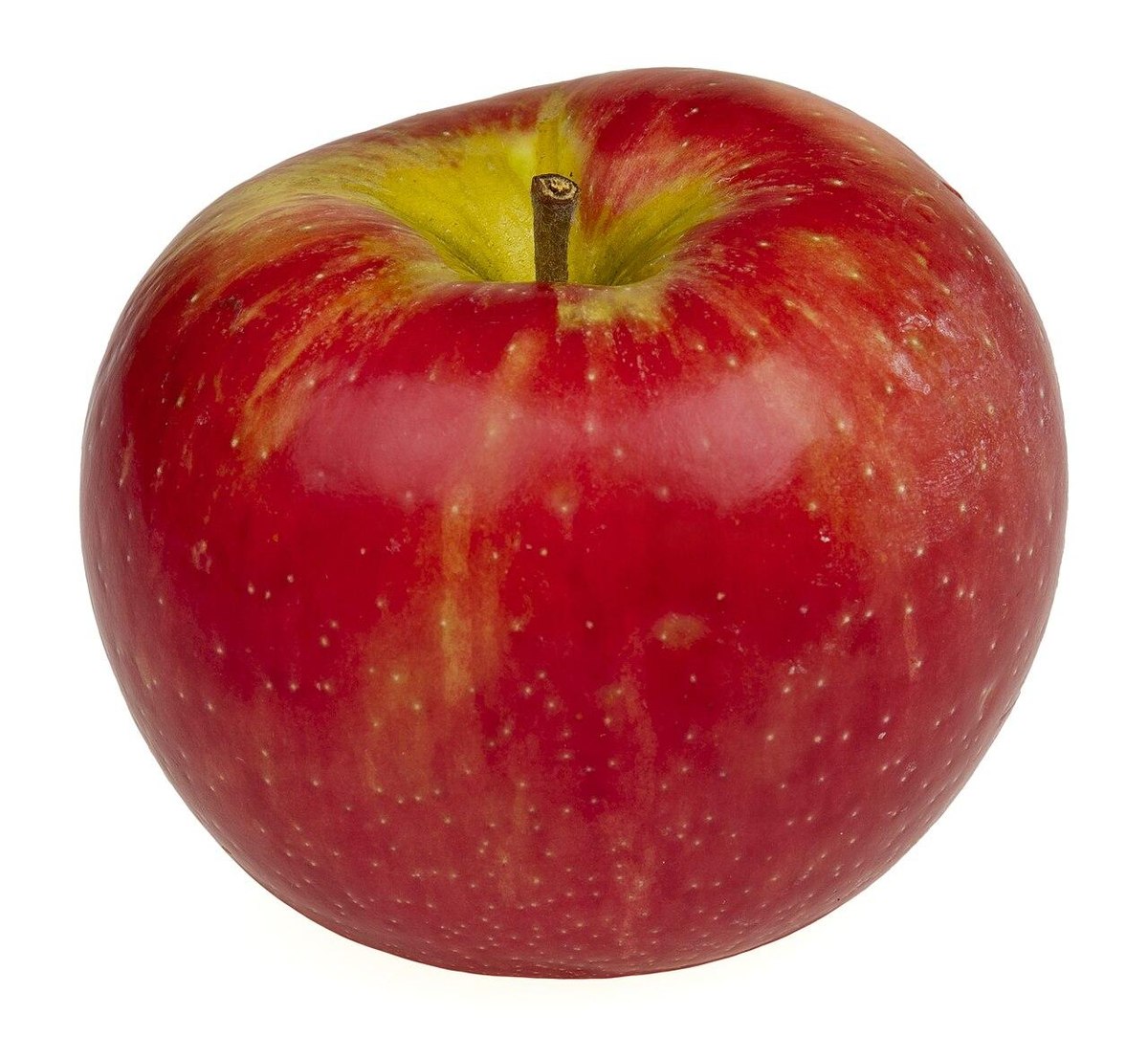
An apple may suggest food, a harvest, a schoolroom gift, a commercial brand, or a familiar story. Its shape alone does not tell us which association is intended. The featured photograph on this page is a prompt to ask that question, not a claim that apples have one hidden definition.
This is especially important when a familiar interpretation outruns its source. The Genesis narrative of the forbidden fruit does not identify the fruit as an apple. An apple can refer to later artistic traditions around that episode, but it should not be presented as a botanical fact supplied by the biblical text.
The best short formula is: “In this context, this detail suggests this idea, because of this evidence.” It keeps interpretation specific, leaves room for alternatives, and makes the reasoning visible. Continue with the definition of symbolism, literary symbolism, or the learning hub.
Frequently asked questions
What are five examples of symbols?
A heart on a valentine can represent affection; an anchor in Christian imagery can represent hope; blood in Macbeth can suggest guilt; Romeo and Juliet's pilgrimage language frames courtship as devotion; roses on historical valentines can express love. Each meaning depends on its setting.
What is symbolic meaning in literature?
It is an additional meaning carried by a concrete detail within a work. The reading should be supported by the language, actions, patterns, or historical context rather than a universal symbol list.
How do I know whether something is a symbol?
Look for contextual evidence such as emphasis, repetition, contrast, an inscription, or a recognizable textual reference. Then test whether the proposed meaning explains the detail's role in the work.
Can an object be both literal and symbolic?
Yes. Blood can be an actual consequence of violence within Macbeth and also help the play explore guilt. The symbolic function adds meaning without removing the literal one.
Are symbolism and metaphor the same?
They overlap but are not identical. A metaphor understands one thing in terms of another, while a symbol is a concrete thing that carries an additional association. One passage can use both.
Sources & further reading
- Folger Shakespeare Library: Macbeth, Act 2, scene 2
- Folger Shakespeare Library: Macbeth, Act 5, scene 1
- Folger Shakespeare Library: Romeo and Juliet, Act 1, scene 5
- Hebrews 6:19, New Revised Standard Version Updated Edition
- The Met: A Rose by Any Other Name
- Folger Shakespeare Library: Reading Shakespeare's Language, Romeo and Juliet
- Rutgers University: How the Forbidden Fruit Became an Apple
- Britannica: Symbolism
- Genesis 3, New Revised Standard Version Updated Edition