Cultures
Zodiac Symbols and the Meanings of All 12 Signs
Recognize every zodiac glyph, understand its traditional image, and see how the signs appear on real artworks across cultures.
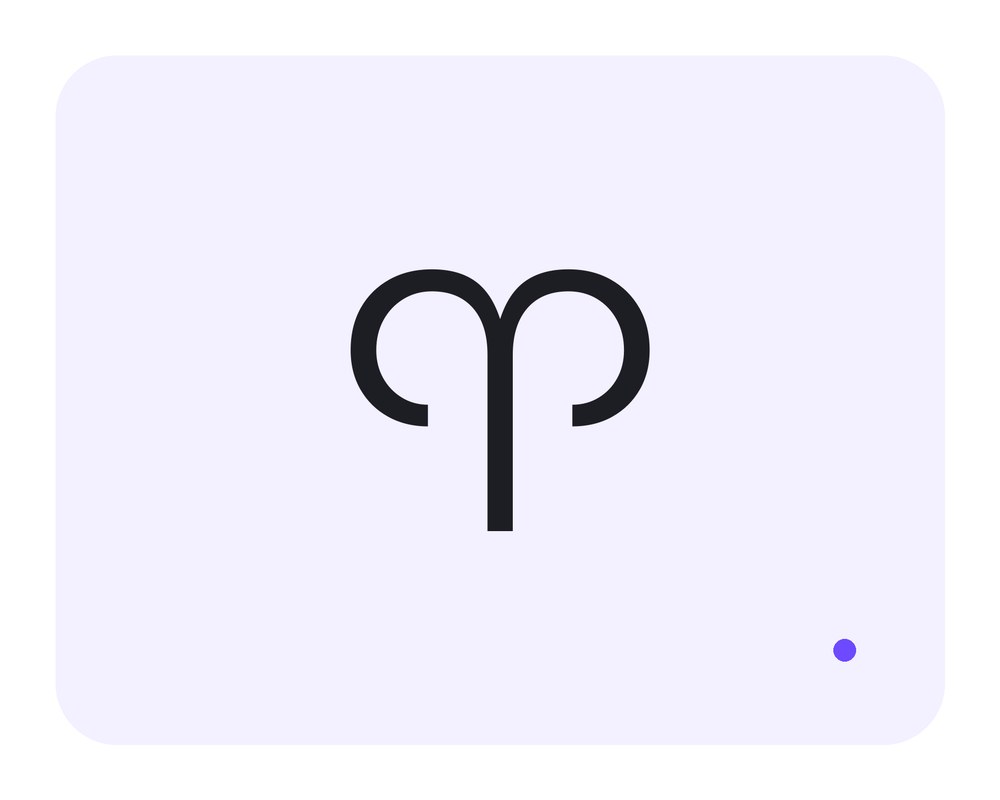
The ram.
The bull.
The twins.
The crab.
The lion.
The maiden.
The scales.
The scorpion.
The archer.
The sea-goat.
The water bearer.
The fishes.
Zodiac symbols are the twelve signs ♈ ♉ ♊ ♋ ♌ ♍ ♎ ♏ ♐ ♑ ♒ ♓, used to represent Aries through Pisces. Each has a name and a conventional image, such as the ram for Aries or scales for Libra. The small written mark is a glyph; it is not a map of the corresponding constellation.
These symbols belong to the history of astronomy, astrology, calendars, and art. Knowing what a glyph identifies is different from accepting predictions made with it. This guide explains the symbols as a cultural vocabulary, with museum objects that show how widely zodiac imagery traveled.
The twelve zodiac signs, symbols, and dates
The dates below are commonly printed Western tropical sun-sign ranges. They are approximate: a sign boundary is a moment, not a whole civil day, and its calendar date can depend on year and time zone. They are not the dates when the Sun crosses today's astronomical constellation boundaries.
| Sign | Symbol | Traditional image | Common tropical dates | Unicode |
|---|---|---|---|---|
| Aries | ♈ | Ram | March 21–April 19 | U+2648 |
| Taurus | ♉ | Bull | April 20–May 20 | U+2649 |
| Gemini | ♊ | Twins | May 21–June 21 | U+264A |
| Cancer | ♋ | Crab | June 22–July 22 | U+264B |
| Leo | ♌ | Lion | July 23–August 22 | U+264C |
| Virgo | ♍ | Maiden | August 23–September 22 | U+264D |
| Libra | ♎ | Scales | September 23–October 23 | U+264E |
| Scorpio | ♏ | Scorpion | October 24–November 21 | U+264F |
| Sagittarius | ♐ | Archer | November 22–December 21 | U+2650 |
| Capricorn | ♑ | Sea-goat | December 22–January 19 | U+2651 |
| Aquarius | ♒ | Water bearer | January 20–February 18 | U+2652 |
| Pisces | ♓ | Two fish | February 19–March 20 | U+2653 |
Some popular calendars shift a boundary by a day. If a birth falls near a change, a generic date chart is not precise enough to identify the tropical Sun sign. More importantly, a date range says which convention is being used, not whether a prediction is scientifically valid.
How to recognize each zodiac glyph
Aries ♈, Taurus ♉, and Gemini ♊
Aries means ram. Its glyph has a central stem and two curving upper branches, making ram's horns a useful visual reminder. Do not confuse the resemblance with a complete explanation of how every historical form of the mark developed.
Taurus means bull. The circle topped by a pair of curves is easy to remember as a head with horns. In art the sign may appear as an entire bull instead of a compact glyph. Cleveland's Taurus, from a “Mandi Astrology Series”, made in northern India around 1810, shows a large decorated white bull, not the familiar typed circle-and-horns mark.
Gemini means twins. The glyph's two parallel uprights, joined at top and bottom, provide a compact reminder of a pair. A painted or carved zodiac cycle may represent the twins as two human figures. The paired structure, not any one font's curve, is the useful identification feature.
Cancer ♋, Leo ♌, and Virgo ♍
Cancer is the crab. The glyph looks like two opposed curved forms, often described informally as a sideways 69. That comparison helps identify the character, but the official sign remains Cancer, not a number. Historical images can show a recognizable crab rather than an abstract mark.
Leo is the lion. Look for a small loop connected to a larger rising and falling curve. Thinking of a mane or tail may help you remember it, but a mnemonic is not proof of the glyph's origin. On zodiac artworks, a whole lion can carry the same identifying role.
Virgo is the maiden or virgin. Its mark has an m-like body ending in an inward-turning loop. Compare the ending carefully with Scorpio's: Virgo does not have Scorpio's outward arrow. The two can become hard to distinguish at very small sizes or in an unfamiliar typeface.
Libra ♎, Scorpio ♏, and Sagittarius ♐
Libra is represented by scales. Its glyph combines a horizontal lower line with an upper form that rises into a central arch. The traditional image is a balancing instrument, so a set of scales on a calendar or vessel may identify Libra even without this written sign.
Scorpio is the scorpion; the corresponding constellation is usually called Scorpius in astronomical usage. Its m-like glyph ends in an outward-pointing arrow, a helpful way to distinguish it from Virgo. Identify the whole mark rather than relying only on the first two strokes.
Sagittarius is the archer. The glyph is a diagonal arrow crossed by a short stroke. In figurative art the archer can take a more elaborate form, including a centaur with a bow. The arrow alone is the compact written identifier.
Capricorn ♑, Aquarius ♒, and Pisces ♓
Capricorn is traditionally the sea-goat, a composite creature with a goat's front and a fishlike rear. Its glyph varies noticeably among fonts, with an angular beginning and a curled ending. That hybrid identity is more precise than calling every historical Capricorn image simply a mountain goat.
Aquarius is the water bearer, not the name of a fish. The mark consists of two stacked zigzag or wavy lines. They are a convenient visual link to water, while traditional figural images show a person pouring it. Its watery picture should not be mistaken for a scientific classification of the sign.
Pisces is the fishes, usually shown as a pair. Its glyph has two opposed curves joined by a crossbar. The mark's paired arrangement separates it from Gemini's parallel uprights. In a museum image, look for two fish and any connecting band rather than expecting a modern font character.
Where did the zodiac come from?
The zodiac developed from observing the region of sky around the Sun's apparent yearly path, the ecliptic. Babylonian astronomy and astrology were important to its development; Greek and later traditions adapted and transmitted this material. The familiar twelve-sign sequence is a historical system, not an arrangement that every culture independently used in the same way.
Over time, zodiac images appeared on scientific instruments, luxury metalwork, manuscripts, and other objects. That range is important. A zodiac image on a cup is not automatically a personal horoscope, and a calendar image does not necessarily claim that the stars determine its owner's future.
The Metropolitan Museum's account of medieval Islamic astronomy and astrology distinguishes observational and calculating work from astrological interpretation while explaining their historical connections. The same instrument could support different purposes. Reading an object accurately means asking how it was used, not assigning its entire culture one attitude toward the heavens.
Three real objects with zodiac imagery
The Wade Cup with Animated Script, 1200–1221. This Iranian vessel in Cleveland has small human and animal figures in interlacing compartments. The museum identifies them as the twelve zodiac signs. Its animated inscription and intricate surface show why a close look at an actual object tells us more than a generic zodiac wheel.
A June calendar page from a Book of Hours, about 1510. Made in Rouen, France, this manuscript leaf combines seasonal haymaking with Cancer, represented by a crab. It is part of a Christian devotional manuscript. Its presence shows zodiac imagery working as calendar decoration in a religious book, rather than establishing that the book was a horoscope manual.
Taurus from a Mandi astrology series, about 1810. The northern Indian painting makes a richly adorned bull the central image. Its setting and artistic vocabulary differ from the French manuscript and Iranian cup. The shared identification of a zodiac sign should not hide those differences in date, region, and purpose.
All three photographs in the museum strip are CC0 collection images. They show representational animals and figures, not evidence that today's exact Unicode glyph designs were used unchanged in every period.
Zodiac signs are not the same as constellations
A constellation in modern astronomy is a defined region of the sky. A tropical astrological sign is one of twelve equal 30-degree divisions measured from the March equinox. The constellations are not equal in size, so the Sun does not spend an equal month in each one.
Earth's rotational axis slowly changes direction, a motion called precession. This changes the relationship between seasonal reference points and the distant stars over long periods. It helps explain why common tropical sign dates do not line up with the Sun's present passage through the named constellations.
Sidereal astrological systems use stellar reference frameworks rather than the tropical zodiac's equinoctial starting point, with differences among their conventions. A chart should say which system it follows. Combining dates from one system with interpretations labeled as another creates avoidable confusion.
What about Ophiuchus?
The Sun's apparent path crosses Ophiuchus as well as the twelve constellations whose names are used for the familiar signs. That astronomical fact does not mean NASA created a new astrological sign or changed anyone's horoscope. Astronomy describes sky regions; an astrological tradition decides how its own system divides and interprets them.
Copying zodiac symbols without losing their meaning
The twelve glyphs are encoded consecutively in Unicode, from Aries at U+2648 to Pisces at U+2653. You can select and copy the characters here, or find other characters in the Symbol Finder. Their shapes may change with the font, and some apps display colorful emoji-style tiles instead of monochrome text.
A glyph, an animal picture, and a star-map outline are three different ways to represent a sign or constellation. For literal star characters, use the star symbols collection; those characters do not identify zodiac signs by themselves. For repeating circles and diagrams, see sacred geometry symbols, another subject where visual similarity can conceal different histories.
The Chinese zodiac is a separate calendrical system, not an alternative set of names for these twelve glyphs. Keep its animal cycle and cultural explanations distinct; our Chinese symbols guide provides a broader entry point to reading imagery in context.
Finally, astrology is not the same discipline as astronomy. NASA describes astronomy as a science based on evidence and data, while astrology is a belief about interpreting celestial positions. Zodiac symbols can be studied, enjoyed, or used for personal identification without treating personality or compatibility claims as established scientific facts.
In the museum
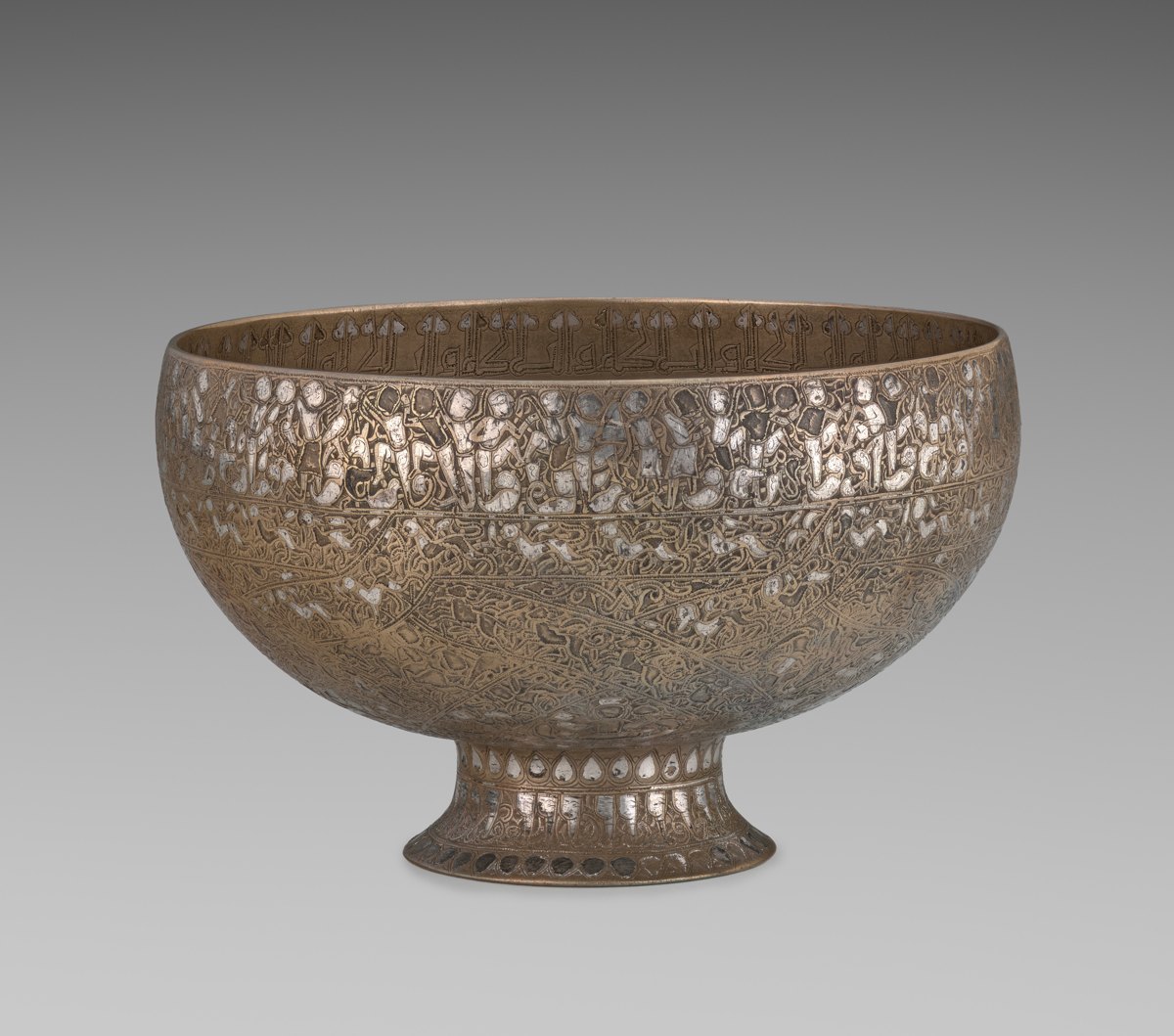
The Wade Cup with Animated Script, Iran, 1200–1221. The museum identifies the tiny compartment figures as the twelve zodiac signs; their details are subtle at this scale. Cleveland Museum of Art, 1944.485. CC0.
1200–1221 · Iran, Seljuq period of Iran (1037–1194) · Cleveland Museum of Art · 1944.485 · CC0
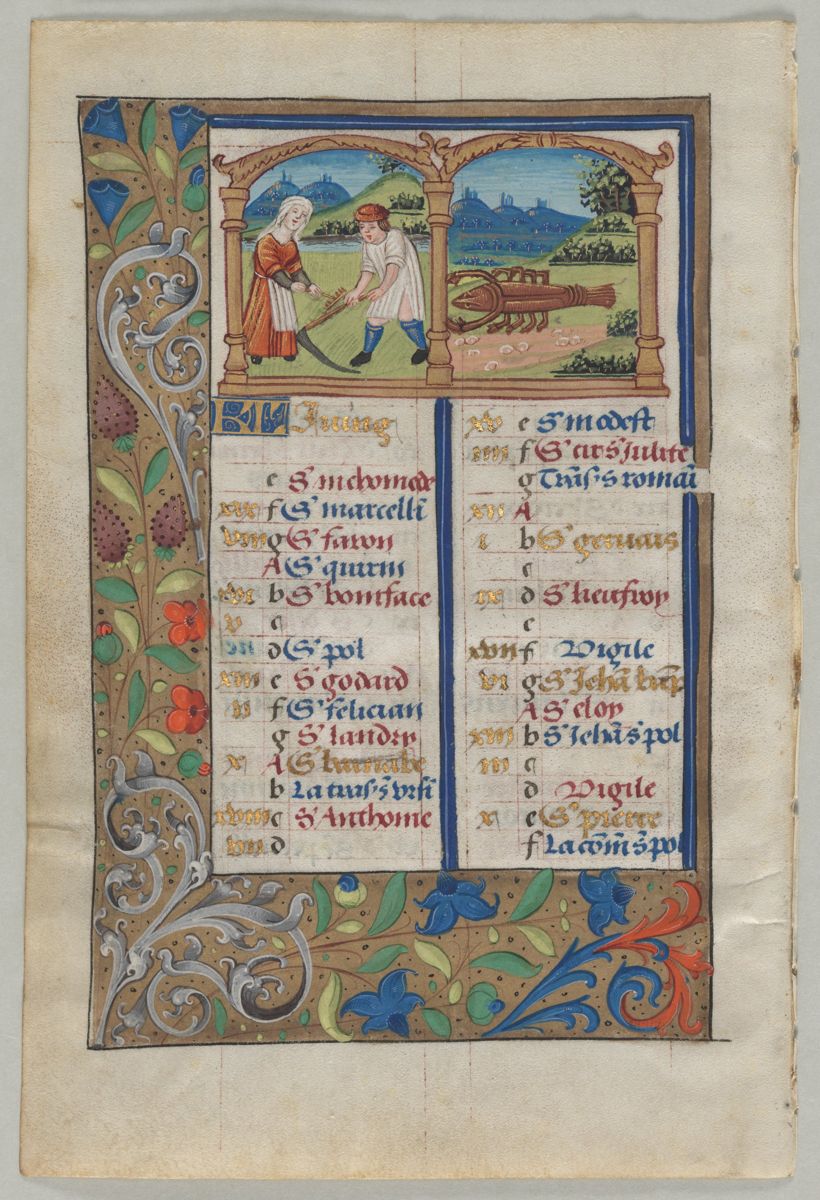
June calendar page from a Book of Hours, Rouen, c. 1510. Haymaking illustrates the season, while the small crab represents Cancer. Cleveland Museum of Art, 2011.65.b. CC0.
c. 1510 · France, Rouen · Cleveland Museum of Art · 2011.65.b · CC0
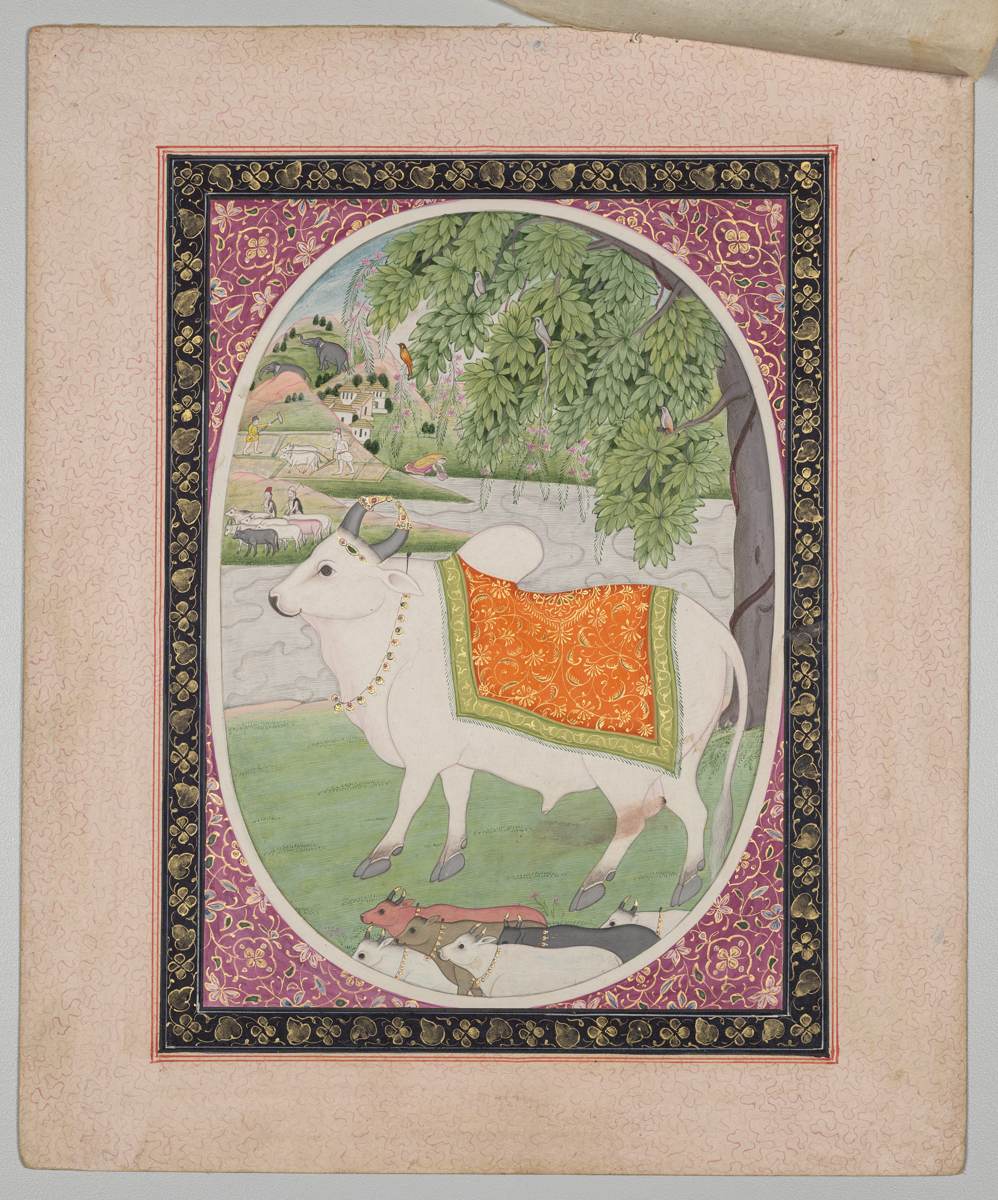
Taurus from a Mandi Astrology Series, northern India, c. 1810. The decorated white bull represents Taurus through a full animal image rather than a typed glyph. Cleveland Museum of Art, 2020.432. CC0.
c. 1810 · Northern India, Pahari kingdoms · Cleveland Museum of Art · 2020.432 · CC0
Frequently asked questions
What are the 12 zodiac symbols in order?
♈ Aries, ♉ Taurus, ♊ Gemini, ♋ Cancer, ♌ Leo, ♍ Virgo, ♎ Libra, ♏ Scorpio, ♐ Sagittarius, ♑ Capricorn, ♒ Aquarius, and ♓ Pisces.
Are zodiac sign dates exact?
The ranges printed in popular charts are approximate tropical dates. A boundary is an exact moment that can fall on different civil dates depending on year and time zone. These ranges also differ from the Sun's passage through astronomical constellations.
What is the difference between Virgo and Scorpio symbols?
Both have an m-like beginning. Virgo ♍ ends with an inward-turning loop; Scorpio ♏ ends with an outward-pointing arrow.
Did NASA add a thirteenth zodiac sign?
No. Ophiuchus is a constellation crossed by the Sun's apparent path. Describing that path does not revise the conventional twelve-sign astrological system.
Why do zodiac symbols turn into emoji?
Display depends on the app, font, and presentation support. The same encoded sign may appear as a monochrome glyph or a colorful emoji-style tile.
Do zodiac symbols prove astrology works?
No. They document a cultural and historical system of signs. The existence and long use of those signs are separate from evidence for predictive claims.
Sources & further reading
- Britannica: Zodiac
- NASA: The Path of the Sun, the Ecliptic
- NASA Space Place: What Are Constellations?
- The Met: Astronomy and Astrology in the Medieval Islamic World
- Unicode: Miscellaneous Symbols code chart
- Cleveland Museum of Art: The Wade Cup with Animated Script
- Cleveland Museum of Art: Calendar Page for June
- Cleveland Museum of Art: Taurus, Mandi Astrology Series