Cultures
Rod of Asclepius Meaning and Medical History
The single-serpent staff of a Greek healing god became a widely recognized emblem of medicine.
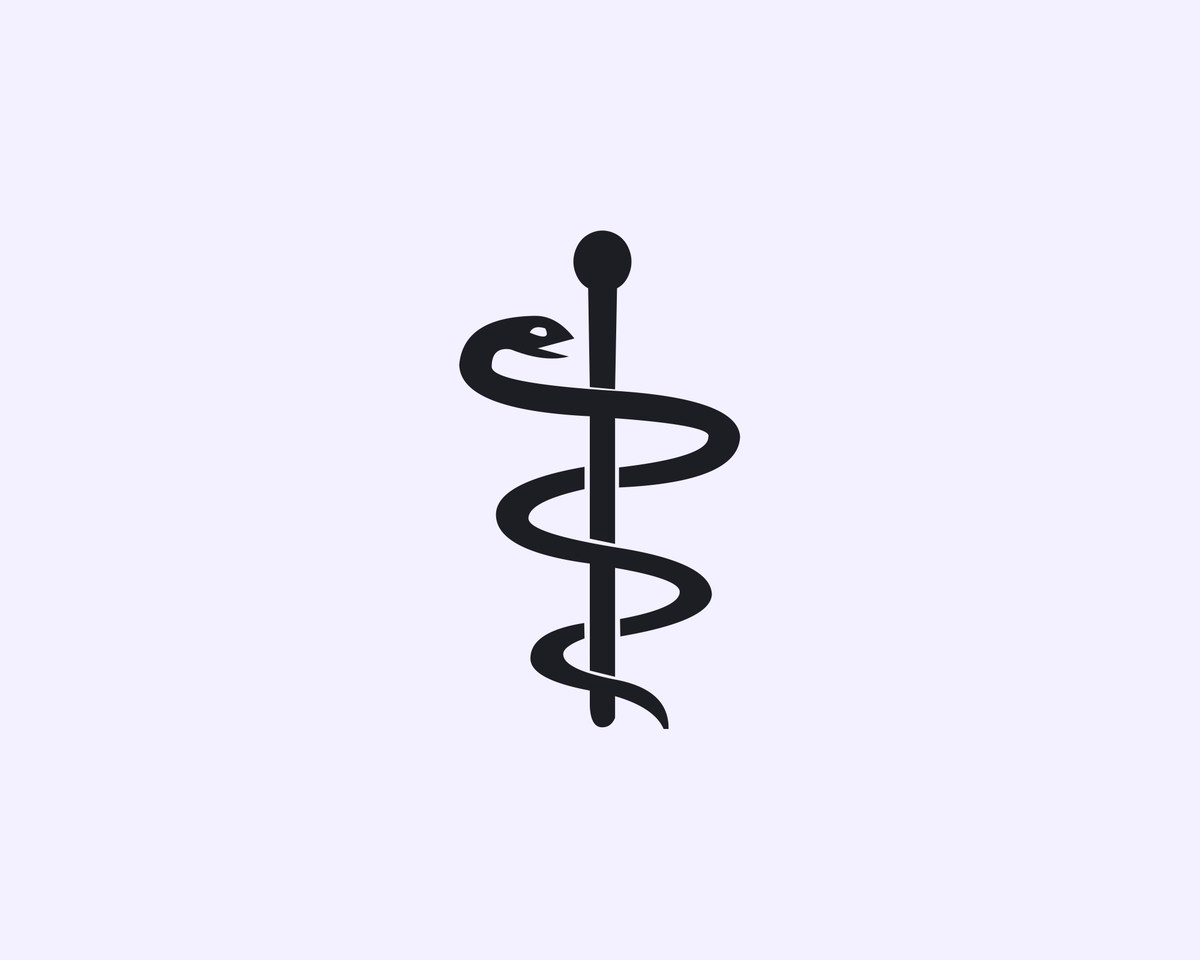
The rod of Asclepius is a staff with one snake coiled around it, a symbol of medicine and the medical profession. It takes its name from Asclepius, the ancient Greek god of healing, known in Latin as Aesculapius. The simplest identifying rule is one snake, one staff, and no wings. It is not the same emblem as the two-snake caduceus.
Its modern use draws on a much older religious image. In Greek and Roman art, a serpent-wound staff helps identify the healing god; in a medical organization's emblem, the same attribute refers to the work of medicine. That continuity is symbolic, not a claim that ancient religious practices and modern clinical care are equivalent.
What does the rod of Asclepius mean?
Today its clearest meaning is medicine, healing as a professional aim, and the people or institutions engaged in care. The World Health Organization explicitly explains the snake and staff in its emblem by reference to Asclepius. That documented explanation is firmer evidence than a generalized claim that every snake everywhere represents healing.
The sign can also carry a historical meaning: it identifies the god in a sculpture or alludes to his cult. To interpret an ancient object, ask whether the staff belongs to a figure and what the museum says about that figure. To interpret a modern logo, consult the institution's own explanation. The same visual components can function differently in a sanctuary, a scholarly book, and a hospital sign.
Who was Asclepius?
Asclepius was worshiped by ancient Greeks as a healing deity. The Science Museum Group describes the spread of his cult in the fifth century BCE and the establishment of sanctuaries where the ill sought help. His Roman name, Aesculapius, accounts for the alternative phrase “staff of Aesculapius.” These are two names for the same emblematic association, not two competing medical symbols.
In art, he often appears as a mature, bearded man with a heavy staff and a single serpent. The staff is an attribute: a recognizable accompanying object that tells the viewer who the figure is. Over time, the attribute could stand apart from the figure and still evoke medicine. A modern icon is usually that isolated attribute rather than a portrait of the god.
Ancient accounts of Asclepius belong to religious and mythological traditions. They can explain why an image mattered to worshipers, but they are not clinical evidence. Describing the cult respectfully does not require presenting a legend as a tested account of disease or treatment.
Rod of Asclepius versus caduceus
The caduceus is the herald's staff associated with Hermes, called Mercury by the Romans. Its familiar form has two snakes arranged around a central shaft and often a pair of wings. Asclepius's rod has one snake and normally no wings. Count the snakes before relying on the general impression of a “medical-looking” staff.
| Feature | Rod of Asclepius | Caduceus |
|---|---|---|
| Snakes | One | Two |
| Wings | Absent in the conventional form | Often present |
| Associated deity | Asclepius / Aesculapius | Hermes / Mercury |
| Historical association | Healing and medicine | Heralds and the messenger god |
The Science Museum Group notes the persistent confusion between the emblems. Some modern healthcare bodies do use a caduceus, so recognizing one on a medical building does not change its original identity. It means that a later organization adopted that image. Calling every two-snake medical logo a rod of Asclepius makes an understandable confusion harder to correct.
For other cases in which a familiar shape acquired different meanings, browse the symbol dictionary. Similarity is a useful starting point for comparison, not proof that two traditions share an origin.
Why a snake and a staff?
The secure historical association is between Asclepius, his cult, and snakes. WHO's account explicitly mentions the use of snakes in that cult, and museum descriptions identify the serpent-wound staff as his attribute. This supports the emblem's medical history without requiring a single universal explanation for each component.
Popular accounts often decode the snake as renewal because it sheds its skin, or the staff as the healer's travels. Such interpretations may be meaningful to later viewers, but an attractive explanation is not automatically evidence of what first produced the symbol. Nor should a story about a worm wound around a stick be presented as an established origin without specific historical support.
There is a practical distinction between explaining an image and assigning a fixed meaning to every detail. The rod can be recognized with confidence even when the first reason for combining its components is less certain. “Associated with the healing god Asclepius” is a more defensible caption than a confident but unsourced reconstruction of its invention.
How medical institutions use it
WHO's emblem was chosen by the First World Health Assembly in 1948. It places a staff with a coiled snake over the United Nations symbol. WHO identifies that staff as a longstanding sign of medicine and links it to Asclepius. The full emblem is an institutional design, not simply a free-standing ancient motif.
The distinction matters for reuse. WHO states that its name, emblem, and logo are protected and require express permission. A general discussion of the rod does not give permission to copy WHO's complete design or imply the organization's endorsement. The illustration on this page is a generic rendering of the symbol, not the WHO emblem.
The National Army Museum gives another documented example: the cap badge of the Royal Army Medical Corps featured a serpent coiled around a staff. Its history shows how an ancient attribute can become a recognizable marker of a modern medical service without losing its identifying single-snake form.
What counts as good historical evidence?
A particularly clear comparison is the Science Museum Group's headless marble figure of Asclepius with staff and serpent, cataloged as probably Roman and dated 100 BCE–200 CE. Although the head is missing, the associated objects still identify the healing god. That makes it better evidence for this emblem than a generic ancient snake ornament.
The Met's Roman carnelian ring stone depicts Asclepius with a snake, but its catalog describes a bust rather than an isolated rod. It is useful evidence for the god's serpent association, not a reason to label every depiction of him a complete example of the modern medical emblem. We distinguish those claims rather than substituting loosely related objects for direct evidence.
Copying the medical symbol
Unicode encodes ⚕ as U+2695, STAFF OF AESCULAPIUS. The name uses the Latin form of the god's name. Fonts may show an upright or inclined staff; Unicode specifically recognizes that variation. It remains different from ☤, U+2624, CADUCEUS.
For a concise description, use “a single snake coiled around a staff, the rod of Asclepius.” For religious or historical context, add the object's place and date. Like the ankh, it is an old symbol with modern uses, but its medical meaning should never be turned into a promise that an image itself can prevent or cure illness.
Frequently asked questions
How many snakes are on the rod of Asclepius?
One. The conventional emblem shows a single serpent coiled around a staff, without wings.
Is the rod of Asclepius the same as the caduceus?
No. The caduceus belongs to Hermes or Mercury and normally has two snakes, often with wings.
Why does WHO use a snake and staff?
WHO explains the motif as a longstanding symbol of medicine originating in the story and cult of Asclepius. Its emblem was chosen in 1948.
What is the medical symbol in Unicode?
⚕ is U+2695, officially STAFF OF AESCULAPIUS. The two-snake caduceus is a separate character, ☤, U+2624.