Cultures
Ouroboros Meaning and the Serpent That Bites Its Tail
A serpent closes a circle by taking its own tail into its mouth. The ouroboros can express recurrence, eternity, or the unity of things, depending on its setting.
The ouroboros is a snake, or sometimes a dragon, shown with its tail in its mouth. Its closed body often represents a cycle: ending and beginning belong to the same movement. Eternity, renewal, and the unity of things are established ouroboros meanings, but a particular object may emphasize one of these ideas rather than all of them.
The most useful starting point is the image itself. Unlike an ordinary coiled snake, an ouroboros joins mouth and tail. Unlike a plain ring, it is a living creature apparently consuming itself. That combination makes the symbol more complicated than a simple sign for “forever.”
What does the ouroboros mean?
In its familiar cyclical reading, the serpent consumes what it also continually becomes. The image allows destruction and renewal to occupy the same circle. Britannica describes its use in Gnostic and alchemical settings as an expression of the unity of material and spiritual things undergoing continuing transformation.
A second reading emphasizes duration. The British Museum identifies the ouroboros as a symbol of eternity. A closed outline has no obvious stopping point, while the act of biting gives the circle a sense of ongoing activity. These are related ideas, but eternity and repeated renewal are not identical.
A third feature is enclosure. On small engraved gems, an ouroboros can form a boundary around other figures. What lies inside matters. A serpent surrounding an Egyptian deity on a Roman amulet is not automatically making the same statement as a serpent surrounding a modern artist’s composition.
History without a single-origin myth
Reference works connect the emblem with ancient Egypt and Greece. Surviving objects also demonstrate its use in the Roman world. That is firmer ground than naming a single inventor or claiming that every later tail-biting serpent descends through an unbroken chain from one original drawing.
Even the name and the image should be distinguished. The word belongs to a Greek naming tradition; the existence of a Greek name does not prove that Greek artists invented the motif. Equally, identifying Egyptian examples does not make every later occurrence a direct statement of Egyptian religion.
For a broader introduction to that religious setting, see our guide to Egyptian symbols. The ankh and Eye of Horus have their own histories and uses. They should not be treated as interchangeable signs for a generalized “ancient spirituality.”
What museum objects actually show
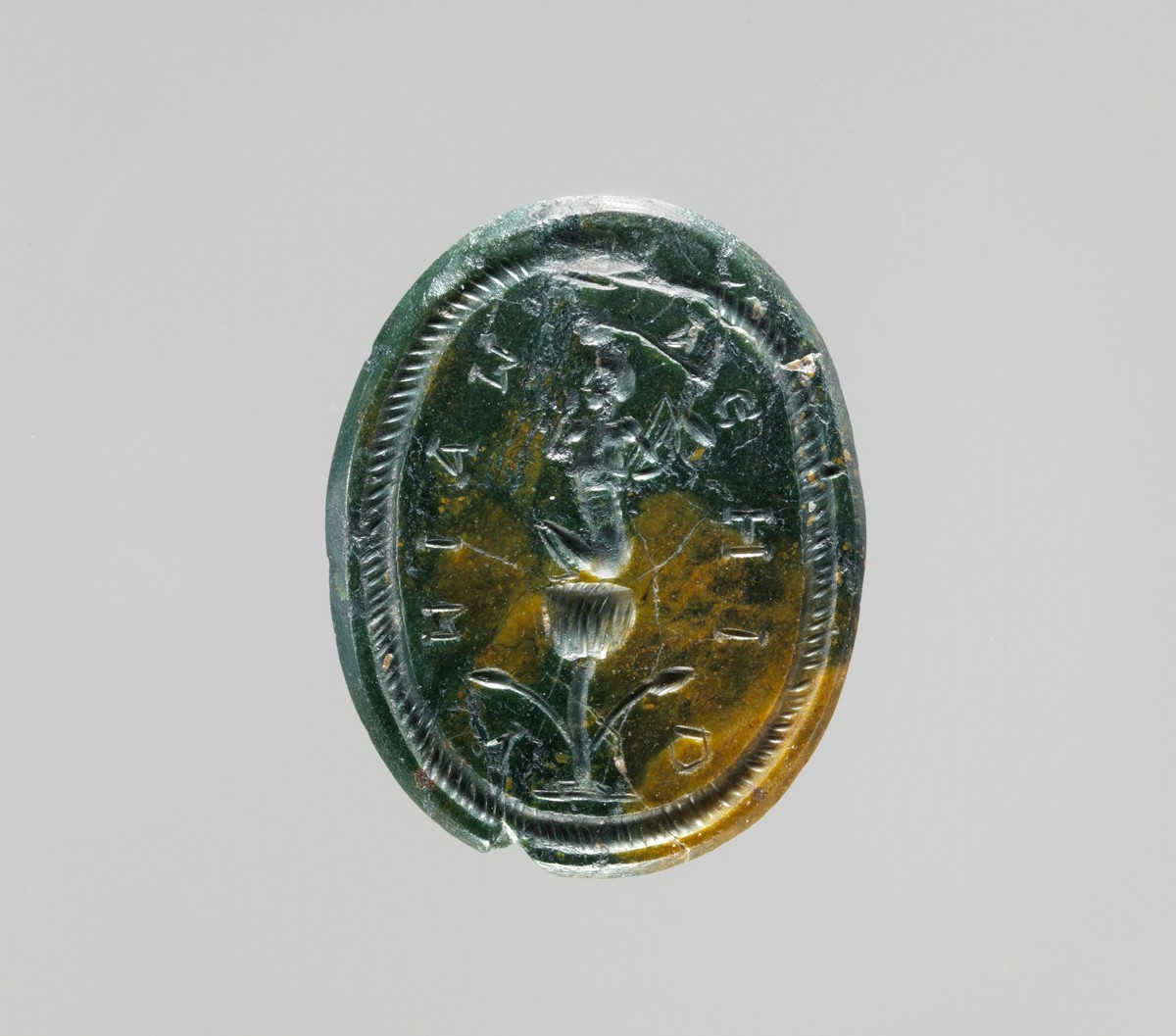
The Metropolitan Museum of Art catalogs a Jasper intaglio: Harpocrates seated on a lotus, dated about the second–third century CE. Its description identifies an ouroboros enclosing Harpocrates. The serpent is part of the composition’s frame, not simply a separate animal added beside the god.
Another Met jasper intaglio, Seated Serapis on crocodile, dates to the second century CE. The museum describes an ouroboros enclosing Serapis on a throne above a crocodile, with additional figures above and below. Together, these records show why the central subject and the surrounding serpent must be read together.
Both intaglios are reproduced here from the Met’s CC0 images, with their accession numbers and collection links. The enclosing serpent is visible in each photograph. These are Roman-period objects: they document particular uses of the ouroboros, not its first invention or a single meaning shared by every culture.
The ouroboros in alchemy
Alchemy gives the image one of its best-known later settings. Here the emphasis can fall on unity and transformation: substances change, apparent opposites belong to a larger whole, and an ending becomes material for another beginning. The image condenses those relationships without functioning as a literal laboratory instruction.
It is tempting to turn this into a neat dictionary equation, such as “snake equals matter, circle equals spirit.” Historical images are rarely so obedient. Inscriptions, the surrounding diagram, the manuscript’s purpose, and its date can change how an alchemical serpent should be understood. A caption is stronger evidence than a modern list of supposed secret correspondences.
The same caution applies to dramatic stories about scientific inspiration. A memorable anecdote involving a snake does not explain the full development of a scientific theory. This entry focuses on the documented emblem rather than using it to replace the history of chemistry.
Is it the same as an infinity symbol?
The ideas overlap, but the designs are different. The mathematical infinity symbol is a sideways figure eight. The familiar ouroboros is an animal closing on itself, usually in a circle. One is a mathematical notation with broader decorative uses; the other is an image whose meanings depend on religious, philosophical, or artistic context.
An artist can combine a serpent with a figure-eight outline. That creates a variation, not proof that the two symbols have always meant exactly the same thing. When identifying an image, describe what is visible before assigning a historical label.
Modern meanings and responsible interpretation
Today a person may choose the ouroboros to express resilience, repeating patterns, self-renewal, or an experience of starting over. Those are intelligible personal readings. They should be described as present-day choices, not presented as a universal message shared by every ancient user.
Likewise, a circular serpent in another tradition deserves its own identification. Similar shapes do not establish identical beliefs. A named mythological serpent may have a specific story, relationship to the world, or ritual setting that the general label “ouroboros” leaves out.
To read an unfamiliar example, ask three questions: does the mouth actually meet the tail, what occupies the enclosed space, and what does the maker or catalog say? Those checks help distinguish the tail-biting emblem from a snake bracelet, a decorative coil, or a modern logo. They also keep a powerful image grounded in evidence rather than an attractive origin story.
In the museum
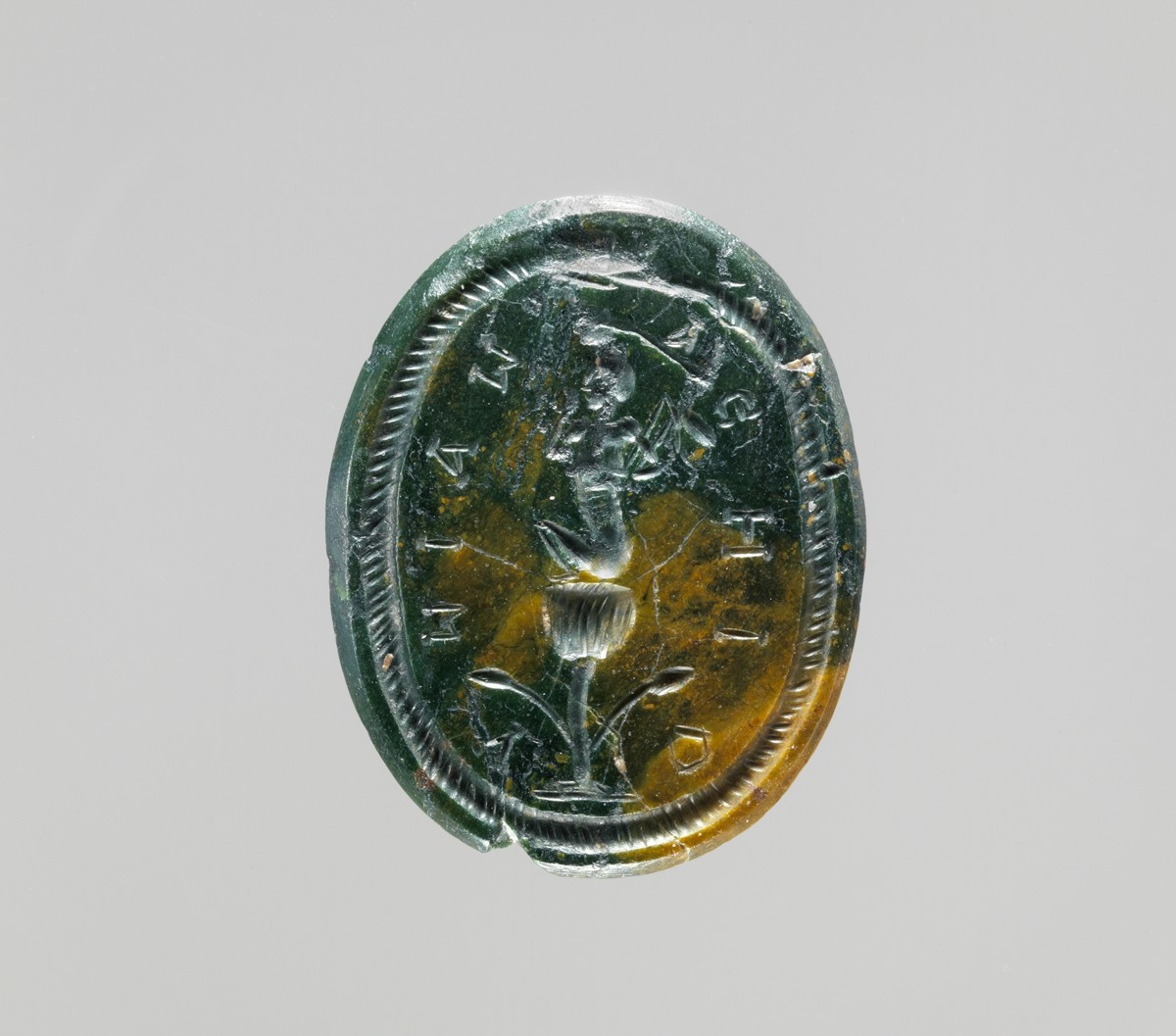
Harpocrates seated on a lotus within an enclosing ouroboros; the tail-biting serpent forms the perimeter of the intaglio.
ca. 2nd–3rd century CE · Roman · The Metropolitan Museum of Art · 41.160.638 · CC0
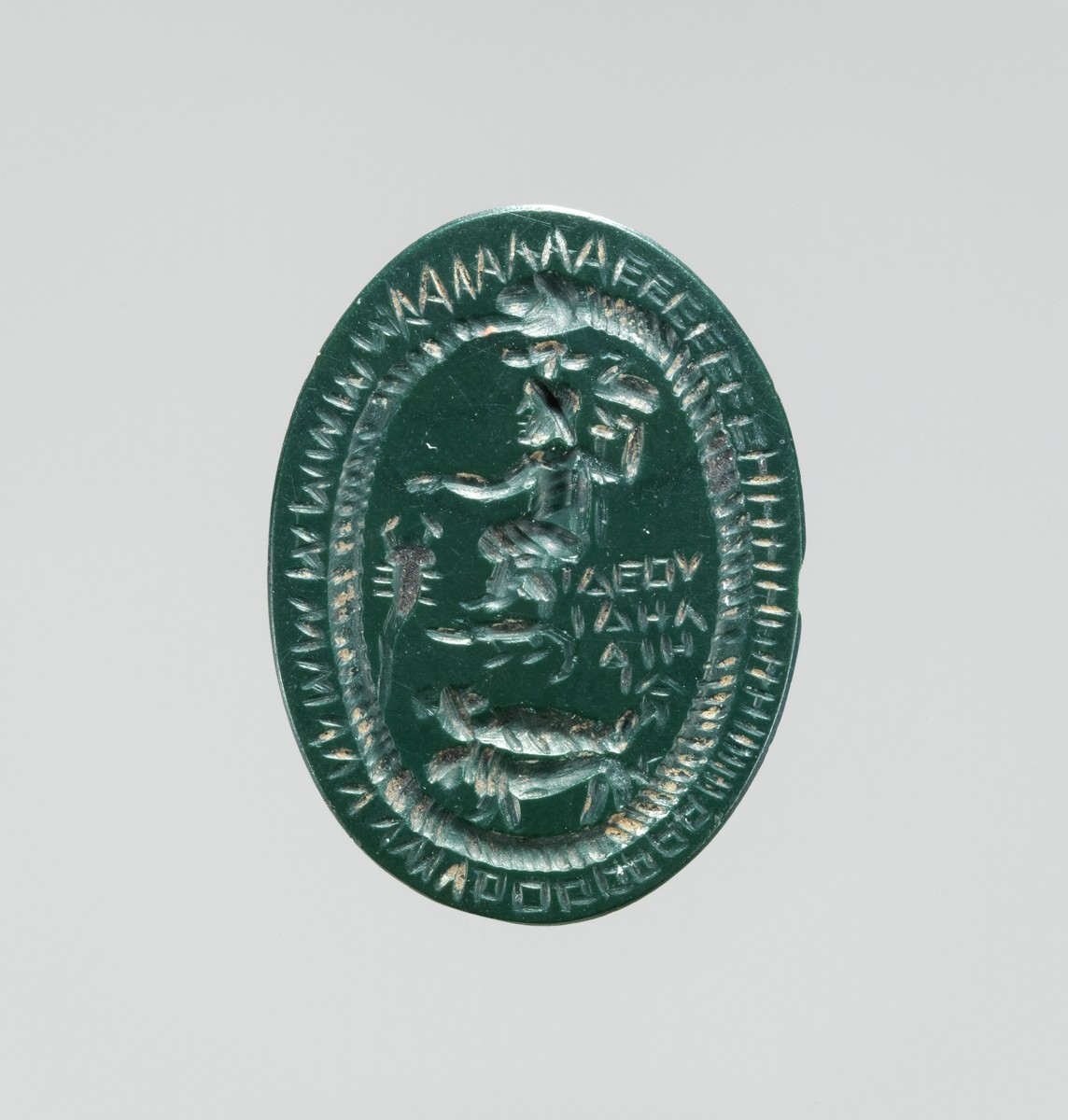
Serapis seated above a crocodile, enclosed by an ouroboros; the serpent surrounds the central scene.
2nd century CE · Roman · The Metropolitan Museum of Art · 10.130.1390 · CC0
Frequently asked questions
Is the ouroboros a symbol of good or evil?
Neither is a universal meaning. Documented readings include eternity, cyclical renewal, and unity. Its moral or religious significance depends on the object and tradition.
Is an ouroboros always a snake?
A snake is the usual form, but a dragon can also be shown biting its tail. The defining feature is the closed relationship between mouth and tail.
Does the ouroboros mean infinity?
It can suggest eternity or endless recurrence. It is not the same sign as the mathematical infinity symbol, and the two have different histories.
Can every circular serpent be called an ouroboros?
Not confidently. Check whether it bites its tail and whether the tradition or museum identifies it that way. A coiled serpent alone is insufficient.