Nature
Peacock Symbolism in Myth, Religion, and Art
The peacock can stand for splendor, pride, or immortality, and accompany particular deities. Dated artworks reveal why context changes its meaning.
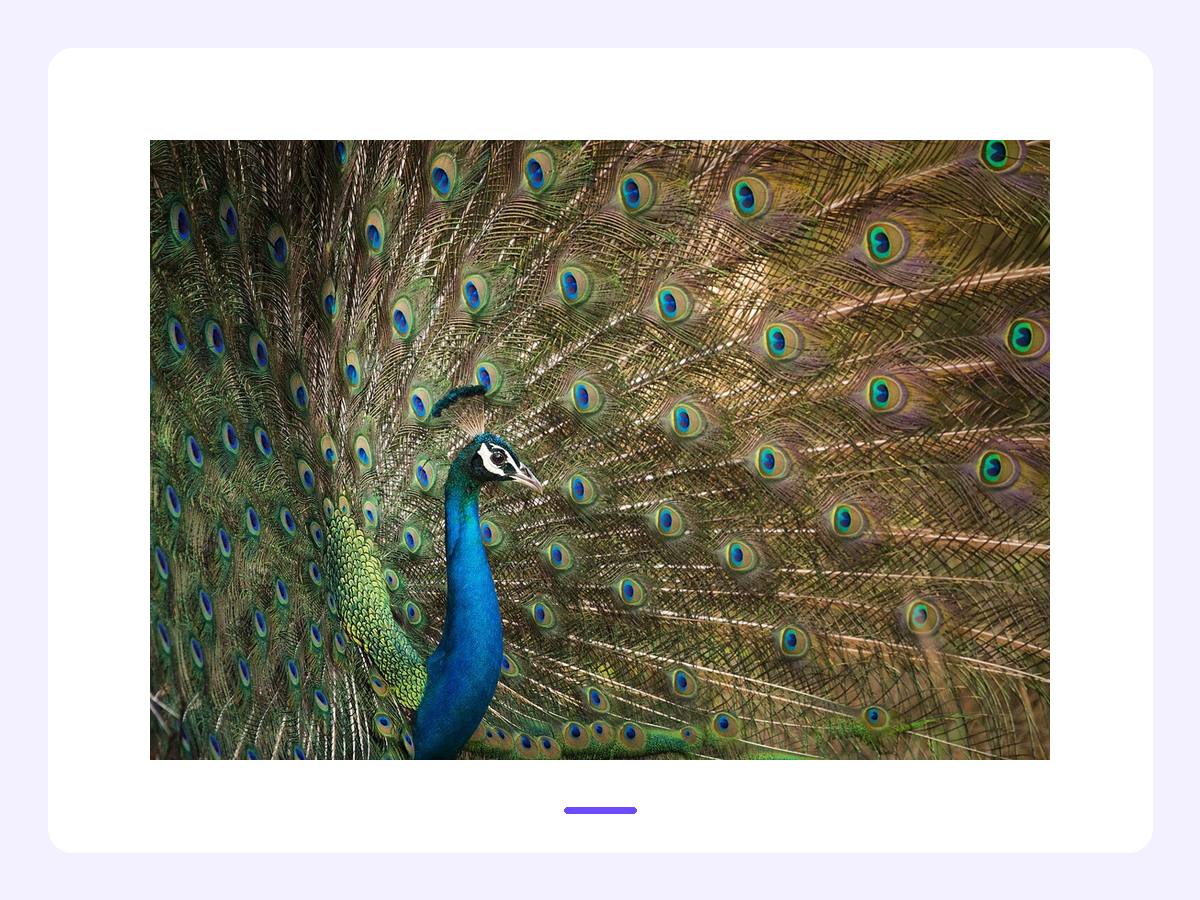

Peacock symbolism includes beauty, splendor, pride, immortality, and association with particular deities. What a peacock symbolizes depends on its setting: the bird accompanies Hera or Juno in classical mythology, serves as the vehicle of Skanda in Hindu art, and can signify immortality in early Christian decoration. It has no single meaning shared by every culture.
The famous fan of eyespots makes the bird especially suited to visual storytelling. Yet a magnificent appearance can prompt admiration in one image and a warning against vanity in another. The most useful question is not simply “What do peacocks mean?” but “What is this peacock doing here?”
What does the peacock symbolize?
The following guide separates several well-documented associations. These are starting points for interpretation, not a codebook that assigns the same message to every feather, color, or sighting.
| Context | Common association | What to look for |
|---|---|---|
| Hera or Juno | The goddess and the story of Argus | A female deity and prominent feather eyespots |
| Skanda, Karttikeya, or Murugan | The deity's animal vehicle | A divine figure riding or accompanied by the bird |
| Early Christian decoration | Immortality and paradise | Paired birds, vines, or a central vessel |
| Moralizing European imagery | Pride or vanity | A display linked to an allegory or critical text |
| Luxury and decorative art | Beauty, wealth, or magnificent display | Opulent materials and an emphasis on plumage |
These meanings can coexist. Splendor might suggest heavenly abundance in a church mosaic and worldly ostentation in a moral allegory. As with other bird symbols, the surrounding figures and objects narrow the possibilities. The wider study of nature symbolism likewise depends on how people interpret animals, plants, and landscapes.
The real bird behind the symbolism
A peacock is a male peafowl; a female is a peahen. The Smithsonian's common peafowl account describes the male's elaborate train and its iridescent eyespots, called ocelli. Those conspicuous forms help explain the bird's appeal to artists without requiring a supernatural explanation.
The display fan is not simply a set of very long ordinary tail feathers. A Smithsonian discussion by David Challinor explains that the spectacular feathers are upper tail coverts; the shorter true tail helps lift and support the train. In everyday descriptions “tail” is understandable, but “train” is more precise.
The display also has a biological purpose. The Smithsonian describes males gathering in display areas and shaking their fanned trains while females assess possible mates. That behavior is not evidence of human vanity or spiritual self-knowledge. Pride is a meaning people give the display, not a moral defect identified in the bird.
Keeping animal behavior separate from human interpretation helps explain the range of peafowl symbolism. The same visual feature can support ideas about attraction, magnificence, watchfulness, or excessive self-regard. None of those associations cancels the bird's ordinary life as an animal.
Peacocks in Greek and Roman mythology
In the classical tradition, the peacock is associated with Hera, called Juno by the Romans. One of the best-known stories explains the eyespots through Argus, the many-eyed guardian of Io. After Mercury kills Argus, Juno places his eyes in the plumage of her bird.
The Wallraf-Richartz-Museum's account of Rubens's Juno and Argus, painted around 1610, explicitly connects the scene to Ovid's Metamorphoses. In the painting, Juno transfers the dead Argus's eyes to the peacock. It is a disturbing mythological episode, not simply a pleasant origin story for beautiful feathers.
This context explains why eyespots can suggest sight, vigilance, and the memory of Argus. But those associations should remain attached to the story when that is the evidence. A modern claim that a peacock feather literally watches over its owner goes beyond what the myth establishes.
It is equally important to distinguish the ancient narrative from later artworks illustrating it. Rubens offers evidence for the story's interpretation in early modern Europe. His painting is not itself an ancient Roman object, even though its subject comes from classical literature.
In an unidentified artwork, a peacock beside a richly dressed woman may therefore be an identifying attribute of Juno rather than a comment on the woman's vanity. Titles, accompanying figures, and collection records can resolve that ambiguity.
Peacock significance in Hindu art
The peacock has a particularly important relationship with Skanda, also known through names including Karttikeya and Murugan. Names and forms vary across regions and devotional traditions, so one image should not be treated as a complete account of Hindu belief.
The Metropolitan Museum of Art's Kumara Riding a Peacock, from Nepal's Kathmandu Valley and dated to the eleventh–twelfth century, provides a clear example. The museum explains that Kumara is an epithet of Skanda, a son of Shiva and Parvati, and identifies the peacock as his mount.
A second Met sculpture, Kumara with a Peacock, dates to the eleventh century. Here the deity appears as a child seated on a cushion, cradling the bird. Comparing the two makes a useful point: an animal attribute can identify a divine figure whether it is ridden or held close.
The Victoria and Albert Museum holds an eighteenth-century South Indian figure of Karttikeya with six heads and twelve arms. He sits on a peacock holding a snake in its mouth. The museum's record also gives the names Subrahmanya and Murugan, connecting the work to the deity's southern Indian identities.
These objects offer a stronger foundation than a generic statement that the peacock “means spirituality in the East.” Their dates, regions, and depicted figures differ, while the peacock's role as a divine vehicle remains identifiable. A vehicle is often called a vahana, but naming the depicted deity matters more than adding an unfamiliar term without explanation.
The snake in the V&A figure also illustrates a limit. Its presence is a visible fact; an elaborate account of precisely which human vice it represents requires additional tradition-specific evidence. It should not be improvised from the assumption that all religious animal scenes carry the same moral lesson.
Why does the peacock symbolize immortality in Christianity?
Peacocks appear in early Christian imagery as signs of immortality. The Getty's Mosaic Fragment with Peacock Facing Right, made in Syria in the fifth–sixth century, gives this interpretation a dated material anchor. The museum identifies the bird within the decoration of a church floor.
In the original composition, the peacock faced a second bird across a central image, probably a tree or wine vessel. Grapevines surrounded the birds. The Getty's teaching guide to the companion fragment carefully distinguishes what survives from what scholars reconstruct. The center is missing, so the precise central object is not known.
That distinction is worth preserving. Two birds flanking a vessel can be a meaningful early Christian composition, but the museum does not possess a fully intact scene showing every detail. The surviving grapes, vines, and birds support interpretation without making the missing area certain.
One explanation for the peacock's association with immortality was the historical belief that its flesh did not decay. The V&A's Constantinople exhibition guide describes that belief when discussing peacock decoration from the church of St Polyeuktos, dated 524–27. This was a belief about the bird, not a scientific property of its body.
Immortality and paradise are therefore documented meanings in particular Christian settings. They do not make the peacock a substitute for every other Christian symbol. Compare it with the dove, whose identification with the Holy Spirit rests especially on the account of Jesus's baptism.
Beauty, pride, and vanity: why meanings can conflict
A displayed train can be admired as extraordinary beauty or criticized as a performance of superiority. The difference lies in the artwork's purpose. A decorative panel may celebrate visual richness; an allegory of pride may use similar plumage to warn viewers against self-importance.
The Hudson River Museum exhibition catalog Strut: The Peacock and Beauty in Art gives a particularly useful comparison. It discusses a displaying peacock in Pieter Brueghel's imagery of pride and another in Jan Brueghel's treatment of sight. The bird can support moral criticism in one work and the pleasures of vision in another.
Consequently, “a peacock always means vanity” is too narrow. So is the opposite modern reassurance that it always means healthy confidence. Both descriptions remove the image from the evidence that would tell us how a particular maker understood it.
This is a recurring issue in interpreting symbolism in art. An attribute helps establish meaning, but it rarely does all the work alone. A title, gesture, neighboring figure, inscription, or intended location may completely change the reading.
What does a peacock feather symbolize?
A detached feather retains the peacock's most distinctive feature: the eyespot. In a work connected to Juno and Argus, it may recall that myth. In a decorative design, it may suggest elegance or richness through pattern alone. A feather used in a religious setting needs to be interpreted within that setting rather than assigned every meaning of the whole bird.
Claims that peacock feathers are universally lucky, unlucky, protective, or dangerous cannot all be turned into one historical rule. A superstition may belong to a particular household or community. Without a reliable source, it should be described as a personal belief, not an established fact about the object.
The same caution applies to blue, green, or white peacock meanings. Animal Diversity Web's account of Indian peafowl describes white-plumaged birds as a color variation. Their unusual appearance does not establish that they bring divine messages or predict a life transition. Biological variation and symbolic interpretation answer different questions.
For color-rich designs, compare the surrounding palette with our guide to color symbolism. The designer's use of white or violet may contribute to the meaning, but a color chart cannot replace evidence about a particular image.
How to read a peacock image
- Identify the accompanying figure. A deity can make the bird an attribute or a vehicle rather than a free-standing emblem.
- Look beyond the feathers. Vines, vessels, snakes, inscriptions, and paired birds supply essential context.
- Check date and place. A Syrian church mosaic and a Nepalese sculpture belong to different histories.
- Separate observation from interpretation. Visible eyespots are a fact; a proposed meaning needs support.
A living peacock can be beautiful and personally significant without functioning as an omen. Its appearance does not reliably predict wealth, romance, protection, or a spiritual awakening. The documented history is already rich: artists and worshippers have used one remarkable bird to think about divine identity, lasting life, beauty, and the risks of pride.
Frequently asked questions
What does the peacock symbolize?
Documented meanings include beauty, splendor, pride, and immortality. It also accompanies Hera or Juno in classical imagery and serves as the vehicle of Skanda in Hindu art. The setting determines which association is relevant.
Why do peacocks symbolize immortality?
Early Christian art associated peacocks with immortality. One historical explanation was the belief that their flesh did not decay, a belief recorded in museum interpretations rather than a true biological property.
Is a peacock a symbol of pride?
It can be, especially in moralizing European art. Its display can also express beauty or splendor, so pride is not the correct interpretation of every peacock image.
What do the eyes on peacock feathers mean?
The eyespots are natural feather patterns called ocelli. In the myth of Juno and Argus, they are explained as the eyes of the slain guardian placed in the bird's plumage. Other contexts may give the pattern different associations.
Does seeing a white peacock have a spiritual meaning?
A white peacock can hold personal meaning, but its appearance does not establish a supernatural message or predict an event. White plumage is a documented variation in Indian peafowl.
Sources & further reading
- Smithsonian's National Zoo: Common peafowl
- Smithsonian: David Challinor, November 2001 letter on peacocks
- Wallraf-Richartz-Museum: Rubens, Juno and Argus, c. 1610
- The Met: Kumara Riding a Peacock, 11th–12th century
- The Met: Kumara with a Peacock, 11th century
- V&A: Karttikeya, South India, 18th century
- Getty: Mosaic Fragment with Peacock Facing Right, 5th–6th century
- Getty Education: Mosaic Fragment with Peacock Facing Left
- V&A: Constantinople to Istanbul exhibition guide
- Hudson River Museum: Strut, The Peacock and Beauty in Art
- University of Michigan Animal Diversity Web: Pavo cristatus