Religion
Menorah Meaning and the Seven- and Nine-Light Lamps
The menorah is a Jewish lampstand with a biblical seven-light form. The Hanukkah lamp has eight festival lights and a separate helper light, making nine in all.
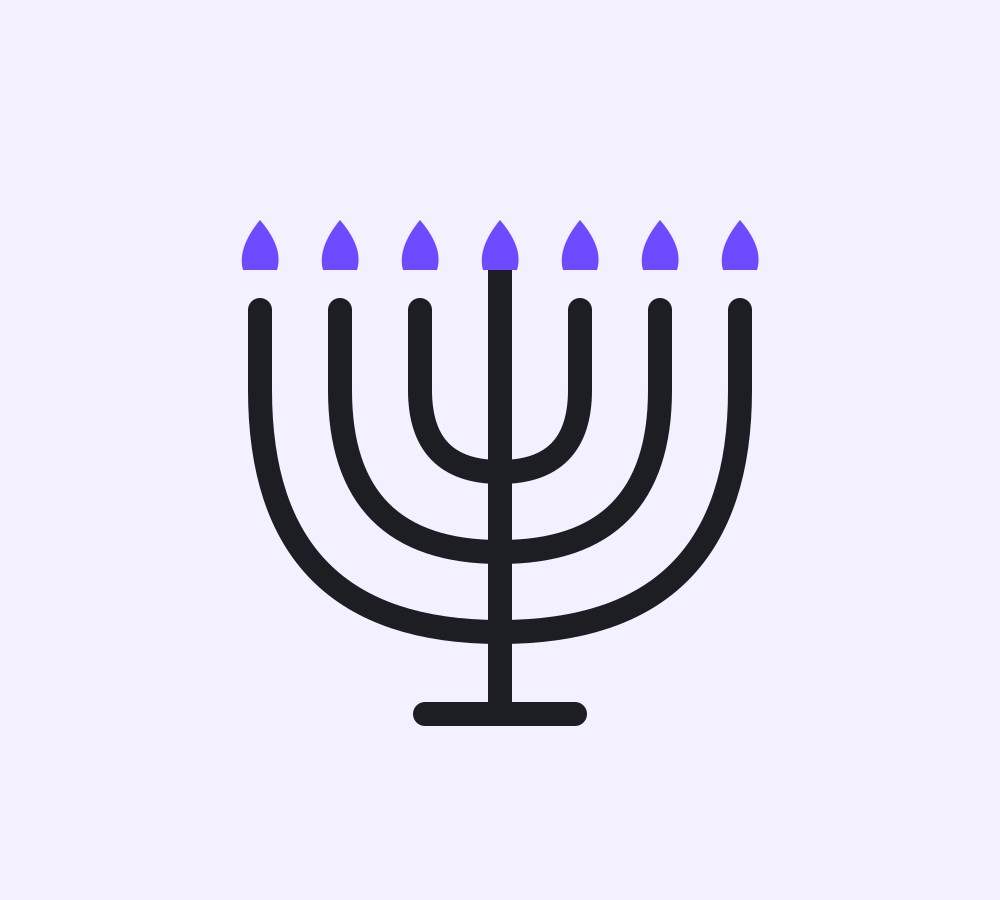
A menorah is a lamp or lampstand, most famously the seven-light golden lampstand described in the Torah and associated with the Jerusalem Temple. As a symbol, it represents Jewish religious life, memory, and continuity. The lamp used for Hanukkah is a particular type of menorah, usually called a hanukkiah, with eight festival lights and a separate helper light.
That distinction resolves a common puzzle: a menorah may have seven lights or, in its Hanukkah form, nine. The two designs are related but serve different purposes. Counting the lights is a useful first step, though the story behind the count matters more than the silhouette alone.
What does the menorah mean in Judaism?
The seven-light menorah recalls the sacred lampstand of the biblical sanctuary and the Temple. Its meaning comes first from Jewish texts and worship, not from a general belief that every branching shape means the same thing. It is a specific ritual object that also became a powerful visual sign of Jewish identity.
Light makes a natural language for interpretation: readers and artists can connect it with learning, divine presence, or religious responsibility. These associations should be presented as interpretations, however, rather than a single official decoding of every part. A depicted menorah can refer directly to the Temple without assigning one abstract quality to each branch.
The menorah is also a useful comparison with the Star of David. Both are now recognizable Jewish symbols, but they have different histories. The menorah has an explicit biblical description as a sacred furnishing. The six-pointed star became a broadly shared Jewish emblem through a later process of adoption.
The seven-branched menorah in Exodus
Exodus 25:31–40 describes a lampstand of pure gold made as hammered work. The passage specifies a central shaft and six branches, three extending from each side. It also describes cups shaped like almond blossoms, along with calyxes and petals, and directs that seven lamps be made for it.
These details explain why plant imagery often enters discussions of the menorah. The biblical description includes floral elements; it is not simply a modern impression that the branches look treelike. Still, calling the menorah identical to every tree of life symbol goes beyond the text. Comparison is useful only when it preserves the identity of each tradition.
The seven lights are oil lamps in the biblical description, not seven modern wax candles. Contemporary illustrations often use candles because they are immediately legible to a viewer. A museum caption should distinguish the original type of lighting equipment from a later artist’s translation of it.
A scriptural description is not itself an archaeological date for the first surviving menorah. Nor does it supply a museum accession number for the original object. It is better to name the textual source precisely than to invent an “earliest known use” year by turning religious narrative into a securely dated artifact.
Why does a Hanukkah menorah have nine lights?
The Hanukkah lamp has places for eight festival lights, one for each night of the eight-day holiday, plus the shamash, or helper light. That additional light is used to light the others. The total is nine, but it is misleading to describe the object as marking nine days of Hanukkah.
My Jewish Learning explains that a hanukkiah is a kind of menorah: every hanukkiah is a menorah in the broader sense of a lamp, but not every menorah is a hanukkiah. In everyday English, people often shorten “Hanukkah menorah” to “menorah,” so context is essential.
The helper light is often raised or set apart from the eight festival lights. Its distinct position makes the different function visible. A design may place it in the center or elsewhere; not every authentic lamp has nine symmetrical arms arranged as an idealized branching candelabrum.
Hanukkah, rededication, and the story of oil
Hanukkah commemorates the rededication of the Temple after the Maccabean victory. The familiar rabbinic account tells of a small supply of suitable oil that lasted eight days. Lighting the festival lamps recalls this tradition, which explains the prominence of light and oil in the holiday’s visual language.
The distinction between an account within a religious tradition and independent historical verification should remain clear. One can accurately explain what the oil story means in Jewish observance without claiming that a museum object proves a miracle. Text, ritual, and material evidence answer different kinds of questions.
On successive evenings, an additional festival light is kindled, so the display grows across the holiday. This gradual increase is part of what makes the lamp a symbol of the festival rather than merely a decoration shaped like an older Temple furnishing. The act of lighting contributes to its meaning.
Do all menorahs look like branching candlesticks?
No. Historical Hanukkah lamps may place small oil reservoirs in a row before a decorative backplate. The Metropolitan Museum of Art describes a German silver example by August Ferdinand Gentzmer as a “bench-shape” lamp, with four feet and a decorated rectangular form. It could be placed near a window or hung on a wall.
The Met’s Hamburg Hanukkah lamp provides another reminder that local artistic fashions shaped Jewish ritual objects. Its catalog describes large floral ornament inspired by Dutch tulip decoration and a polished backplate that reflected the flames. The function of the lamp and the decorative vocabulary of its makers belong to the same object.
Recognizing these forms prevents a common misidentification. An eight-position row of oil holders with a separate helper can be a Hanukkah lamp even if it does not resemble the familiar emoji. Conversely, an ordinary decorative candelabrum does not become a Jewish ritual object merely because it has several arms.
The menorah emoji and modern illustrations
Unicode names 🕎 at U+1F54E MENORAH. Common emoji designs show the nine-light Hanukkah form, rather than the seven-light Temple lamp. The character’s short name is therefore less precise than an art-historical caption needs to be. Count the lights in the version displayed on your device.
Our featured illustration uses seven lights to show the biblical form; the copyable emoji may show nine. Neither should be treated as a reconstruction of the lost Temple object. They are modern graphic aids to distinguishing two related designs, not photographs of ancient artifacts.
For any historical image, ask whether it represents Temple memory, a working Hanukkah lamp, or a later emblem of identity. Place it alongside other religious symbols without reducing their meanings to generic “spiritual light.” The menorah’s richness comes from its particular texts, practices, and communities.
Frequently asked questions
Does a menorah have seven or nine lights?
The biblical Temple menorah has seven lights. A Hanukkah lamp has eight festival lights and a separate shamash, making nine.
What is the difference between a menorah and a hanukkiah?
Menorah is the broader word for a lamp or lampstand. Hanukkiah refers specifically to the Hanukkah lamp.
Why is one Hanukkah light higher?
The shamash is often raised or otherwise set apart because it has a separate helper function. Its exact position varies with the design.
Sources & further reading
- Sefaria: Exodus 25:31–40
- My Jewish Learning: The Hanukkiah (Hanukkah Menorah)
- My Jewish Learning: Symbols of Hanukkah
- My Jewish Learning: Ritual Objects in the Jerusalem Temple
- The Met: August Ferdinand Gentzmer, Hanukkah lamp
- The Met: Hanukkah lamp, Hamburg
- Unicode: Miscellaneous Symbols and Pictographs, U+1F54E